
-
The Role of Tumor Suppressor Genes in Cancer: Knudson Hypothesis & Oncogenes(Post)
Cancer Biology · GeneticsTumour Suppressor Genes: Roles, Examples & CancerTumour suppressor genes are the brakes on cell growth — they restrain proliferation, repair damaged DNA and trigger apoptosis
Excluding Doublets in FACS Analysis: A Comprehensive Guide(Post)Flow Cytometry · GatingExcluding Doublets in Flow Cytometry: Pulse Geometry and Gating StrategyTwo cells passing the laser together are recorded as one event, with roughly double the signal. In DNA co
Cancer & Tumour Suppressors – Mini Review(Post)Cancer DevelopmentCancer is a group of diseases that involves abnormal cell growth resulting in malignant tumours/ malignant neoplasms. Cancer is a leading cause of morbidity, with 14 million ne
Adhesion molecules in atherosclerosis – ICAM1(Post)Adhesion Molecules Direct cell-cell interactions are maintained and regulated by cell adhesion molecules. The expression of adhesion molecules
TIGIT: A New Frontier in Cancer and Autoimmune Disease Immunotherapy(Post)TIGIT (T cell immunoreceptor with Ig and ITIM domains) has emerged as a promising target in cancer immunotherapy and the treatment of autoimmune diseases. As a checkpoint receptor, TIGIT
ST2 and IL33(Post)ST2, a member of the IL-1R Subfamily ST2 is a member of the IL-1R subfamily and was identified in 1989 [1]. The ST2 gene is located on chromoso
Transfection: A Comprehensive Guide (Post)Transfection protocols play a crucial role in the realm of molecular biology and genetic research, enabling the introduction of foreign nucleic acids into living cells. This innovati
LILT: A Novel Immune Checkpoint for Cancer Therapy(Post)Recent advances in immunotherapy have highlighted the importance of targeting immune checkpoints to enhance the immune system’s ability to combat cancer. A new potential target in this gr
Macrophage, M1 & M2, Polarization and Function(Post)What is a Macrophage? Macrophages are indeed a type of phagocyte, responsible for engulfing and destroying foreign particles and cellular debris. They are larger cells with more cytoplasm an
Mogamulizumab: Understanding Its Mechanism, Clinical Applications, and the Role of Biosimilars in Research(Post)Quick Info Section: Key Facts About MogamulizumabWhat is Mogamulizumab?Mogamulizumab is an anti-CCR4 monoclonal antibody used primarily for treating certain cancers, including cutaneous
Vibostolimab: Mechanism, Clinical Applications, and Research Potential in Oncology(Post)Key Facts About VibostolimabWhat is Vibostolimab?Vibostolimab is an anti-TIGIT monoclonal antibody developed by Merck, targeting immune checkpoint pathways to enhance anti-tumor immunity
Inflammation and the aging process(Post)by Ryan Wallis, PhD Aging and Disease Imagine a world where everything you do is missing just a little piece and as time goes on you start to lose sense entirely. This is the deva
TCA Cycle Assays(Page) Mucosal Homing and Tissue-Resident Memory(Page) Anti-PD-L1: Targeting Tumor Evasion with Immune Checkpoint Blockade(Post)IntroductionCancer cells have developed sophisticated mechanisms to evade the immune system, particularly through the inhibition of T-cell responses. One such mechanism involves the progr
Apamistamab: Advancing Leukemia Treatment through Targeted Radioimmunotherapy(Post)Quick Facts About ApamistamabWhat is Apamistamab?Apamistamab is a monoclonal antibody that targets the CD45 antigen on hematopoietic cells.How does Apamistamab work?When labeled with the
Adaptive immune system molecules(Page) Etigilimab: Unveiling the Role of Anti-TIGIT in Cancer Research(Post)Key Facts About EtigilimabWhat is Etigilimab?Etigilimab is an anti-TIGIT monoclonal antibody being studied for its potential role in cancer immunotherapy.What role does Etigilimab play i
Hybridoma Technology: Revolutionizing Antibody Production(Post)Immunology · Antibody ProductionHybridoma Technology: How Monoclonal Antibodies Are MadeHybridoma technology, pioneered by Georges Köhler and César Milstein in 1975, is the method that made monoclonal
Validation of MycoGenie Rapid Mycoplasma Detection Kit - A highly sensitive visual determination method for Mycoplasma detection.(Post)The MycoGenie Rapid Mycoplasma Detection Kit enables the detection of 28 Mycoplasma species in under 1 hour using a simple visual determination method, eliminating the need for expensive
Featured
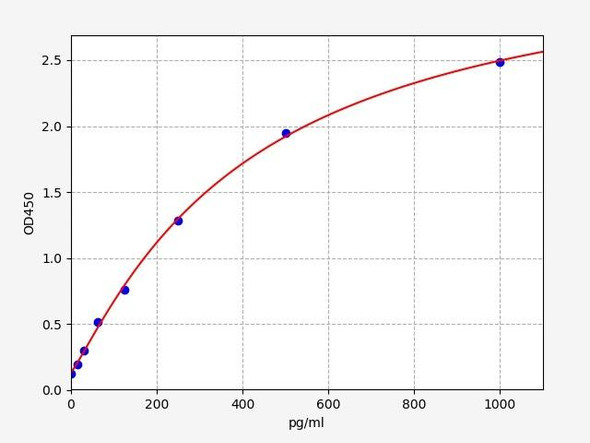

Human CAT (Catalase) ELISA Kit (HUFI07676)
- Product Code:
- HUFI07676
- Detection Method:
- Sandwich ELISA, Double Antibody
- Sensitivity:
- 9.375 pg/mL
- Range:
- 15.625-1000 pg/mL


Human MICA ELISA Kit (HUFI00015)
- Product Code:
- HUFI00015
- Detection Method:
- Sandwich ELISA, Double Antibody
- Sensitivity:
- 46.875 pg/mL
- Range:
- 78.125-5000 pg/mL

Fatty Acid Oxidation (FAO) Assay Kit (BR00001)
- Product Code:
- BR00001
- Instrument:
- Microplate Reader

Anti-Mouse IFNAR-1 In Vivo Antibody - Low Endotoxin (IVMB0202)
- Product Code:
- IVMB0202
- Antibody Type:
- Functional-Grade In Vivo Antibody
- Clone:
- MAR1-5A3
- Protein:
- IFNAR1
- Isotype:
- Mouse IgG1

Anti-Mouse CD25 In Vivo Antibody - Low Endotoxin (IVMB0148)
- Product Code:
- IVMB0148
- Antibody Type:
- Functional-Grade In Vivo Antibody
- Clone:
- PC61
- Protein:
- CD25
- Isotype:
- Rat IgG1 lambda

Anti-Mouse NK1.1 In Vivo Antibody - Low Endotoxin (IVMB0100)
- Product Code:
- IVMB0100
- Antibody Type:
- Functional-Grade In Vivo Antibody
- Clone:
- PK136
- Protein:
- NK1.1
- Isotype:
- Mouse IgG2a kappa

Anti-Mouse PD-1 Antibody [RMP1-14] In Vivo-Low Endotoxin (IVMB0037)
- Product Code:
- IVMB0037
- Antibody Type:
- Functional-Grade In Vivo Antibody
- Clone:
- RMP1-14
- Protein:
- PD-1
- Isotype:
- Rat IgG2a kappa


LSAMP Rabbit Polyclonal Antibody (CAB14248)
- Product Code:
- CAB14248
- Antibody Type:
- Polyclonal Antibody
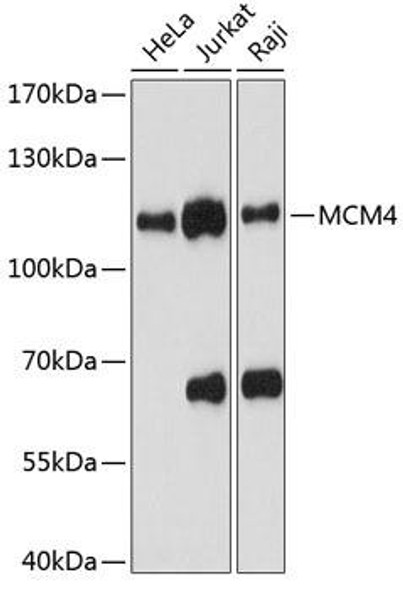
MCM4 Rabbit Polyclonal Antibody (CAB13513)
- Product Code:
- CAB13513
- Antibody Type:
- Polyclonal Antibody

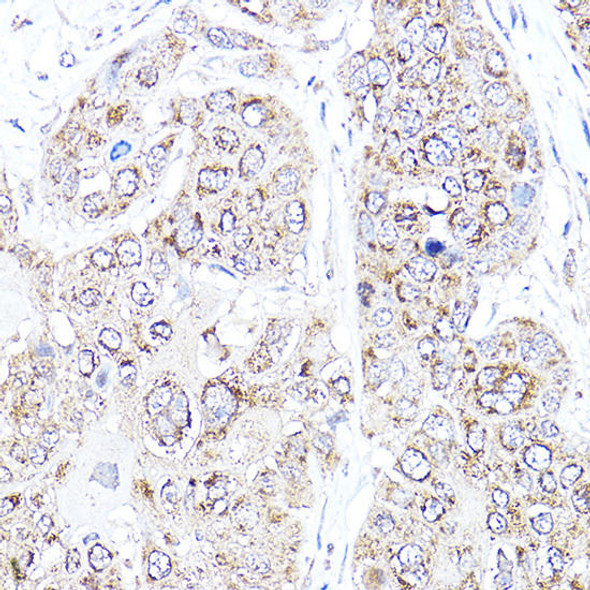
VEGF Rabbit Polyclonal Antibody (CAB12303)
- Product Code:
- CAB12303
- Antibody Type:
- Polyclonal Antibody

MDA ELISA Kit (UNFI0048)
- Product Code:
- UNFI0048
- Detection Method:
- Competitive ELISA, Coated with Antigen
- Sensitivity:
- 4.688 ng/mL
- Range:
- 7.813-500 ng/mL


Dopamine ELISA Kit (UNFI0013)
- Product Code:
- UNFI0013
- Detection Method:
- Competitive ELISA, Coated with Antigen
- Sensitivity:
- 0.938 ng/mL
- Range:
- 1.563-100 ng/mL

Serotonin ELISA Kit (UNFI0018)
- Product Code:
- UNFI0018
- Detection Method:
- Competitive ELISA, Coated with Antigen
- Sensitivity:
- 0.938 ng/mL
- Range:
- 1.563-100 ng/mL

PGE2 ELISA Kit (UNFI0032)
- Product Code:
- UNFI0032
- Detection Method:
- Competitive ELISA, Coated with Antigen
- Sensitivity:
- 18.75 pg/mL
- Range:
- 31.25-2000 pg/mL
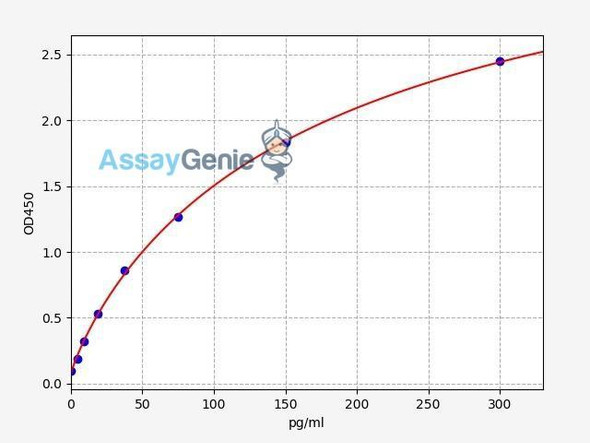
Human IL-6 ELISA Kit (HUFI00180)
- Product Code:
- HUFI00180
- Sensitivity:
- 2.813pg/ml
- Range:
- 4.688-300pg/ml
- ELISA Type:
- Sandwich
