
Hybridoma Technology: Revolutionizing Antibody Production
Hybridoma Technology: How Monoclonal Antibodies Are Made
Hybridoma technology, pioneered by Georges Köhler and César Milstein in 1975, is the method that made monoclonal antibodies possible. By fusing an antibody-producing B cell with an immortal myeloma cell, it creates a hybrid that churns out a single, defined antibody indefinitely — the foundation of modern diagnostics, therapeutics and research.
Explore the antibody range →Key Takeaways
- Hybridoma technology fuses a B cell with a myeloma cell to make an immortal, antibody-producing hybrid.
- It was invented by Köhler and Milstein in 1975 and won the 1984 Nobel Prize.
- Each hybridoma clone produces a single monoclonal antibody of defined specificity.
- HAT medium selects successfully fused hybridomas from unfused cells.
- Monoclonal antibodies underpin diagnostics, therapeutics, research and vaccine development.
- Chimeric, humanised and recombinant methods now extend and complement the original technique.
Antibodies & Reagents for Hybridoma Workflows
From screening secondary antibodies to validated monoclonal and tag antibodies, these reagents support every stage of monoclonal antibody development and detection.
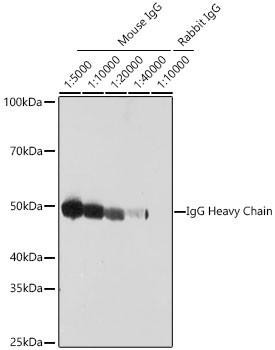
HRP Goat Anti-Mouse IgG
A workhorse secondary for ELISA screening of mouse hybridoma supernatants.
View antibody →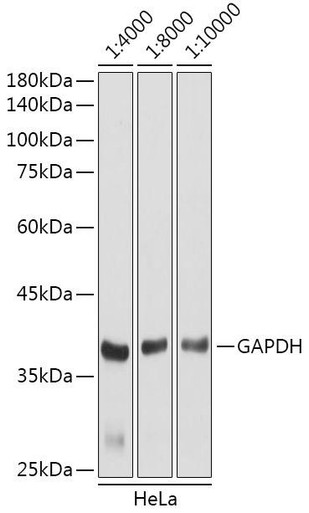
HRP Goat Anti-Rabbit IgG
HRP-conjugated secondary for detecting rabbit primary antibodies in screening assays.
View antibody →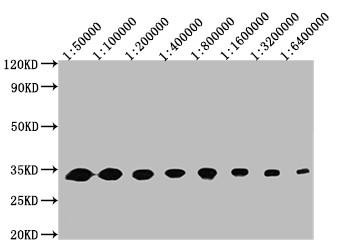
GFP Monoclonal Antibody
A high-specificity monoclonal — a typical product of the hybridoma approach.
View antibody →
Anti-His-Tag Monoclonal (HRP)
Directly conjugated anti-His mAb for detecting recombinant tagged proteins.
View antibody →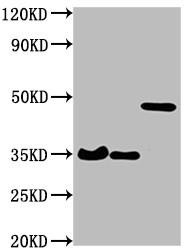
HA-Tag Monoclonal Antibody
A clonal anti-tag antibody for tracking HA-tagged fusion proteins.
View antibody →
IgG1 Isotype Control
A matched negative control to confirm specific antibody binding.
View antibody →What is Hybridoma Technology?
Hybridoma technology is a method for producing large quantities of identical antibodies, known as monoclonal antibodies, from a single clone of cells. It was pioneered by Georges Köhler and César Milstein in 1975 — work so influential that it earned them the Nobel Prize in Physiology or Medicine in 1984 — and it fundamentally transformed immunology, diagnostics and drug development.
The breakthrough was solving a long-standing problem: antibody-producing B cells cannot survive for long in culture, so it was impossible to obtain a steady supply of a single defined antibody. By fusing a B cell with an immortal cancer cell, Köhler and Milstein created a hybrid — a hybridoma — that combined the antibody-making ability of the B cell with the endless proliferation of the tumour cell.
How Hybridomas Are Made
The process begins by immunising a small mammal, typically a mouse, with a specific antigen. The animal mounts an immune response, and its spleen becomes rich in B cells producing antibodies against that antigen. These B cells are harvested and fused with myeloma (immortal plasma-tumour) cells, usually using polyethylene glycol to merge their membranes.
The fusion yields a mixture of cells: unfused B cells, unfused myeloma cells, and the desired hybridomas. Each hybridoma inherits two crucial traits — the antibody-producing capability of the B cell and the immortality of the myeloma cell — so it can be cultured indefinitely while secreting a single, defined antibody.
Selecting and Screening Hybridomas
Because fusion is inefficient, the next step is to select only the hybridomas from the mixture. This is done in HAT medium (hypoxanthine, aminopterin and thymidine). The myeloma cells used are deficient in the enzyme HGPRT, so aminopterin blocks their DNA synthesis and they die; unfused B cells die naturally in culture; only the fused hybridomas, which gain a functional HGPRT gene from the B cell, survive.
Surviving hybridomas are then diluted to single cells, grown into clonal populations, and screened — typically by ELISA — to identify the clones producing the antibody of interest. Secondary antibodies such as HRP-conjugated anti-mouse IgG provide the detection signal in these screening plates. The best clones are expanded and banked as a permanent, renewable source of that monoclonal antibody.
Applications of Monoclonal Antibodies
The monoclonal antibodies produced by hybridomas are among the most versatile tools in biology and medicine.
Medical diagnostics
Their exquisite specificity makes monoclonal antibodies ideal for detecting disease markers in ELISA, lateral-flow and immunohistochemistry tests — from pregnancy tests to cancer biomarkers.
Therapeutics
Therapeutic monoclonal antibodies now treat cancers, autoimmune diseases and infections by precisely targeting disease-associated molecules, a cornerstone of modern precision medicine.
Basic research
In the laboratory, monoclonal antibodies are indispensable for Western blotting, flow cytometry, immunofluorescence and immunoprecipitation, illuminating where and when proteins are expressed.
Vaccine development
Monoclonals aid the identification and characterisation of antigens, helping researchers understand the immune response and improve vaccine design.
Challenges and Modern Alternatives
While hybridoma technology was a giant leap forward, it has limitations. Antibodies raised in mice can provoke an immune reaction when given to humans, and the fusion and screening process is laborious. To address immunogenicity, chimeric antibodies (with human constant regions) and fully humanised antibodies (with human variable and constant regions) were developed, greatly reducing adverse reactions.
In parallel, antibody-engineering approaches such as phage display and recombinant DNA technology now complement — and in some cases replace — the classical hybridoma. These methods can generate antibodies without immunising animals and offer additional routes to refine affinity and specificity, giving researchers a broader toolkit than ever for producing the perfect antibody.
Explore the Assay Genie Antibody Range
From validated monoclonal and recombinant antibodies to secondary and anti-tag antibodies for screening and detection, Assay Genie supplies the reagents behind every antibody workflow.
Browse all antibodies →Frequently Asked Questions
What is hybridoma technology used for?
It is used to produce monoclonal antibodies — large quantities of a single, identical antibody — for diagnostics, therapeutics and research.
Who invented hybridoma technology?
Georges Köhler and César Milstein developed it in 1975, and were awarded the Nobel Prize in Physiology or Medicine in 1984.
What is HAT medium and why is it used?
HAT medium (hypoxanthine, aminopterin, thymidine) selectively kills unfused myeloma cells, so that only successfully fused hybridomas survive and can be expanded.
What is the difference between monoclonal and polyclonal antibodies?
Monoclonal antibodies come from a single hybridoma clone and recognise one epitope, whereas polyclonal antibodies are a mixture recognising several epitopes on the same antigen.
Are hybridomas still used today?
Yes, though they are increasingly complemented by recombinant and phage-display methods that avoid animal immunisation and allow finer control of antibody properties.
Umang is a life-science writer at Assay Genie covering immunology, antibodies and molecular biology.
Recent Posts
-
Suspected Plague Death at a Siberian Anti-Plague Institute: What Researchers Should Know
Infectious Disease · News AnalysisSuspected Plague Death at a Siberian Anti-Plague Institute: What …6th Oct 2026 -
LPS ELISA Troubleshooting: The Importance of Sample Nature
Quick answer A researcher measuring circulating lipopolysaccharide (LPS) in human serum …25th Sep 2026 -
Sekundärantikörper wählen: Die Regel, die im Labor wirklich zählt
Sekundärantikörper wählen: Die Regel, die im Labor wirklich zählt Wählen Sie einen Sekundärantikörp …24th Sep 2026