null

New Anti-Tag Antibodies

Anti-Tag Antibodies & Beads

Designed for accurate detection and protein isolation

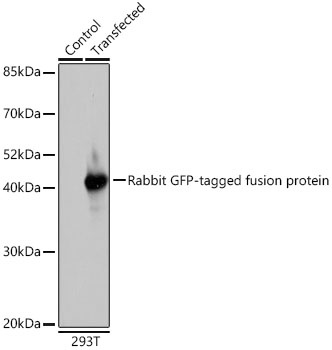
Enhance your protein purification and detection workflows with Assay Genie’s Anti-Tag Antibodies and Beads. Engineered for high binding efficiency and reproducibility, our antibodies deliver reliable performance across His, FLAG, Myc, HA, GST, GFP, and other commonly used protein tags, ensuring accurate and consistent experimental results.


check_box   Validated for WB, IP/ Co-IP, ICC & IHC
check_box   Monoclonals & polyclonals available
check_box   High specificity & low background
check_box   Multiple tag compatibilities
check_box   Robust purification
check_box   Research Use Only


Why Choose Our Anti-Tag Antibodies & Beads?

Precise Detection & Protein Purification

Assay Genie’s Anti-Tag Antibodies offer high specificity, low background, and reliable results across multiple applications. In addition, bead-conjugated anti-tag antibodies provide a powerful tool for rapid and efficient protein purification, immunoprecipitation, and pull-down assays. These ready-to-use magnetic bead formats enable gentle handling, high recovery, and easy automation for high-throughput workflows.

Validated For All Applications

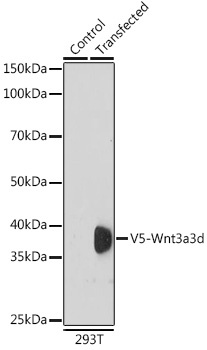
done   Western Blotting (WB): Accurate detection of tagged recombinant proteins with minimal background.
done   Immunocytochemistry (ICC) & Immunohistochemistry (IHC): Precise visualization of protein localization in cells and tissues.
done   Immunoprecipitation (IP / Co-IP): Efficient capture and interaction analysis of tagged proteins.
done   Affinity Purification: Simplified isolation of recombinant proteins from cell lysates.
done   Fluorescence & Confocal Imaging: Simplified isolation of recombinant proteins from cell lysates.

Key Advantages

done   High specificity & low cross-reactivity with host proteins.
done   Broad tag compatibility - His, Myc, HA, GST, GFP, FLAG, and more.
done   Conjugated Formats- Antibodies Conjugated to Beads available
done   Reproducible results across multiple assay types and sample sources.
done   Ideal for recombinant protein expression, functional studies, and large-scale purification workflows.


Popular Anti-Tag Antibodies

Optimized to achieved the best results

  • Flag Tag Monoclonal Antibody (MACO0660)

    €269

    Myc tag Monoclonal antibody (MACO0654)

    €269

    E-Tag Monoclonal Antibody 

    (MACO0659)

    €269
  • HA-Tag Monoclonal Antibody (MACO0657)

    €269

    Anti-Strep Tag II Antibody 

    (MACO0113)

    €269

    HRP-conjugated Mouse anti DDDDK-Tag Monoclonal Antibody (CABE024)

    €159 - €499

Types of Protein Tags

Choose the right  format for your research


Fluorescent polypeptides consist of proteins or small peptides that are either naturally occurring or artificially generated, and they are often used in science to study proteins of interest within cells. Studies could focus on protein folding, location analysis, and protein function. Find below the most commonly used fluorescent polypeptides as protein tags:


keyboard_arrow_right   RFP (Red Fluorescent Protein): The original RFP was isolated from Discosoma, and named DsRed. Yields a red-orange colour when excited.
keyboard_arrow_right   mCherry: Member of the mFruits family of monomeric red fluorescent proteins. Derived from DsRed of Discosoma sea anemones.

These tags can be used in reporter assays, fluorescence microscopy, protein colocalization, macrophotography, immunoprecipitation  & more. 

Example of GFP-Tagged Protein Purification via Immunoprecipitation

An epitope tag is a short, genetically engineered amino acid sequence fused to a recombinant protein to facilitate its detection, purification, or imaging. By using commercially available antibodies that recognize the tag, scientists can easily study proteins that lack their own specific antibodies, using techniques like affinity chromatography for purification and immunofluorescence or flow cytometry for detection. Find below the most commonly used epitope tags:


keyboard_arrow_right   T7 (T7 RNA Polymerase): T7 RNA polymerase is a single-subunit enzyme (~99 kDa) from bacteriophage T7 that specifically recognizes and transcribes genes downstream of a T7 promoter sequence. Although not a typical small tag, T7 RNA polymerase can be fused to another protein for functional or localization purposes
keyboard_arrow_right   DDDDK: It’s a small peptide tag (~1 kDa) added to proteins for easy detection or purification using anti-FLAG antibodies or FLAG affinity resin.
keyboard_arrow_right   HA: HATag derives from a human influenza hemagglutinin protein, 98-106 amino acids in length. It's used in protein detection and purification, and as an epitope tag in expression vectors.
keyboard_arrow_right   Myc: Short peptide derived from the c-myc gene product. Often used in Affinity Chromatography, cellulite localization studies by immunofluorescence, Protein detection by Western blotting.
keyboard_arrow_right   V5: V5 Tag is a short peptide derived from the paramyxovirus (SV5) P/V proteinProtein detection and purification. It’s commonly fused to recombinant proteins for detection, purification, or localization. The tag is recognized by highly specific anti-V5 antibodies, making it useful in Western blotting, immunofluorescence, and immunoprecipitation.
Example of Protein Purification via Immunoprecipitation

Fusion tags are short peptide or protein sequences genetically attached to a target protein to improve its handling and study. They simplify purification, enable detection, enhance solubility, or direct cellular localization. These tags are widely used in recombinant protein expression to make protein production faster and more efficient. Find below the most commonly used affinity tags:

keyboard_arrow_right   His Tag: His tag (or 6×His tag) is a short sequence of six histidine residues. Often placed at a protein’s N- or C-terminus.
It binds strongly to nickel or cobalt ions, allowing affinity purification using Ni²⁺-NTA or Co²⁺ resins, and can also be detected with anti-His antibodies. Used for or easy protein purification and detection via metal affinity chromatography.
keyboard_arrow_right   TAP (Transporter associated with antigen processing):  Consists of two Immunoglobulin G (IgG) binding domains from the Staphylococcus aureus surface protein, Protein A, and a calmodulin-binding peptide (CBP). Often used for protein purification via protein A affinity chromatography.
Example of Protein Purification via Immunoprecipitation

Fusion tags are short peptide sequences or entire proteins genetically attached (fused) to a target protein to help with its expression, purification, detection, or functionality. Find below the most commonly used fusion tags:
keyboard_arrow_right   His TagHis tag (or 6×His tag) is a short sequence of six histidine residues. Often placed at a protein’s N- or C-terminus.
It binds strongly to nickel or cobalt ions, allowing affinity purification using Ni²⁺-NTA or Co²⁺ resins, and can also be detected with anti-His antibodies. Because it’s small (~0.8 kDa) and rarely disrupts protein function, it’s one of the most popular fusion tags in protein expression systems.
keyboard_arrow_right   GST (Glutathione-S-transferase): Large tag consisting of 220 amino acids (roughly 26 kDa). Protein purification via pull-down assays.
keyboard_arrow_right   Trx (Thioredoxin): Thioredoxin is normally involved in the reduction of oxidised cysteine residues as well as the cleavage of disulfide bonds. Used as a solubilization tag. Assist protein folding, improve solubility of tagged protein.
keyboard_arrow_right   MBP (Maltose-binding protein): Thioredoxin is normally involved in the reduction of oxidised cysteine residues as well as the cleavage of disulfide bonds. Used as a solubilization tag. Assist protein folding, improve solubility of tagged protein.
Example GST (Glutathione-S-transferase) Pull-Down Assay


update

Fast Delivery

7 - 10  Business Day Lead Time after Manufacture
thumb_up

Highly Cited

We develop high quality custom multiplex assays using the best technology
message

PhD Level Support

Our team are trained to a PhD level to support your multiplex assay problems


Frequently asked questions


Customers may place an order in 3 ways. Orders can be made online via pro-forma invoice, on our website, or via email by emailing orders@assaygenie.com. If you wish to send a purchase order, you can find our company under "Assay Genie" or "Reagent Genie Ireland Ltd" on your ordering system. Alternatively, orders may be placed via your local distributor.
Our company can be found under the supplier name "Assay Genie" or "Reagent Genie Ireland Ltd." Still can't find us? Check if we are on your vendor system here. If not, we would be happy to fill out a new supplier form to be registered as a vendor. Alternatively, orders can be placed through your local distributor.
To find out if you can directly order from us or if your order must be made via a distributor click here. Information on your local distributor can be found on this page.
Inquiries can be made online via our 'Contact Us' page. You may also contact us via email at: info@assaygenie.com or orders@assaygenie.com, or by telephone on: +353 15639720. Alternatively, an inquiry can be made via your local distributor.
To create an Assay Genie account, click on 'Register' in the top right corner of the home page. On the registration page fill out the registration details. Once complete, click the 'Create Account' button. To login, click on 'Sign in' in the top right corner of the results page (beside 'Register'). Fill in your email and password and click the 'Sign in' button.
To change the currency of product prices click 'select currency' from the row of options at the top of screen of each web page. Options include: Euro (€), Pound (£), and US Dollar ($).
Once we have received your order a confirmation email will be sent to you. Details such as order number and estimated date of delivery will also be disclosed in this email.


Meet Some of the Genie Team!

At Assay Genie, we're here to help every step of the way. Whether you need guidance choosing the right product, updates on your order, or expert support after your purchase, we've got you covered.

  • Colm PhD, CEO
    Sean PhD, CSO
    Shane MSc, Sales Manager
    Beatriz, Logistics
  • David PhD, Partner Manager
    Marina PhD, Tech Support
    Joe MSc, Sales
    Miren PhD, Product Manager
  • Zac MSc, Operations Manager
    Natalia PhD, Tech Support
    José MSc, Development Manager

Additional Resources