
-
Decoding the Language of Cells: Chemokine Signaling Pathways Unveiled(Post)
Chemokines are small signaling proteins that play a crucial role in the immune system by directing the movement of cells, orchestrating immune responses, and maintaining tissue homeostasis. The
Innate Viral Immunity & RIG-I in COVID-19(Post)RIG-I: Antiviral Properties in COVID-19 (SARS-CoV-2) Infection Key Points RIG-I is a cytosolic RNA h
Comprehensive Analysis of Antibody Structure and Function(Post)Antibodies, or immunoglobulins, stand as critical components of the immune system, orchestrating the identification and neutralization of pathogens like viruses and bacteria. This extensive artic
Platinum based cancer drugs and next generation therapeutics(Post)Platinum based cancer drugs Despite nearly 50% of all anti-cancer treatments being platinum-based, there is an urgent need to develop novel therapeutics
PD-1 & PD-L1 Inhibitors(Post)PD-1 & PD-L1 interaction between T-cells and tumour cells. What are PD-1 and PD-L1? PD-1, also known as programmed cell death 1, is a receptor expressed on t
Antibody Light Chains, Heavy Chains, Constant Regions & Tumour-Associated Antigens(Post)Immunology · Antibody BiologyAntibody Light Chains, Heavy Chains, Constant Regions & Tumour-Associated AntigensAn antibody’s specificity comes from its variable domains and its biological effect comes
Zolbetuximab: A Breakthrough in Targeting Claudin 18.2 for Cancer Treatment(Post)Quick Facts About ZolbetuximabWhat is Zolbetuximab?Zolbetuximab is a monoclonal antibody that targets Claudin 18.2, a protein overexpressed in gastric and pancreatic cancers, enhancing t
Milatuzumab: Unveiling Its Role in Cancer Immunotherapy and Research(Post)What You Need to Know About MilatuzumabWhat is Milatuzumab?Milatuzumab is a humanized monoclonal antibody targeting CD74, a molecule involved in antigen presentation and cell signaling.W
Natalizumab: Mechanism, Applications, and Emerging Research in Multiple Sclerosis and Crohn's Disease(Post)Quick Facts About NatalizumabWhat is Natalizumab?Natalizumab is a monoclonal antibody used to treat multiple sclerosis (MS) and Crohn's disease. It works by blocking immune cells from at
CD31: A Comprehensive Look at an Essential Biomarker(Post)What is CD31? CD31, also known as PECAM-1, was originally described as a cell surface antigen present on platelets and megakaryocytes. CD31 is
CD25 Marker(Post)CD25, a key molecule in immune regulation, is integral to the function of activated lymphocytes and regulatory T cells. It's central in mediating immune responses, with implications in autoimmune
Treg Suppression and the IL-2 Axis: Pathway, Function and Assays(Post)Regulatory T cells cannot make the cytokine they depend on. FOXP3 represses the Il2 locus, so every Treg lives on IL-2 secreted by the conventional T cells it exists to restrain. That asymmetry expla
JAK-STAT Signaling Pathway: A Comprehensive Exploration(Post)Progression of the JAK STAT Signalling Pathway Cellular communication is a complex network of molecular interactions that govern various physiological processes. Among the many signal
Myeloid Checkpoints: CD47-SIRPa, LILRB and Siglec-10(Page) CXCL16 – Review(Post)CXCL16 CXCL16, a unique member of the CXC chemokine family, stands at the crossroads of immune modulation and vascular biology. Initially discovered as a chem
T-Cell Co-Stimulation and Agonist Checkpoint Signalling Explained(Post)Signal 1 tells a T cell what it is looking at; signal 2 tells it whether to care. The same peptide–MHC engagement that launches a productive effector response can just as easily install an anergy pro
Hippo Pathway Review(Post)MST2/Hippo PathwayMammalian Sterile Twenty (MST) pathways have been identified as a homologue of the ste20 kinase from Saccharomyces cerevisiae (Creasy and Chernoff 1995). The MST2/Hippo pathway
Tgf beta smad pathway · HT(Page) Understanding CD16: A Comprehensive Overview(Post)CD16, also known as FcγRIII (Fc gamma receptor III), plays a crucial role in the immune system, serving as a receptor for the Fc region of immunoglobulin G (IgG). This receptor is a key player in
One Integrin Chain, Two Partners, Brain or Gut(Post)A chemokine gradient does not move a leukocyte anywhere. It only tells one that has already stopped which way to go. That sentence is the whole map. Trafficking is a four-step cascade and the steps a
Featured
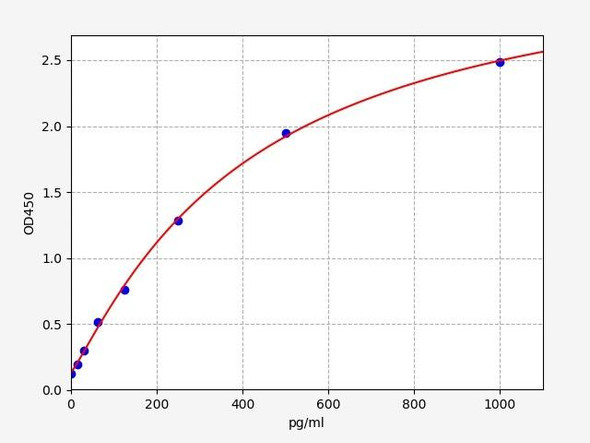

Human CAT (Catalase) ELISA Kit (HUFI07676)
- Product Code:
- HUFI07676
- Detection Method:
- Sandwich ELISA, Double Antibody
- Sensitivity:
- 9.375 pg/mL
- Range:
- 15.625-1000 pg/mL


Human MICA ELISA Kit (HUFI00015)
- Product Code:
- HUFI00015
- Detection Method:
- Sandwich ELISA, Double Antibody
- Sensitivity:
- 46.875 pg/mL
- Range:
- 78.125-5000 pg/mL

Fatty Acid Oxidation (FAO) Assay Kit (BR00001)
- Product Code:
- BR00001
- Instrument:
- Microplate Reader

Anti-Mouse IFNAR-1 In Vivo Antibody - Low Endotoxin (IVMB0202)
- Product Code:
- IVMB0202
- Antibody Type:
- Functional-Grade In Vivo Antibody
- Clone:
- MAR1-5A3
- Protein:
- IFNAR1
- Isotype:
- Mouse IgG1

Anti-Mouse CD25 In Vivo Antibody - Low Endotoxin (IVMB0148)
- Product Code:
- IVMB0148
- Antibody Type:
- Functional-Grade In Vivo Antibody
- Clone:
- PC61
- Protein:
- CD25
- Isotype:
- Rat IgG1 lambda

Anti-Mouse NK1.1 In Vivo Antibody - Low Endotoxin (IVMB0100)
- Product Code:
- IVMB0100
- Antibody Type:
- Functional-Grade In Vivo Antibody
- Clone:
- PK136
- Protein:
- NK1.1
- Isotype:
- Mouse IgG2a kappa

Anti-Mouse PD-1 Antibody [RMP1-14] In Vivo-Low Endotoxin (IVMB0037)
- Product Code:
- IVMB0037
- Antibody Type:
- Functional-Grade In Vivo Antibody
- Clone:
- RMP1-14
- Protein:
- PD-1
- Isotype:
- Rat IgG2a kappa


LSAMP Rabbit Polyclonal Antibody (CAB14248)
- Product Code:
- CAB14248
- Antibody Type:
- Polyclonal Antibody
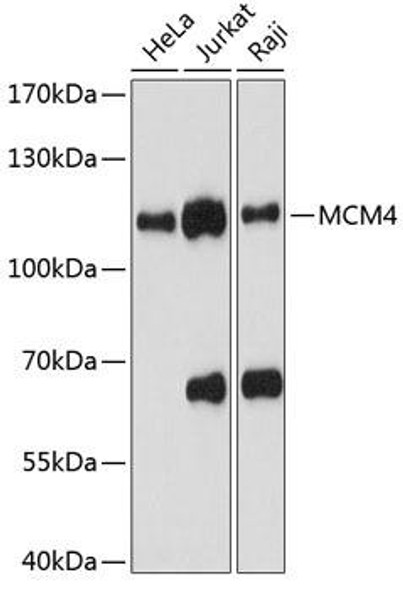
MCM4 Rabbit Polyclonal Antibody (CAB13513)
- Product Code:
- CAB13513
- Antibody Type:
- Polyclonal Antibody

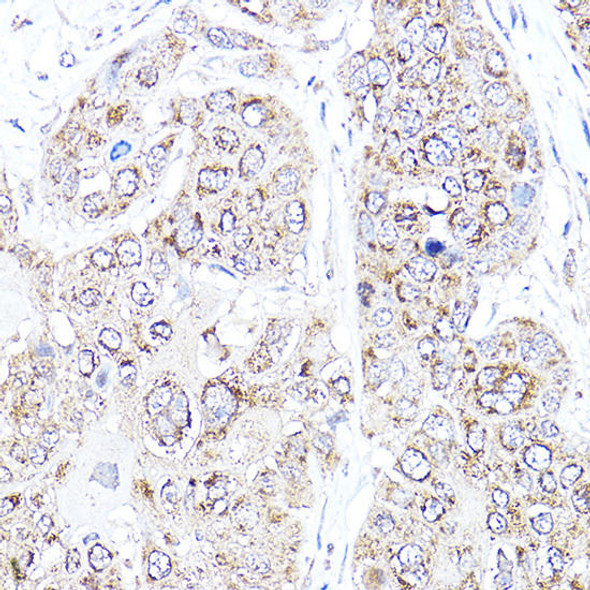
VEGF Rabbit Polyclonal Antibody (CAB12303)
- Product Code:
- CAB12303
- Antibody Type:
- Polyclonal Antibody

MDA ELISA Kit (UNFI0048)
- Product Code:
- UNFI0048
- Detection Method:
- Competitive ELISA, Coated with Antigen
- Sensitivity:
- 4.688 ng/mL
- Range:
- 7.813-500 ng/mL


Dopamine ELISA Kit (UNFI0013)
- Product Code:
- UNFI0013
- Detection Method:
- Competitive ELISA, Coated with Antigen
- Sensitivity:
- 0.938 ng/mL
- Range:
- 1.563-100 ng/mL

Serotonin ELISA Kit (UNFI0018)
- Product Code:
- UNFI0018
- Detection Method:
- Competitive ELISA, Coated with Antigen
- Sensitivity:
- 0.938 ng/mL
- Range:
- 1.563-100 ng/mL

PGE2 ELISA Kit (UNFI0032)
- Product Code:
- UNFI0032
- Detection Method:
- Competitive ELISA, Coated with Antigen
- Sensitivity:
- 18.75 pg/mL
- Range:
- 31.25-2000 pg/mL
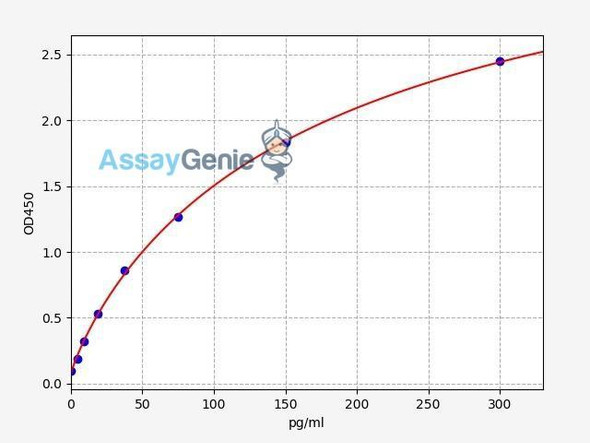
Human IL-6 ELISA Kit (HUFI00180)
- Product Code:
- HUFI00180
- Sensitivity:
- 2.813pg/ml
- Range:
- 4.688-300pg/ml
- ELISA Type:
- Sandwich
