
-
Fenofibrate Usage for Diabetes Damage(Post)
Fenofibrate, also known as FEN, is a drug that is used to lower cholesterol levels. It works by blocking the absorption of dietary cholesterol in the small intestine and therefore, red
Understanding Parkinson's Disease: Insights and Innovations(Post)Parkinson's disease (PD) is a progressive neurological disorder that predominantly affects the motor system, leading to a wide range of symptoms including tremors, rigidity, bradykinesia (slownes
TIGIT/DNAM-1/CD155 (PVR) Checkpoint Axis(Page) Complement: The Brake Matters More Than the Trigger(Post)Complement is firing on your own cells right now. Not in response to anything — C3 hydrolyses spontaneously in plasma at a low, constant rate, and every hydrolysed molecule is a potential convertase
T-Cell Co-Stimulation & Agonist Checkpoint Pathway(Page) Toll-Like Receptor Signaling Pathways: A Key to Innate Immunity(Post)In the intricate landscape of the immune system, toll-like receptors (TLRs) play a fundamental role in the first line of defense against pathogens. These receptors, essential components of the inn
TIM-3/Gal-9 Pathway in Antiparasitic Immunity(Post)Exploring the Role of TIM-3/Gal-9 in Antiparasitic ImmunityIntroductionThe immune system is a complex network of cells and molecules that work together to defend the body against pathogens, including
Iscalimab: Advancing Research in Autoimmune Diseases and Transplantation(Post)What You Need to Know About IscalimabWhat is Iscalimab?Iscalimab (CFZ533) is a monoclonal antibody targeting CD40, a key protein involved in immune system regulation.What is the mechanis
Clinical Chemistry Assays(Page) LAG-3: Revitalizing T Cells in Exhaustion for Combination Therapies(Post)Lymphocyte Activation Gene-3 (LAG-3) is an immune checkpoint receptor that plays a critical role in regulating T cell function. In recent years, LAG-3 has emerged as a potential target fo
Ianalumab: Exploring Its Mechanism, Clinical Applications, and Research Potential(Post)Quick Facts About IanalumabWhat is Ianalumab?Ianalumab is a monoclonal antibody currently being investigated for its potential in treating autoimmune diseases, particularly lupus and imm
Characteristics of scaffold protein(Post)Scaffold Proteins Environmental stimuli result in different biological responses including cell growth, proliferation or apoptosis. How cells translate specific stimuli into a specific cellu
VEGF-A VEGFR-2 Signaling: Decoding the Blueprint of Angiogenesis for Therapeutic Insights(Post)The orchestration of angiogenesis, the process by which new blood vessels form from pre-existing ones, is a complex symphony regulated by various molecular players. At the forefront of this int
SOCS proteins: Manipulating the immune response(Post)Katherine Edwards, PhD Student, Queen’s University Belfast Cytokines play a vital role in immune responses enabling cross-talk between different cell types a
Platelet Adhesion Proteins and Ligands: Key Players in Hemostasis and Thrombosis(Post)Platelet adhesion is a critical process in the maintenance of hemostasis, the body's response to bleeding. This intricate process involves a series of interactions between platelets, the cellular
LILT: A Novel Immune Checkpoint for Cancer Therapy(Post)Recent advances in immunotherapy have highlighted the importance of targeting immune checkpoints to enhance the immune system’s ability to combat cancer. A new potential target in this gr
Anti-CTLA-4: Unleashing the Power of T Cells in Combination Immunotherapy(Post)Immunotherapy has revolutionized cancer treatment by harnessing the body's immune system to fight malignancies. Among the notable advancements in this field is the development of immune c
Top 10 Therapeutics(Page) CD4+ T Cells: Unveiling the Role of Helper and Regulatory T Cells(Post)CD4+ T cells are central to the immune system, functioning as coordinators of immune responses and regulators of immune tolerance. These cells are divided into two primary subtypes: Helpe
The PD-1 Pathway and Cancer Immunotherapy(Post)The initial identification of PD-1 as a potential target for cancer treatment occurred in the late 1990s and early 2000s through studies exploring the regulation of T-cell responses.
Featured
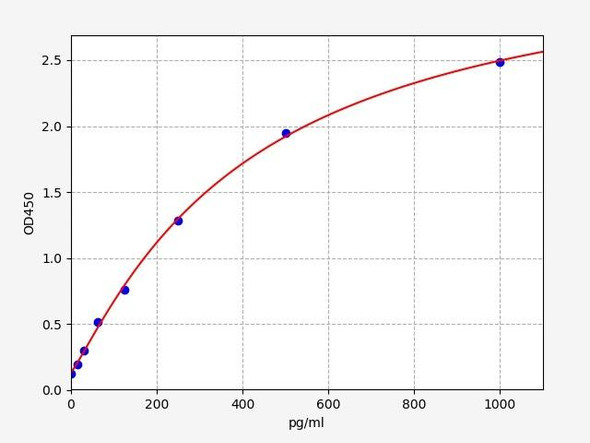

Human CAT (Catalase) ELISA Kit (HUFI07676)
- Product Code:
- HUFI07676
- Detection Method:
- Sandwich ELISA, Double Antibody
- Sensitivity:
- 9.375 pg/mL
- Range:
- 15.625-1000 pg/mL


Human MICA ELISA Kit (HUFI00015)
- Product Code:
- HUFI00015
- Detection Method:
- Sandwich ELISA, Double Antibody
- Sensitivity:
- 46.875 pg/mL
- Range:
- 78.125-5000 pg/mL

Fatty Acid Oxidation (FAO) Assay Kit (BR00001)
- Product Code:
- BR00001
- Instrument:
- Microplate Reader

Anti-Mouse IFNAR-1 In Vivo Antibody - Low Endotoxin (IVMB0202)
- Product Code:
- IVMB0202
- Antibody Type:
- Functional-Grade In Vivo Antibody
- Clone:
- MAR1-5A3
- Protein:
- IFNAR1
- Isotype:
- Mouse IgG1

Anti-Mouse CD25 In Vivo Antibody - Low Endotoxin (IVMB0148)
- Product Code:
- IVMB0148
- Antibody Type:
- Functional-Grade In Vivo Antibody
- Clone:
- PC61
- Protein:
- CD25
- Isotype:
- Rat IgG1 lambda

Anti-Mouse NK1.1 In Vivo Antibody - Low Endotoxin (IVMB0100)
- Product Code:
- IVMB0100
- Antibody Type:
- Functional-Grade In Vivo Antibody
- Clone:
- PK136
- Protein:
- NK1.1
- Isotype:
- Mouse IgG2a kappa

Anti-Mouse PD-1 Antibody [RMP1-14] In Vivo-Low Endotoxin (IVMB0037)
- Product Code:
- IVMB0037
- Antibody Type:
- Functional-Grade In Vivo Antibody
- Clone:
- RMP1-14
- Protein:
- PD-1
- Isotype:
- Rat IgG2a kappa


LSAMP Rabbit Polyclonal Antibody (CAB14248)
- Product Code:
- CAB14248
- Antibody Type:
- Polyclonal Antibody
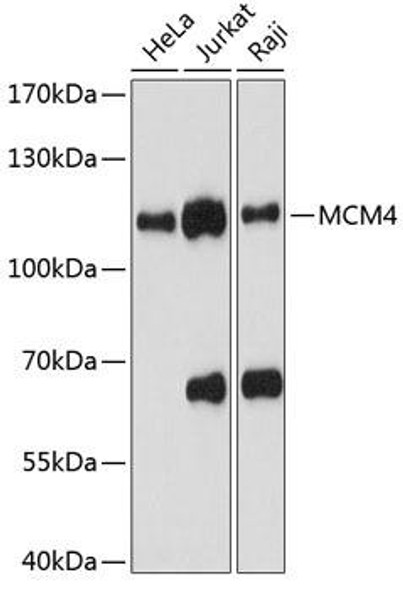
MCM4 Rabbit Polyclonal Antibody (CAB13513)
- Product Code:
- CAB13513
- Antibody Type:
- Polyclonal Antibody

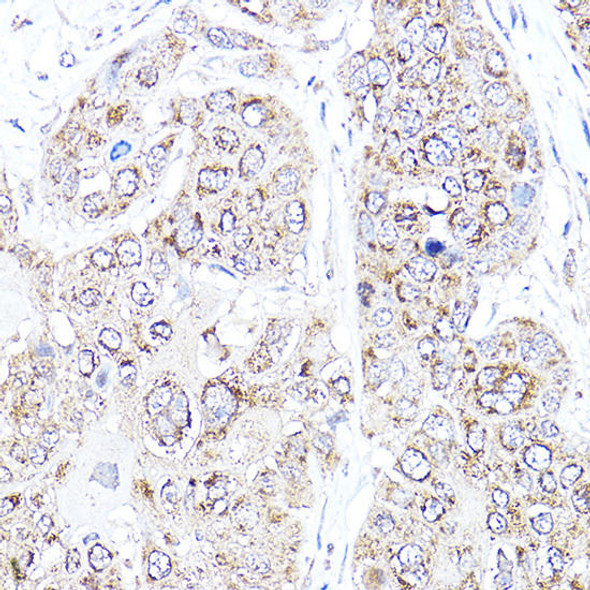
VEGF Rabbit Polyclonal Antibody (CAB12303)
- Product Code:
- CAB12303
- Antibody Type:
- Polyclonal Antibody

MDA ELISA Kit (UNFI0048)
- Product Code:
- UNFI0048
- Detection Method:
- Competitive ELISA, Coated with Antigen
- Sensitivity:
- 4.688 ng/mL
- Range:
- 7.813-500 ng/mL


Dopamine ELISA Kit (UNFI0013)
- Product Code:
- UNFI0013
- Detection Method:
- Competitive ELISA, Coated with Antigen
- Sensitivity:
- 0.938 ng/mL
- Range:
- 1.563-100 ng/mL

Serotonin ELISA Kit (UNFI0018)
- Product Code:
- UNFI0018
- Detection Method:
- Competitive ELISA, Coated with Antigen
- Sensitivity:
- 0.938 ng/mL
- Range:
- 1.563-100 ng/mL

PGE2 ELISA Kit (UNFI0032)
- Product Code:
- UNFI0032
- Detection Method:
- Competitive ELISA, Coated with Antigen
- Sensitivity:
- 18.75 pg/mL
- Range:
- 31.25-2000 pg/mL
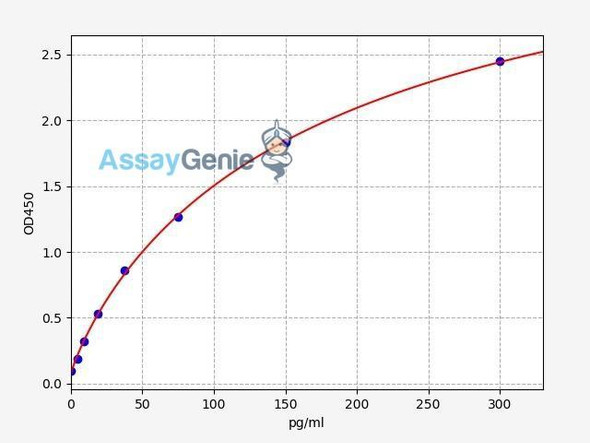
Human IL-6 ELISA Kit (HUFI00180)
- Product Code:
- HUFI00180
- Sensitivity:
- 2.813pg/ml
- Range:
- 4.688-300pg/ml
- ELISA Type:
- Sandwich
