
-
The common characteristics of cancer | Assay Genie(Post)
By Shane Houston, PhD Candidate Queen’s University Belfast Cancer is an age old adversary of the human race. This out-of-control growth of abnormal cells has been a shadow over human health t
Understanding the Autophagy Pathway: A Critical Process in Cellular Maintenance(Post)Cell Biology · Protein DegradationThe Autophagy Pathway: Mechanism, Regulation and How to Measure ItAutophagy is the cell’s route for degrading and recycling its own contents — damaged organelles, agg
Fluorescence spectroscopy: An early detection tool for cancer.(Post)Millions of people are afflicted with cancer each year. 2016 statistics for the USA alone show over half a million deaths attributed to cancer 1. We have come a long way from our early underst
TLR Innate Sensing Pathway: Receptors, MyD88/TRIF and Assays(Post)Toll-like receptors are the reason a milligram of endotoxin can kill a mouse. They are the fastest, least discriminating layer of immunity: germline-encoded sensors that read conserved microbial chem
Antigen Presenting Cells (APCs) and cancer immunotherapy(Post)Explore antigen presentation's crucial role in adaptive immunity and its impact on cancer immunotherapy, highlighting the diversity and function of MHC class I molecules. Key Takeaway
Antigen Processing and Presentation: MHC-I, MHC-II, Cross-Priming(Post)Every T-cell response begins with a protein being taken apart. Before a CD8 or CD4 T cell can see anything, an antigen has to be degraded into peptides of the right length, delivered to the right com
Antigen Processing & Presentation(Page) MHC Class I vs Class II: Key Differences & Functions [Guide](Post)Immunology Guide MHC Class I vs Class II: Key Differences & Functions [Guide] Major Histocompatibility Complex molecules present antigens to T
Cyclins and Cyclin Dependent Kinase – Review(Post)Cell Cycle · KinasesCyclins and Cyclin-Dependent Kinases: Regulation, Substrates and Mitotic ControlCDKs are inactive on their own. They require a cyclin partner, and because cyclin levels rise and fa
NF-κB Signalling Pathway: Canonical and Non-Canonical Routes(Post)NF-κB is not one pathway, it is two clocks running at different speeds. The canonical arm fires within minutes of TNF-α, IL-1β or LPS reaching the surface, peaks, and is switched off by feedback it e
Exploring Cellular Senescence: Defining Cell Morphology, Aging & Cell Division(Post)Introduction Cellular senescence is a fascinating phenomenon that plays a crucial role in the aging process and various age-related diseases. It is essential to explore the cellular
chemokine receptors and ligands(Post)Chemokines are highly conserved cytokines that control the movement of cells around the body. All 45 members of the chemokine family can be divided into 4 subfamilies depending on th
Cytokinesis review(Post)By John Bannon PhD Early Cytokinesis Early cytokinesis; from anaphase to midbody formation cytokinesis is the physical s
B-Cell Depletion and the BAFF-APRIL Axis(Page) Spindle Assembly Checkpoint review(Post)Spindle assembly checkpoint The spindle assembly checkpoint (SAC), or mitotic checkpoint, is the main cell cycle control mechanism that governs mitosis. Incorrec
DNA Origami in the Brain: How Nanoscale Structural Folding Governs Neural Development(Post)Imagine a world where we can fold the very fabric of life into microscopic machines, guiding the growth of a single neuron with the precision of a master architect. This isn't science fiction; it is
Pyruvate dehydrogenase (PDH)(Post)Pyruvate dehydrogenase is a complex enzyme involved in the conversion of pyruvate, a product of glycolysis, into acetyl-CoA, a crucial molecule in energy production and intermediary
Microtubule and Mitosis review(Post)Introduction Microtubules are key components of the cytoskeleton and are composed of alpha and beta tubulin. These dimerise in a head to tail fashion to form 13 linear protofilaments.
One Ligand, Two Receptors, Opposite Jobs: TNFR1 vs TNFR2(Post)Blocking TNF cures rheumatoid arthritis in some patients and triggers demyelination in others. That is not a dosing problem, and it is not a patient-selection problem. It is the direct consequence of
NF-κB Signalling Pathway(Page)Featured
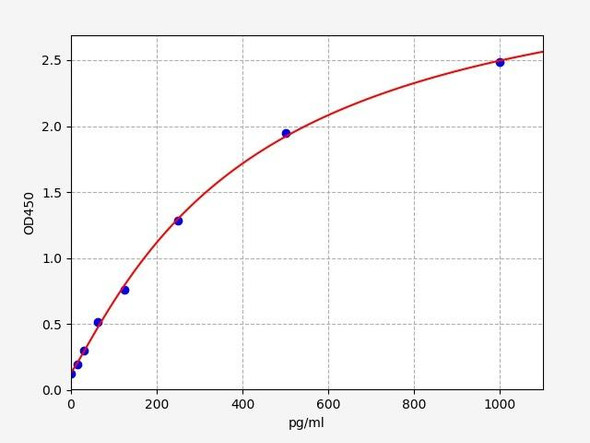

Human CAT (Catalase) ELISA Kit (HUFI07676)
- Product Code:
- HUFI07676
- Detection Method:
- Sandwich ELISA, Double Antibody
- Sensitivity:
- 9.375 pg/mL
- Range:
- 15.625-1000 pg/mL


Human MICA ELISA Kit (HUFI00015)
- Product Code:
- HUFI00015
- Detection Method:
- Sandwich ELISA, Double Antibody
- Sensitivity:
- 46.875 pg/mL
- Range:
- 78.125-5000 pg/mL

Fatty Acid Oxidation (FAO) Assay Kit (BR00001)
- Product Code:
- BR00001
- Instrument:
- Microplate Reader

Anti-Mouse IFNAR-1 In Vivo Antibody - Low Endotoxin (IVMB0202)
- Product Code:
- IVMB0202
- Antibody Type:
- Functional-Grade In Vivo Antibody
- Clone:
- MAR1-5A3
- Protein:
- IFNAR1
- Isotype:
- Mouse IgG1

Anti-Mouse CD25 In Vivo Antibody - Low Endotoxin (IVMB0148)
- Product Code:
- IVMB0148
- Antibody Type:
- Functional-Grade In Vivo Antibody
- Clone:
- PC61
- Protein:
- CD25
- Isotype:
- Rat IgG1 lambda

Anti-Mouse NK1.1 In Vivo Antibody - Low Endotoxin (IVMB0100)
- Product Code:
- IVMB0100
- Antibody Type:
- Functional-Grade In Vivo Antibody
- Clone:
- PK136
- Protein:
- NK1.1
- Isotype:
- Mouse IgG2a kappa
![Anti-Mouse PD-1 (CD279) [RMP1-14] In Vivo Antibody - Low Endotoxin](https://cdn11.bigcommerce.com/s-h68l9z2lnx/images/stencil/590x590/products/214372/569320/anti-mouse-pd-1-cd279-rmp1-14-in-vivo-antibody-low-endotoxin__18202.1743527968.jpg?c=2 "Anti-Mouse PD-1 (CD279) [RMP1-14] In Vivo Antibody - Low Endotoxin")
Anti-Mouse PD-1 Antibody [RMP1-14] In Vivo-Low Endotoxin (IVMB0037)
- Product Code:
- IVMB0037
- Antibody Type:
- Functional-Grade In Vivo Antibody
- Clone:
- RMP1-14
- Protein:
- PD-1
- Isotype:
- Rat IgG2a kappa


LSAMP Rabbit Polyclonal Antibody (CAB14248)
- Product Code:
- CAB14248
- Antibody Type:
- Polyclonal Antibody
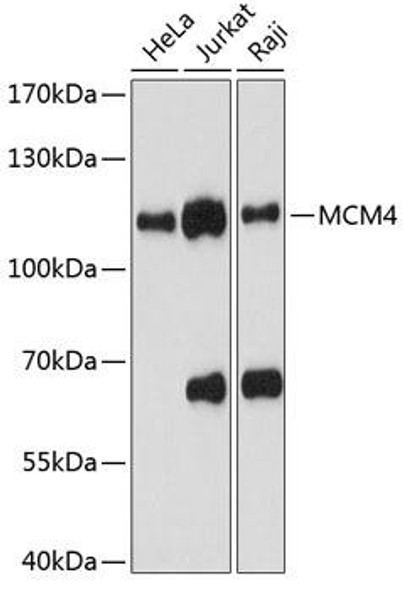
MCM4 Rabbit Polyclonal Antibody (CAB13513)
- Product Code:
- CAB13513
- Antibody Type:
- Polyclonal Antibody

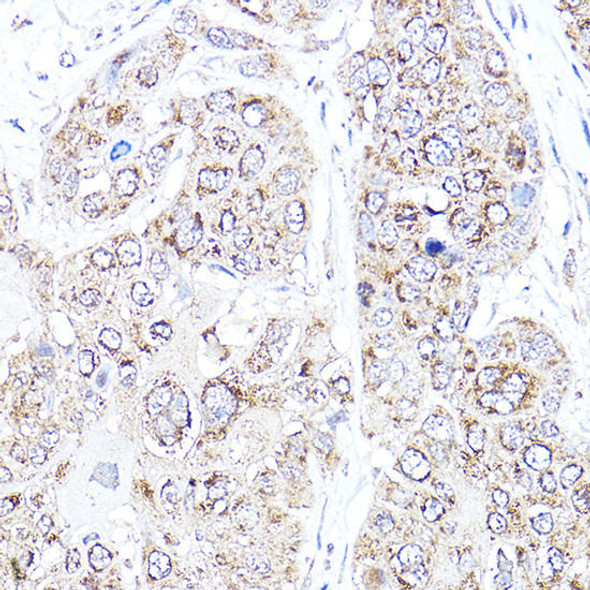
VEGF Rabbit Polyclonal Antibody (CAB12303)
- Product Code:
- CAB12303
- Antibody Type:
- Polyclonal Antibody

MDA ELISA Kit (UNFI0048)
- Product Code:
- UNFI0048
- Detection Method:
- Competitive ELISA, Coated with Antigen
- Sensitivity:
- 4.688 ng/mL
- Range:
- 7.813-500 ng/mL


Dopamine ELISA Kit (UNFI0013)
- Product Code:
- UNFI0013
- Detection Method:
- Competitive ELISA, Coated with Antigen
- Sensitivity:
- 0.938 ng/mL
- Range:
- 1.563-100 ng/mL

Serotonin ELISA Kit (UNFI0018)
- Product Code:
- UNFI0018
- Detection Method:
- Competitive ELISA, Coated with Antigen
- Sensitivity:
- 0.938 ng/mL
- Range:
- 1.563-100 ng/mL

PGE2 ELISA Kit (UNFI0032)
- Product Code:
- UNFI0032
- Detection Method:
- Competitive ELISA, Coated with Antigen
- Sensitivity:
- 18.75 pg/mL
- Range:
- 31.25-2000 pg/mL
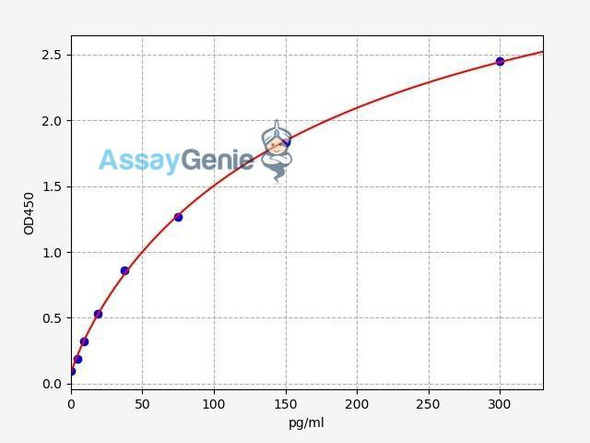
Human IL-6 ELISA Kit (HUFI00180)
- Product Code:
- HUFI00180
- Sensitivity:
- 2.813pg/ml
- Range:
- 4.688-300pg/ml
- ELISA Type:
- Sandwich
