
-
Understanding Blotchy Western Blots: Causes and Remedies(Post)
Western blotting is a powerful and widely used technique in molecular biology, essential for detecting and quantifying specific proteins in complex biological samples. However, despite its popu
Preeclampsia & immune cell regulation | Assay Genie(Post)What is preeclampsia? According to the World Health Organization (WHO), one in ten pregnant women is affected by hypertensive disorders, and preeclampsia a
GeniePlex Validated Panels by Cytometer(Page) Molecular Biology(Page)Molecular Biology Tools, PCR & Cloning Kits | Assay Genie
Flow Cytometry Protocol | 10 Hints & Tips(Post)Lab Methods · Flow CytometryFlow Cytometry Protocol: Two Worked Protocols, Controls and 10 Practical TipsFlow cytometry measures individual cells in a fluid stream at hundreds per second, reporting si
Understanding Antibody Staining for Antigen Detection in Flow Cytometry(Post)Flow cytometry stands as a pivotal technique in the realms of molecular biology and immunology, enabling the analysis of physical and chemical characteristics of cells or particles as they flow in
Tumour Inflammation & Signaling | Assay Genie(Post)By Charlotte O’Donnell PhD Inflammation and Cancer The link between inflammation and cancer is well established, with infl
Platinum based cancer drugs and next generation therapeutics(Post)Platinum based cancer drugs Despite nearly 50% of all anti-cancer treatments being platinum-based, there is an urgent need to develop novel therapeutics
Auto-inflammatory diseases and genetics (SAIDs)(Post)Shelly Pathak PhD candidate, University of Leeds SAIDs Systemic Auto-inflammatory diseases (SAIDs) have been defined as a group of mainly inherited disorder
Toll-Like Receptor Signaling Pathways: A Key to Innate Immunity(Post)In the intricate landscape of the immune system, toll-like receptors (TLRs) play a fundamental role in the first line of defense against pathogens. These receptors, essential components of the inn
Your Th2 Phenotype Might Not Be a T Cell(Post)If your knockout showed a type 2 phenotype and you attributed it to Th2 cells, there is a reasonable chance you were looking at something else. Innate lymphoid cells run T-bet, GATA3 and RORγt — not
Chemokines versus Cytokines: A Detailed Comparative Study(Post)The complex interplay between chemokines and cytokines is fundamental to the immune system's function, orchestrating the body's response to infection, inflammation, and injury. This detailed analy
Microcalcifications in breast cancer: Novel insights into the molecular mechanism and functional consequences(Post)Shane O’Grady, PhD student, RCSI Cancer is a disease that will, unfortunately, touch all of our lives at some point, directly or indirectly. Despite decades
The common characteristics of cancer | Assay Genie(Post)By Shane Houston, PhD Candidate Queen’s University Belfast Cancer is an age old adversary of the human race. This out-of-control growth of abnormal cells has been a shadow over human health t
chemokine receptors and ligands(Post)Chemokines are highly conserved cytokines that control the movement of cells around the body. All 45 members of the chemokine family can be divided into 4 subfamilies depending on th
Toll-like Receptor Signalling in Neurodegenerative Disease(Post)Toll-Like Receptors The innate immune response has come under the spotlight in recent years due to its central role in propagating the pathogen
Dendritic Cells: Tracing the Developmental Lineage Pathway(Post)Dendritic cells (DCs) are pivotal in the immune system, orchestrating innate and adaptive immune responses. Understanding their developmental lineage pathway is crucial in immunology, particularly
ST2 and IL33(Post)ST2, a member of the IL-1R Subfamily ST2 is a member of the IL-1R subfamily and was identified in 1989 [1]. The ST2 gene is located on chromoso
Multiple Sclerosis and Stem Cells(Post)By Sonika Singh PhD candidate, University of Nottingham A Devastating Disease Multiple Sclerosis (MS) is a chronic and inflammatory disease based on
Optimizing Organoid Culture Conditions: Paving the Way for Revolutionary Advances in Biomedical Research(Post)In the dynamic landscape of biomedical research, organoids have emerged as a groundbreaking tool, offering three-dimensional (3D) models that mimic the complex architecture and functionality of hu
Featured
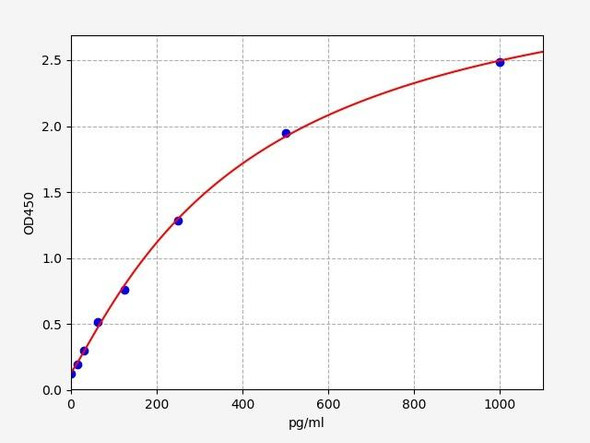

Human CAT (Catalase) ELISA Kit (HUFI07676)
- Product Code:
- HUFI07676
- Detection Method:
- Sandwich ELISA, Double Antibody
- Sensitivity:
- 9.375 pg/mL
- Range:
- 15.625-1000 pg/mL


Human MICA ELISA Kit (HUFI00015)
- Product Code:
- HUFI00015
- Detection Method:
- Sandwich ELISA, Double Antibody
- Sensitivity:
- 46.875 pg/mL
- Range:
- 78.125-5000 pg/mL

Fatty Acid Oxidation (FAO) Assay Kit (BR00001)
- Product Code:
- BR00001
- Instrument:
- Microplate Reader

Anti-Mouse IFNAR-1 In Vivo Antibody - Low Endotoxin (IVMB0202)
- Product Code:
- IVMB0202
- Antibody Type:
- Functional-Grade In Vivo Antibody
- Clone:
- MAR1-5A3
- Protein:
- IFNAR1
- Isotype:
- Mouse IgG1

Anti-Mouse CD25 In Vivo Antibody - Low Endotoxin (IVMB0148)
- Product Code:
- IVMB0148
- Antibody Type:
- Functional-Grade In Vivo Antibody
- Clone:
- PC61
- Protein:
- CD25
- Isotype:
- Rat IgG1 lambda

Anti-Mouse NK1.1 In Vivo Antibody - Low Endotoxin (IVMB0100)
- Product Code:
- IVMB0100
- Antibody Type:
- Functional-Grade In Vivo Antibody
- Clone:
- PK136
- Protein:
- NK1.1
- Isotype:
- Mouse IgG2a kappa
![Anti-Mouse PD-1 (CD279) [RMP1-14] In Vivo Antibody - Low Endotoxin](https://cdn11.bigcommerce.com/s-h68l9z2lnx/images/stencil/590x590/products/214372/569320/anti-mouse-pd-1-cd279-rmp1-14-in-vivo-antibody-low-endotoxin__18202.1743527968.jpg?c=2 "Anti-Mouse PD-1 (CD279) [RMP1-14] In Vivo Antibody - Low Endotoxin")
Anti-Mouse PD-1 Antibody [RMP1-14] In Vivo-Low Endotoxin (IVMB0037)
- Product Code:
- IVMB0037
- Antibody Type:
- Functional-Grade In Vivo Antibody
- Clone:
- RMP1-14
- Protein:
- PD-1
- Isotype:
- Rat IgG2a kappa


LSAMP Rabbit Polyclonal Antibody (CAB14248)
- Product Code:
- CAB14248
- Antibody Type:
- Polyclonal Antibody
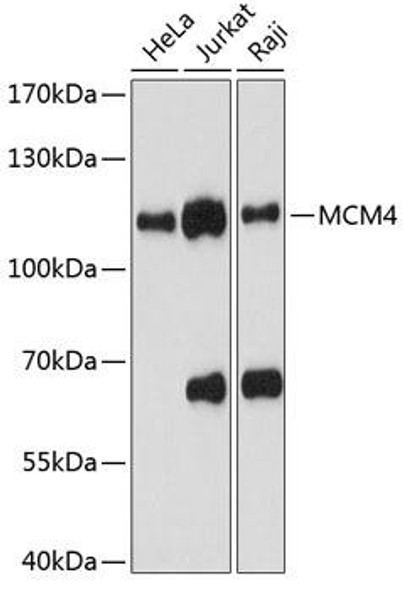
MCM4 Rabbit Polyclonal Antibody (CAB13513)
- Product Code:
- CAB13513
- Antibody Type:
- Polyclonal Antibody

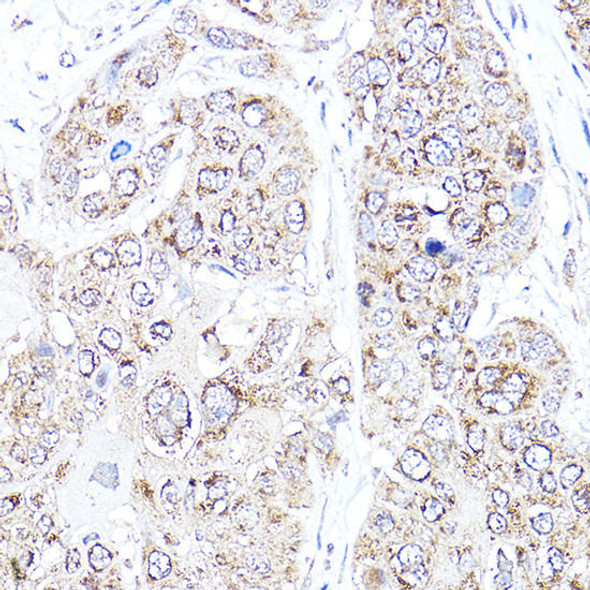
VEGF Rabbit Polyclonal Antibody (CAB12303)
- Product Code:
- CAB12303
- Antibody Type:
- Polyclonal Antibody

MDA ELISA Kit (UNFI0048)
- Product Code:
- UNFI0048
- Detection Method:
- Competitive ELISA, Coated with Antigen
- Sensitivity:
- 4.688 ng/mL
- Range:
- 7.813-500 ng/mL


Dopamine ELISA Kit (UNFI0013)
- Product Code:
- UNFI0013
- Detection Method:
- Competitive ELISA, Coated with Antigen
- Sensitivity:
- 0.938 ng/mL
- Range:
- 1.563-100 ng/mL

Serotonin ELISA Kit (UNFI0018)
- Product Code:
- UNFI0018
- Detection Method:
- Competitive ELISA, Coated with Antigen
- Sensitivity:
- 0.938 ng/mL
- Range:
- 1.563-100 ng/mL

PGE2 ELISA Kit (UNFI0032)
- Product Code:
- UNFI0032
- Detection Method:
- Competitive ELISA, Coated with Antigen
- Sensitivity:
- 18.75 pg/mL
- Range:
- 31.25-2000 pg/mL
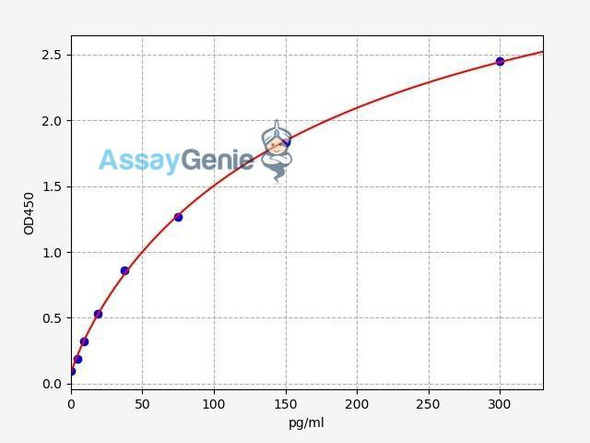
Human IL-6 ELISA Kit (HUFI00180)
- Product Code:
- HUFI00180
- Sensitivity:
- 2.813pg/ml
- Range:
- 4.688-300pg/ml
- ELISA Type:
- Sandwich
