
-
Your Th2 Phenotype Might Not Be a T Cell(Post)
If your knockout showed a type 2 phenotype and you attributed it to Th2 cells, there is a reasonable chance you were looking at something else. Innate lymphoid cells run T-bet, GATA3 and RORγt — not
Phosphatases and PTP1B – Mini review(Post)IntroductionThe human kinome is estimated to contain 518 genes, in comparison to the estimated 180 genes that comprise the phosphatome (Arena et al., 2005). These kinase genes represent a signif
Unraveling the Synergy: How Growth Factors Cooperate to Promote Tumorigenesis(Post)In the intricate ballet of cellular communication and regulation, growth factors play pivotal roles in guiding the processes of cell growth, division, and differentiation. These proteins are essen
CXC Chemokine Family(Post)In the realm of immunology, CXCL chemokines emerge as fascinating conductors. These small proteins, marked by their CXC motif, wield considerable influence over our immune responses and a ra
In Vivo depletion atlas(Page) HMGB1 in inflammation and cancer(Post)HMGB1 Functional Overview High mobility group box 1 ( HMGB1), a member of the high-mobility group (HMG) family, was first identified in the thymus in 1973 an
Leukemia Inhibitory Factor (LIF)(Post)Leukemia Inhibitory Factor (LIF) is a cytokine that plays a crucial role in various physiological processes within the human body. It has gained significant attention in the field of
Protein Kinases: Overview, Classification and Therapeutic Potential(Post)Cell Signalling · EnzymologyProtein Kinases: Function, Classification, Structure and InhibitorsProtein kinases transfer a phosphate group from ATP onto specific residues of target proteins, switching
TLX as a Novel Therapeutic Target(Post)Danka Kozareva PhD Candidate, University College Cork The generation of neurons from stem cells The process of generating
Growth Factors Can Cooperate to Promote Tumorigenesis(Post)Introduction Tumorigenesis, the process by which normal cells transform into cancer cells, is a multifaceted and complex event influenced by various internal and external factors. Among the
CD122: Fine-Tuning T Cell Responses in Immunotherapy(Post)Introduction to CD122 in Immunotherapy CD122, also known as the interleukin-2 receptor beta chain (IL-2Rβ), is a critical component of the immune system's response to pathogens and malign
Inflammasome Activation Pathways: A Comprehensive Overview(Post)Inflammasomes are complex intracellular structures that play a pivotal role in the immune response by detecting pathogenic microorganisms and sterile stressors. Their activation is a critical step
Binding Is the Easy Part(Post)An antibody–drug conjugate is not a targeted drug. It is a delivery problem with an antibody bolted to the front of it. Binding is the easy part, and it is almost never the part that fails. What deci
LAG-3: Key Regulator of T Cell Immunity(Post)Exploring LAG-3: A Key Regulator in T Cell ImmunityLAG-3 (Lymphocyte Activation Gene-3) is an inhibitory receptor that plays a crucial role in modulating T cell activation and effector functions. This
Platelets : The Unassuming Heroes of Blood Circulation(Post)Haematology · HaemostasisPlatelets: Formation, Structure, Activation and Clinical SignificancePlatelets are anucleate fragments shed from megakaryocytes, and they carry out primary haemostasis — adher
Platelet Adhesion Proteins and Ligands: Key Players in Hemostasis and Thrombosis(Post)Platelet adhesion is a critical process in the maintenance of hemostasis, the body's response to bleeding. This intricate process involves a series of interactions between platelets, the cellular
Antibody-Drug Conjugates: Internalisation, Trafficking & the Bystander Effect(Page) An Overview of the glycoprotein GM-CSF(Post)This article breaks down the glycoprotein Granulocyte-macrophage colony-stimulating factor (GM-CSF) detailing its structure, function and therapeutic uses. It also describes its role in imm
CD25 Marker(Post)CD25, a key molecule in immune regulation, is integral to the function of activated lymphocytes and regulatory T cells. It's central in mediating immune responses, with implications in autoimmune
TLR4: Unraveling the Role of Inflammation in Cancer Progression(Post)Introduction to TLR4 and Cancer Toll-like receptor 4 (TLR4) is a key component of the innate immune system, primarily responsible for detecting infections and initiating inflammatory resp
Featured
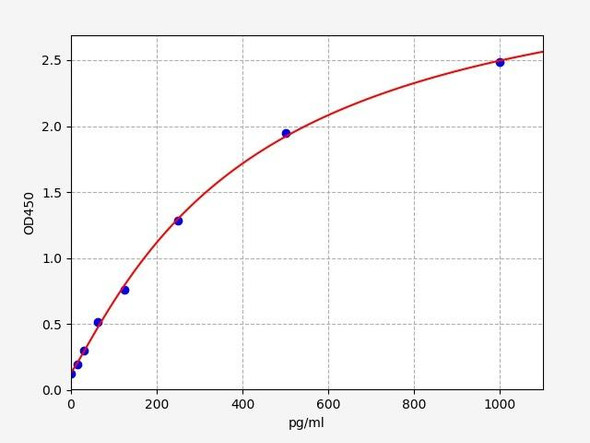

Human CAT (Catalase) ELISA Kit (HUFI07676)
- Product Code:
- HUFI07676
- Detection Method:
- Sandwich ELISA, Double Antibody
- Sensitivity:
- 9.375 pg/mL
- Range:
- 15.625-1000 pg/mL


Human MICA ELISA Kit (HUFI00015)
- Product Code:
- HUFI00015
- Detection Method:
- Sandwich ELISA, Double Antibody
- Sensitivity:
- 46.875 pg/mL
- Range:
- 78.125-5000 pg/mL

Fatty Acid Oxidation (FAO) Assay Kit (BR00001)
- Product Code:
- BR00001
- Instrument:
- Microplate Reader

Anti-Mouse IFNAR-1 In Vivo Antibody - Low Endotoxin (IVMB0202)
- Product Code:
- IVMB0202
- Antibody Type:
- Functional-Grade In Vivo Antibody
- Clone:
- MAR1-5A3
- Protein:
- IFNAR1
- Isotype:
- Mouse IgG1

Anti-Mouse CD25 In Vivo Antibody - Low Endotoxin (IVMB0148)
- Product Code:
- IVMB0148
- Antibody Type:
- Functional-Grade In Vivo Antibody
- Clone:
- PC61
- Protein:
- CD25
- Isotype:
- Rat IgG1 lambda

Anti-Mouse NK1.1 In Vivo Antibody - Low Endotoxin (IVMB0100)
- Product Code:
- IVMB0100
- Antibody Type:
- Functional-Grade In Vivo Antibody
- Clone:
- PK136
- Protein:
- NK1.1
- Isotype:
- Mouse IgG2a kappa
![Anti-Mouse PD-1 (CD279) [RMP1-14] In Vivo Antibody - Low Endotoxin](https://cdn11.bigcommerce.com/s-h68l9z2lnx/images/stencil/590x590/products/214372/569320/anti-mouse-pd-1-cd279-rmp1-14-in-vivo-antibody-low-endotoxin__18202.1743527968.jpg?c=2 "Anti-Mouse PD-1 (CD279) [RMP1-14] In Vivo Antibody - Low Endotoxin")
Anti-Mouse PD-1 Antibody [RMP1-14] In Vivo-Low Endotoxin (IVMB0037)
- Product Code:
- IVMB0037
- Antibody Type:
- Functional-Grade In Vivo Antibody
- Clone:
- RMP1-14
- Protein:
- PD-1
- Isotype:
- Rat IgG2a kappa


LSAMP Rabbit Polyclonal Antibody (CAB14248)
- Product Code:
- CAB14248
- Antibody Type:
- Polyclonal Antibody
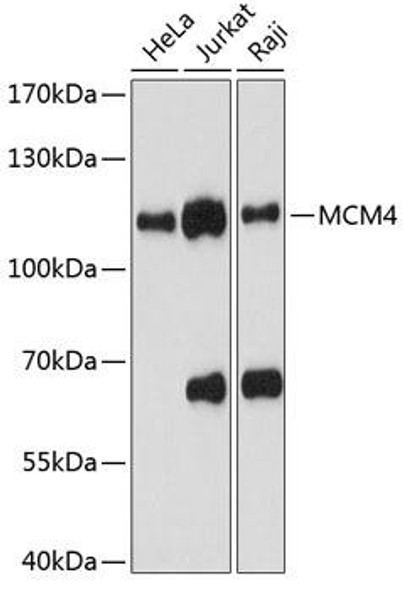
MCM4 Rabbit Polyclonal Antibody (CAB13513)
- Product Code:
- CAB13513
- Antibody Type:
- Polyclonal Antibody

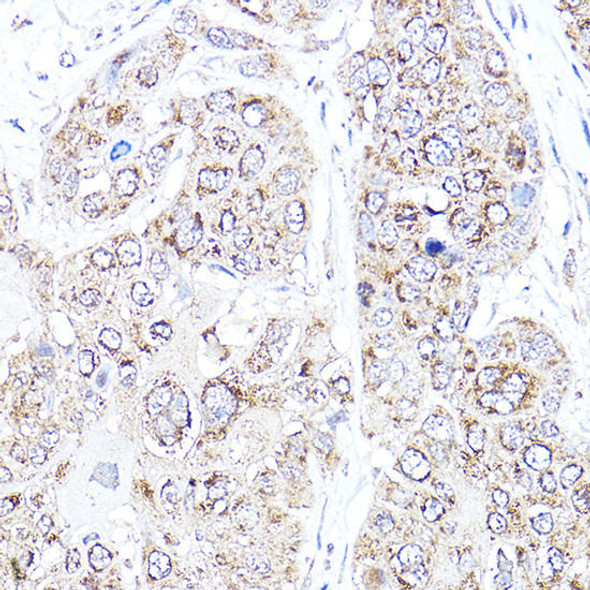
VEGF Rabbit Polyclonal Antibody (CAB12303)
- Product Code:
- CAB12303
- Antibody Type:
- Polyclonal Antibody

MDA ELISA Kit (UNFI0048)
- Product Code:
- UNFI0048
- Detection Method:
- Competitive ELISA, Coated with Antigen
- Sensitivity:
- 4.688 ng/mL
- Range:
- 7.813-500 ng/mL


Dopamine ELISA Kit (UNFI0013)
- Product Code:
- UNFI0013
- Detection Method:
- Competitive ELISA, Coated with Antigen
- Sensitivity:
- 0.938 ng/mL
- Range:
- 1.563-100 ng/mL

Serotonin ELISA Kit (UNFI0018)
- Product Code:
- UNFI0018
- Detection Method:
- Competitive ELISA, Coated with Antigen
- Sensitivity:
- 0.938 ng/mL
- Range:
- 1.563-100 ng/mL

PGE2 ELISA Kit (UNFI0032)
- Product Code:
- UNFI0032
- Detection Method:
- Competitive ELISA, Coated with Antigen
- Sensitivity:
- 18.75 pg/mL
- Range:
- 31.25-2000 pg/mL
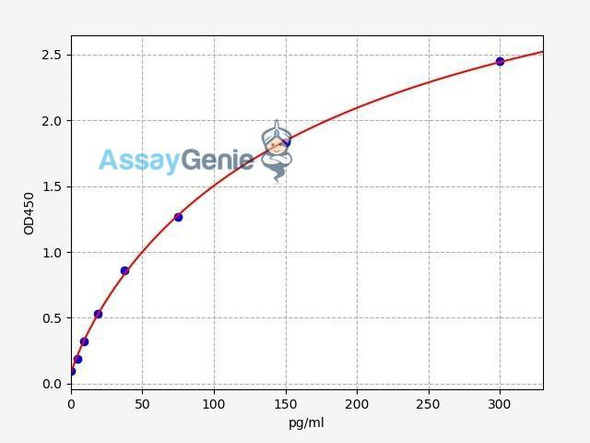
Human IL-6 ELISA Kit (HUFI00180)
- Product Code:
- HUFI00180
- Sensitivity:
- 2.813pg/ml
- Range:
- 4.688-300pg/ml
- ELISA Type:
- Sandwich
