
-
VEGF: Inflammation and Tumourigenesis(Post)
What is VEGF? Vascular Endothelial Growth Factors (VEGFs) are a group of homodimeric polypeptides, and are master regulators of vascular development, maintenance and a
COVID-19 15分のRAPID POCテスト(Post)COVID-19 15分のRAPID POCテスト 詳細については、hello @ assaygenie.comにお問い合わせください。 概観 Acro Biot
Biomarkers in sepsis: Their Role in Early Detection and Management (Post)Sepsis, a life-threatening condition, is characterized by a dysregulated immune
Sweet Deception: How a New Antibody Therapy Unmasks Pancreatic Cancer(Post)Sweet Deception: How a New Antibody Therapy Unmasks Pancreatic Cancer Sweet Deception: How a New Antibody Therapy Unmasks Pancreatic Cancer Pancreatic canc
TGF-Beta SMAD Signalling Pathway: Function, Readouts and Assays(Post)Almost all of the TGF-β in a tissue is already there, and almost none of it is active. That single fact reorganises how the pathway should be studied. Unlike most cytokines, TGF-β is deposited into t
Understanding Radial Glial Cells: Insights into Neurodevelopmental Processes(Post)Radial glial cells are essential in shaping the nervous system, serving dual roles in neurogenesis and structural support during the brain's developmental stages. Key Takeaways: Radi
Nod-Like Receptor Signaling Pathway: A Keystone in Innate Immunity(Post)The innate immune system, a primary line of defense against pathogens, comprises various cellular and molecular mechanisms. Among these, the Nod-like Receptor (NLR) signaling pathways play a criti
CRISPR-Cas Screening for Cell Viability(Post)Key Points Clustered Regularly Interspaced Short Palindromic Repeats (CRISPR) is a method of gene editing that uses t
Deprotonation: Unveiling the Chemistry Behind It(Post)Chemistry · Acid-BaseDeprotonation: Mechanism, pKa and Choosing the Right BaseDeprotonation is the removal of a proton from a molecule to give its conjugate base. Whether it happens, and how completel
Immunohistochemical Staining, Antibodies & Buffers(Page) Bone Resorption Explained: Process, Markers, and Clinical Insights(Post)Bone Biology · BiomarkersBone Resorption: Process, Markers & Clinical SignificanceBone resorption is the process by which osteoclasts break down bone tissue and release its stored minerals into the bl
What are MHC Class I and II molecules?(Post)What are MHC Class I molecules? The MHC class I is a glycoprotein that is expressed on all nucleated cells of the human body. MHC class I are important in disease defense against viruses, ba
Reprogramming Regulatory T Cells: A Breakthrough in Cancer Immunotherapy(Post)A New Dawn in Cancer Treatment: Reprogramming the Immune System's Own Soldiers For decades, the fight against cancer has been a relentless battle of attrition, with treatments like chemotherapy and r
ELISA Troubleshooting: When Standards Read Below the Blank(Post)Quick answer On the GDF-6 (Growth Differentiation Factor 6) ELISA Kit, a researcher saw an elevated blank (OD ≈ 0.41) with the two lowest standards reading at or below it, and no signa
Embryonic Induced Pluripotent Stem Cell Differentiation: Pathways and Lineage-Specific Markers(Post)Embryonic induced pluripotent stem cells (iPSCs) hold immense potential in the field of regenerative medicine due to their ability to differentiate into various cell types. Understanding the diffe
QuickStep ELISA Kits(Page)QuickStep ELISA Kits | 90-Minute 1-Wash Assays | Assay Genie
Resources(Page) IgA Test – Normal Ranges, Results & What They Mean(Post)Clinical · Immunology Guide IgA Test: Normal Ranges, Results & What They Mean [2026] What the immunoglobulin A blood test measures, how result
6 Schritte: ELISA Blockierpuffer nach Detektionschemie wählen(Post)Der richtige Startpunkt für die meisten ELISA‑Protokolle ist Magermilchpulver (NFDM) in TBST für HRP‑basierte Assays ohne Phospho‑Ziele, typischerweise in der gängigen Konzentrationsspanne. Bei St
The Research Pulse 2026: Where Biology Is Heading, According to PubMed and 300,000 Researcher Visits(Post)Research Pulse · Data study Where biology is heading: what PubMed and 300,000 researcher visits reveal We compared five years of PubMed publication counts with two years of researcher visits to Assa
Featured
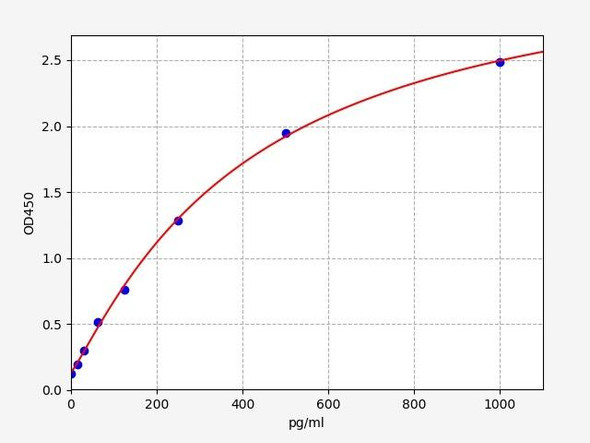

Human CAT (Catalase) ELISA Kit (HUFI07676)
- Product Code:
- HUFI07676
- Detection Method:
- Sandwich ELISA, Double Antibody
- Sensitivity:
- 9.375 pg/mL
- Range:
- 15.625-1000 pg/mL


Human MICA ELISA Kit (HUFI00015)
- Product Code:
- HUFI00015
- Detection Method:
- Sandwich ELISA, Double Antibody
- Sensitivity:
- 46.875 pg/mL
- Range:
- 78.125-5000 pg/mL

Fatty Acid Oxidation (FAO) Assay Kit (BR00001)
- Product Code:
- BR00001
- Instrument:
- Microplate Reader

Anti-Mouse IFNAR-1 In Vivo Antibody - Low Endotoxin (IVMB0202)
- Product Code:
- IVMB0202
- Antibody Type:
- Functional-Grade In Vivo Antibody
- Clone:
- MAR1-5A3
- Protein:
- IFNAR1
- Isotype:
- Mouse IgG1

Anti-Mouse CD25 In Vivo Antibody - Low Endotoxin (IVMB0148)
- Product Code:
- IVMB0148
- Antibody Type:
- Functional-Grade In Vivo Antibody
- Clone:
- PC61
- Protein:
- CD25
- Isotype:
- Rat IgG1 lambda

Anti-Mouse NK1.1 In Vivo Antibody - Low Endotoxin (IVMB0100)
- Product Code:
- IVMB0100
- Antibody Type:
- Functional-Grade In Vivo Antibody
- Clone:
- PK136
- Protein:
- NK1.1
- Isotype:
- Mouse IgG2a kappa

Anti-Mouse PD-1 Antibody [RMP1-14] In Vivo-Low Endotoxin (IVMB0037)
- Product Code:
- IVMB0037
- Antibody Type:
- Functional-Grade In Vivo Antibody
- Clone:
- RMP1-14
- Protein:
- PD-1
- Isotype:
- Rat IgG2a kappa


LSAMP Rabbit Polyclonal Antibody (CAB14248)
- Product Code:
- CAB14248
- Antibody Type:
- Polyclonal Antibody
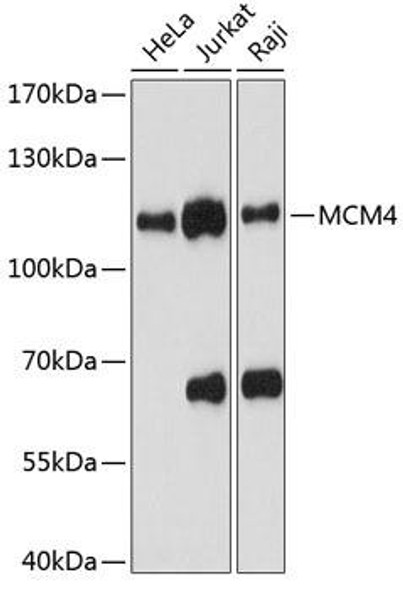
MCM4 Rabbit Polyclonal Antibody (CAB13513)
- Product Code:
- CAB13513
- Antibody Type:
- Polyclonal Antibody

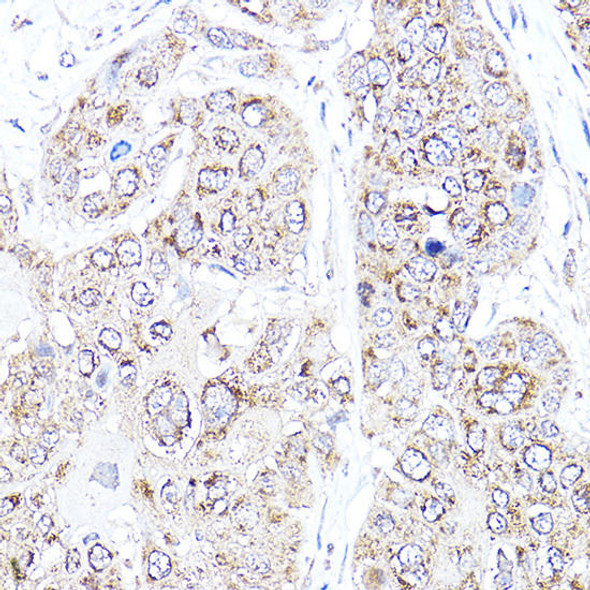
VEGF Rabbit Polyclonal Antibody (CAB12303)
- Product Code:
- CAB12303
- Antibody Type:
- Polyclonal Antibody

MDA ELISA Kit (UNFI0048)
- Product Code:
- UNFI0048
- Detection Method:
- Competitive ELISA, Coated with Antigen
- Sensitivity:
- 4.688 ng/mL
- Range:
- 7.813-500 ng/mL


Dopamine ELISA Kit (UNFI0013)
- Product Code:
- UNFI0013
- Detection Method:
- Competitive ELISA, Coated with Antigen
- Sensitivity:
- 0.938 ng/mL
- Range:
- 1.563-100 ng/mL

Serotonin ELISA Kit (UNFI0018)
- Product Code:
- UNFI0018
- Detection Method:
- Competitive ELISA, Coated with Antigen
- Sensitivity:
- 0.938 ng/mL
- Range:
- 1.563-100 ng/mL

PGE2 ELISA Kit (UNFI0032)
- Product Code:
- UNFI0032
- Detection Method:
- Competitive ELISA, Coated with Antigen
- Sensitivity:
- 18.75 pg/mL
- Range:
- 31.25-2000 pg/mL
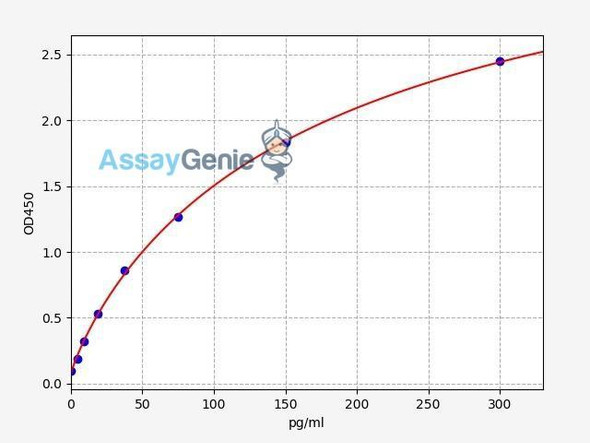
Human IL-6 ELISA Kit (HUFI00180)
- Product Code:
- HUFI00180
- Sensitivity:
- 2.813pg/ml
- Range:
- 4.688-300pg/ml
- ELISA Type:
- Sandwich
