
The Research Pulse 2026: Where Biology Is Heading, According to PubMed and 300,000 Researcher Visits
Where biology is heading: what PubMed and 300,000 researcher visits reveal
We compared five years of PubMed publication counts with two years of researcher visits to Assay Genie product pages. The result is a map of the research fields that are growing fastest, and the ones that are fading.
See the breakout fields →Key Takeaways
- PubMed grew about 10% between 2021 and 2025, but protein lactylation papers grew 47-fold and p-tau217 papers grew 22-fold.
- GLP-1 drug research grew six-fold and ferroptosis research five-fold over the same period.
- Neurofilament light (NfL), HbA1c, CRP, IL-6 and cellular senescence gained ground in both the literature and researcher visits over the past 12 months.
- COVID-19 research has fallen by 70% since its 2021 peak, and researcher interest has fallen with it.
- Blood-based biomarkers account for most of the growth.
Assays for the fastest-growing fields
Kits and antibodies for the markers featured in this study.
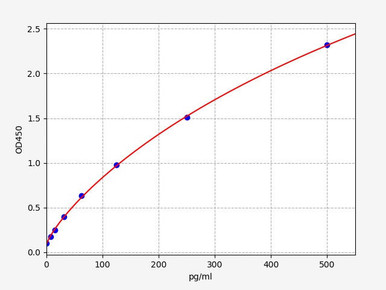
Human p-tau217 (Phospho Tau 217) ELISA Kit (AEFI00429)
Quantifies phospho-tau 217, the leading blood marker of Alzheimer’s pathology.
View kit →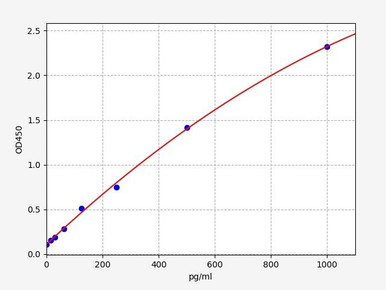
Human NEFL ELISA Kit (HUFI00944)
Measures neurofilament light, a sensitive marker of neuronal injury.
View kit →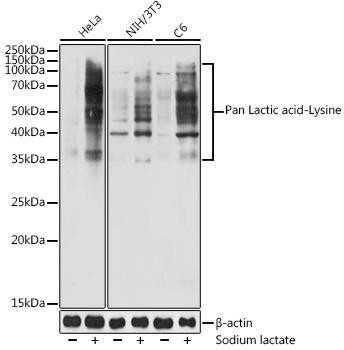
Anti-Lactyl-Lysine (Pan) Antibody
Detects lactylated lysine residues for histone and protein lactylation studies.
View antibody →
Senescence Associated Secretory Phenotype (SASP) ELISA Sampler Pack (SKFI0014)
A sampler pack of core senescence-associated secretory phenotype markers.
View pack →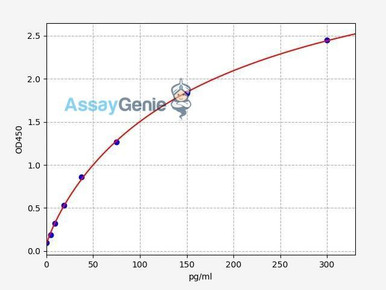
Human IL-6 ELISA Kit (HUFI00180)
Measures interleukin-6, the most widely studied inflammatory cytokine.
View kit →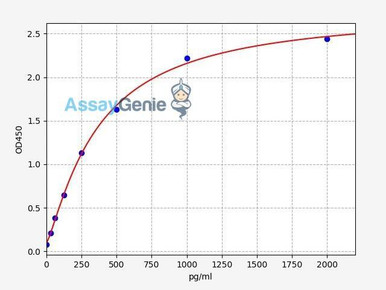
Human CRP ELISA Kit (HUFI00088)
Quantifies C-reactive protein for inflammation and cardiometabolic studies.
View kit →Every year the research community publishes about 1.7 million new papers. Some of those papers mark the start of a new field. Many more simply keep an established field going. Telling the two apart usually takes years.
We tried to do it faster by using two independent signals. The first is PubMed, which shows what scientists are publishing. The second is our own site data, which shows which assays and antibodies researchers look for when they plan an experiment. Publications show where a field has already been, and reagent searches show where it is going next. When the two agree, the trend is probably real.
1. The breakout fields
PubMed grew by about 10% between 2021 and 2025. The fields below grew much faster than that.
Protein lactylation (47×)
In 2019, researchers found that lactate, long treated as a metabolic waste product, can be attached to histones and change gene expression. Twenty papers mentioned lactylation in 2021. In 2025 there were 935, and the most recent 12 months came close to doubling again. Most of the work is in cancer metabolism, immunology and fibrosis. Lactylation antibodies are among the newest additions to our catalogue.
p-tau217 (22×)
Blood tests for phosphorylated tau-217 can now detect Alzheimer’s pathology with accuracy close to that of PET imaging or spinal fluid tests, and regulators have started to clear them for clinical use. Papers rose from 19 in 2021 to 422 in 2025, and output grew by another 143% in the latest 12 months.
GLP-1 drugs (6×)
Semaglutide and tirzepatide research has spread well beyond diabetes into obesity, cardiovascular, kidney and addiction studies. More of these molecules in trials also means more work on measuring the drugs themselves, including anti-drug antibody (immunogenicity) testing.
Ferroptosis, NfL and cellular senescence
These three have become established fields. Ferroptosis (5×) is a target in cancer, NfL (2.2×) has become the standard blood marker for neuronal injury, and senescence research (2.2×) underpins the growing interest in senolytic drugs.
COVID-19 (0.3×)
Pandemic-era research has fallen by 70% since its 2021 peak. Much of that effort has moved on to other areas.
2. Where publications and lab demand agree
We then checked each topic against how often researchers visited the matching Assay Genie product pages. We compared the 12 months to August 2026 with the 12 months before, and measured each topic as a share of all visits so that our own traffic trends would not affect the result.
Neurodegeneration blood markers
NfL gained share in both sources: papers were up 29%, and NfL’s share of product-page visits rose 63%. BDNF, a growth factor studied in depression, exercise and neurodegeneration, followed the same pattern.
Inflammation
IL-6 and CRP are two of the most measured proteins in biology, yet both gained ground this year. Their papers grew 23% and 27%, compared with 8% for PubMed overall. As more studies treat low-grade, chronic inflammation as a common factor in cardiometabolic disease, depression and ageing, these markers are being added to far more study designs.
Metabolic health
HbA1c papers rose 26%, and its share of visits rose 57%. This fits the growth in GLP-1 research, because nearly every metabolic intervention study reports HbA1c.
Biologics and immunogenicity
Papers on anti-drug antibodies grew 23%. Interest on our site grew much faster, although part of that growth comes from anti-drug antibody (ADA) kits we added during the year.
Ageing biology
Cellular senescence papers grew 39%, one of the strongest rises among established fields, and visits to our senescence and SASP panels held up better than the rest of our catalogue (share +17%).
3. What it means for labs
- Blood-based biomarkers are overtaking tissue-based ones. p-tau217, NfL, CRP and HbA1c can all be measured from a small blood or plasma sample, and they account for most of the growth.
- Metabolism and epigenetics are converging. Lactylation links a basic metabolite to gene regulation, and the tools for studying it are still new. It is a good field to enter early.
- Drug measurement is now a field of research in its own right. Biologics, biosimilars and GLP-1 drugs all need immunogenicity and drug-level assays.
Methodology
Publications. We counted PubMed records using the NCBI E-utilities API. Each topic was searched in titles and abstracts (for example, "p-tau217" OR ptau217 OR "phosphorylated tau 217"), and records were dated by when they entered PubMed. Five-year growth compares calendar 2021 with calendar 2025. Recent growth compares September 2025–August 2026 with September 2024–August 2025. Full search strings are available on request.
Researcher visits. We used Google Analytics 4 organic search sessions on Assay Genie product pages (ELISA kits, antibodies, assay kits and proteins) for the same two 12-month periods, 302,337 sessions in total. Pages were grouped into topics by matching keywords in their titles. Automated traffic, which is concentrated in direct and unattributed sessions, was excluded because we used only organic search. Each topic is reported as a share of all product-page sessions, and year-on-year change is the change in that share.
Limitations. Website visits are affected by search rankings and by the products in our catalogue, so they are a supporting signal rather than a census. Some topics have small numbers of visits, and their percentage changes should be read as directional. We report visit data only where it points the same way as the literature.
Data table
| Topic | Papers, 2021 | Papers, 2025 | Papers, last 12 months vs prior | Assay Genie visit share, last 12 months vs prior |
|---|---|---|---|---|
| Protein lactylation | 20 | 935 | +99% | New range |
| p-tau217 | 19 | 422 | +143% | −14% |
| GLP-1 drugs | 569 | 3,445 | +72% | −16% |
| Ferroptosis | 1,514 | 7,812 | +30% | −28% |
| Neurofilament light (NfL) | 497 | 1,103 | +29% | +63% |
| Cellular senescence | 1,248 | 2,761 | +39% | +17% |
| HbA1c | 4,794 | 6,106 | +26% | +57% |
| C-reactive protein (CRP) | 9,238 | 10,338 | +27% | +40% |
| IL-6 | 13,596 | 16,418 | +23% | +35% |
| BDNF | 2,085 | 2,499 | +23% | +106% |
| Anti-drug antibodies | 269 | 324 | +23% | +126% |
| 8-OHdG | 432 | 518 | +28% | +27% |
| COVID-19 / SARS-CoV-2 | 118,801 | 35,757 | −28% | −19% |
| All of PubMed | 1,542,819 | 1,699,871 | +8% | — |
Working in one of these fields?
Assay Genie supplies validated ELISA kits, multiplex assays and antibodies for biomarkers across neurodegeneration, inflammation, metabolism and ageing research.
Browse ELISA kits →FAQ
Which research fields are growing fastest in 2026?
Measured by PubMed papers per year between 2021 and 2025, protein lactylation (47×) and p-tau217 (22×) grew fastest in our study, followed by GLP-1 drugs (6×) and ferroptosis (5×). PubMed as a whole grew about 10%.
What is protein lactylation?
Lactylation is a modification in which a lactyl group, derived from lactate, is attached to lysine residues on histones and other proteins. First described in 2019, it links cellular metabolism to gene regulation and is studied in cancer, immunology and fibrosis.
Why is p-tau217 important?
Phosphorylated tau-217 in blood closely reflects Alzheimer’s disease pathology in the brain. Blood tests based on it offer a less invasive alternative to PET imaging and spinal fluid tests.
How was website data used without bot traffic?
We used only organic search sessions on product pages, which excludes the automated traffic concentrated in direct and unattributed sessions. Results are expressed as each topic’s share of visits so that overall traffic changes do not affect them.
Recent Posts
-
Suspected Plague Death at a Siberian Anti-Plague Institute: What Researchers Should Know
Infectious Disease · News AnalysisSuspected Plague Death at a Siberian Anti-Plague Institute: What …6th Oct 2026 -
LPS ELISA Troubleshooting: The Importance of Sample Nature
Quick answer A researcher measuring circulating lipopolysaccharide (LPS) in human serum …25th Sep 2026 -
Sekundärantikörper wählen: Die Regel, die im Labor wirklich zählt
Sekundärantikörper wählen: Die Regel, die im Labor wirklich zählt Wählen Sie einen Sekundärantikörp …24th Sep 2026