
-
Vixarelimab: A Novel Approach to Targeting Prurigo Nodularis and Fibrosis(Post)
Quick Facts About VixarelimabWhat is Vixarelimab?Vixarelimab is an investigational monoclonal antibody developed to target oncostatin M receptor beta (OSMRβ), a key pathway involved in p
Enhancing Cancer Research: Syngeneic Mouse Models and Immune Checkpoint Inhibitors(Post)Enhancing Cancer Research: Syngeneic Mouse Models and Immune Checkpoint Inhibitors A quick guide to Syngeneic Mouse Models Syngeneic Mouse Models Cancer research has seen rema
Typical Workflow of CRISPR-Cas9 Genome Editing(Post)Molecular Biology · ProtocolsTypical Workflow of CRISPR-Cas9 Genome EditingA CRISPR experiment is only as good as the steps around the cut. This guide walks the full workflow — designing and scoring a
CD27 Activation: Strengthening the Immune Army Against Cancer(Post)Harnessing the immune system to fight cancer has become a pivotal strategy in modern oncology. A key component in this fight is CD27, a receptor that plays a crucial role in T-cell activa
Tarextumab: Unlocking the Potential of Cancer Therapeutics(Post)Quick Facts About TarextumabWhat is Tarextumab?Tarextumab is a novel therapeutic antibody designed to target the Notch signaling pathway, which plays a crucial role in tumor progression
NLRP3 Inflammasome & Cytokine Secretion(Post)Nod-like receptors Nod like receptors (NLRs) are a versatile family of relatively recently discovered intracellular receptors which have a br
Senescence, the SASP and Immunosurveillance(Page) Varlilumab: Unlocking CD27’s Potential in Cancer Research(Post)What You Need to Know About VarlilumabWhat is Varlilumab?Varlilumab is a monoclonal antibody targeting CD27, a receptor on T-cells that plays a critical role in immune modulation.What is
Antigen Processing & Presentation(Page) Hybridoma Technology: Revolutionizing Antibody Production(Post)Immunology · Antibody ProductionHybridoma Technology: How Monoclonal Antibodies Are MadeHybridoma technology, pioneered by Georges Köhler and César Milstein in 1975, is the method that made monoclonal
Streptococcus pneumoniae: Pathogenesis, Diagnosis, and Treatment(Post)Microbiology · Bacterial PathogensStreptococcus pneumoniae: Pathogenesis, Diagnosis & TreatmentStreptococcus pneumoniae (the pneumococcus) is a Gram-positive, encapsulated bacterium that colonises the
Phosphatases and PTP1B – Mini review(Post)IntroductionThe human kinome is estimated to contain 518 genes, in comparison to the estimated 180 genes that comprise the phosphatome (Arena et al., 2005). These kinase genes represent a signif
B-Cell Receptor Signalling and the Germinal Centre Reaction(Post)The germinal centre is where antibody quality is made. A naive B cell that binds antigen does not become a source of protective, high-affinity IgG by accident. It passes through a tightly choreograph
Bcell germinal centre pathway(Page) T cell Immunophenotyping - A Guide(Post)Immunology · Flow CytometryT Cell Immunophenotyping: Markers, Subsets and Panel DesignImmunophenotyping identifies cell populations by the proteins on their surface. For T cells that means resolving n
The Research Pulse 2026: Where Biology Is Heading, According to PubMed and 300,000 Researcher Visits(Post)Research Pulse · Data study Where biology is heading: what PubMed and 300,000 researcher visits reveal We compared five years of PubMed publication counts with two years of researcher visits to Assa
Promising COVID-19 Therapeutics(Post)SARS-CoV-2, the causative viral agent of the novel coronavirus disease COVID-19, has sparked a global effort for creating prophylactic and therapeutic interventions. The following
Kreuzreaktivität ELISA: Praxisleitfaden für Forschende(Post)Kreuzreaktivität ELISA: Praxisleitfaden für Forschende Kreuzreaktivität im ELISA bedeutet, dass ein Antikörper an ein strukturell ähnliches Nicht-Ziel bindet und dadurch falsch-positive oder verfälsc
Understanding T Cell Fatigue: Implications for Immune Function and Therapeutic Interventions(Post)T cells are central players in adaptive immunity, responsible for recognizing and eliminating infected or aberrant cells. Upon encountering antigens, T cells undergo clonal expansion and differ
In Vivo Functional Grade Antibodies(Page)Featured
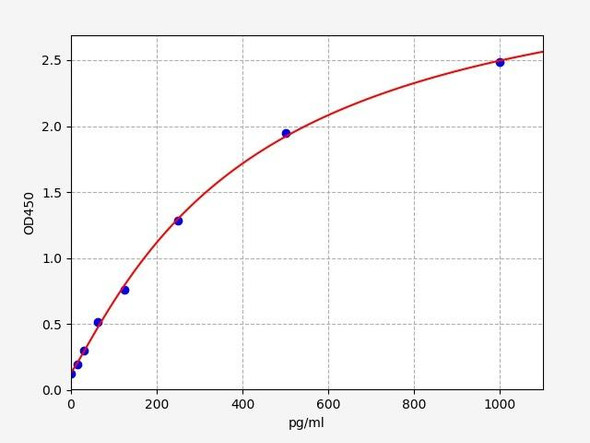

Human CAT (Catalase) ELISA Kit (HUFI07676)
- Product Code:
- HUFI07676
- Detection Method:
- Sandwich ELISA, Double Antibody
- Sensitivity:
- 9.375 pg/mL
- Range:
- 15.625-1000 pg/mL


Human MICA ELISA Kit (HUFI00015)
- Product Code:
- HUFI00015
- Detection Method:
- Sandwich ELISA, Double Antibody
- Sensitivity:
- 46.875 pg/mL
- Range:
- 78.125-5000 pg/mL

Fatty Acid Oxidation (FAO) Assay Kit (BR00001)
- Product Code:
- BR00001
- Instrument:
- Microplate Reader

Anti-Mouse IFNAR-1 In Vivo Antibody - Low Endotoxin (IVMB0202)
- Product Code:
- IVMB0202
- Antibody Type:
- Functional-Grade In Vivo Antibody
- Clone:
- MAR1-5A3
- Protein:
- IFNAR1
- Isotype:
- Mouse IgG1

Anti-Mouse CD25 In Vivo Antibody - Low Endotoxin (IVMB0148)
- Product Code:
- IVMB0148
- Antibody Type:
- Functional-Grade In Vivo Antibody
- Clone:
- PC61
- Protein:
- CD25
- Isotype:
- Rat IgG1 lambda

Anti-Mouse NK1.1 In Vivo Antibody - Low Endotoxin (IVMB0100)
- Product Code:
- IVMB0100
- Antibody Type:
- Functional-Grade In Vivo Antibody
- Clone:
- PK136
- Protein:
- NK1.1
- Isotype:
- Mouse IgG2a kappa
![Anti-Mouse PD-1 (CD279) [RMP1-14] In Vivo Antibody - Low Endotoxin](https://cdn11.bigcommerce.com/s-h68l9z2lnx/images/stencil/590x590/products/214372/569320/anti-mouse-pd-1-cd279-rmp1-14-in-vivo-antibody-low-endotoxin__18202.1743527968.jpg?c=2 "Anti-Mouse PD-1 (CD279) [RMP1-14] In Vivo Antibody - Low Endotoxin")
Anti-Mouse PD-1 Antibody [RMP1-14] In Vivo-Low Endotoxin (IVMB0037)
- Product Code:
- IVMB0037
- Antibody Type:
- Functional-Grade In Vivo Antibody
- Clone:
- RMP1-14
- Protein:
- PD-1
- Isotype:
- Rat IgG2a kappa


LSAMP Rabbit Polyclonal Antibody (CAB14248)
- Product Code:
- CAB14248
- Antibody Type:
- Polyclonal Antibody
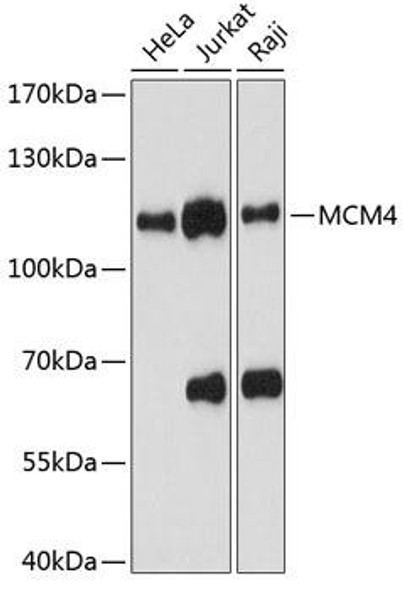
MCM4 Rabbit Polyclonal Antibody (CAB13513)
- Product Code:
- CAB13513
- Antibody Type:
- Polyclonal Antibody

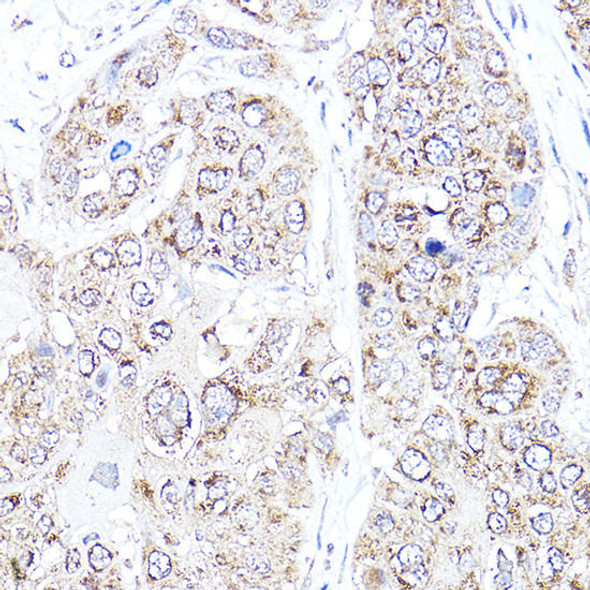
VEGF Rabbit Polyclonal Antibody (CAB12303)
- Product Code:
- CAB12303
- Antibody Type:
- Polyclonal Antibody

MDA ELISA Kit (UNFI0048)
- Product Code:
- UNFI0048
- Detection Method:
- Competitive ELISA, Coated with Antigen
- Sensitivity:
- 4.688 ng/mL
- Range:
- 7.813-500 ng/mL


Dopamine ELISA Kit (UNFI0013)
- Product Code:
- UNFI0013
- Detection Method:
- Competitive ELISA, Coated with Antigen
- Sensitivity:
- 0.938 ng/mL
- Range:
- 1.563-100 ng/mL

Serotonin ELISA Kit (UNFI0018)
- Product Code:
- UNFI0018
- Detection Method:
- Competitive ELISA, Coated with Antigen
- Sensitivity:
- 0.938 ng/mL
- Range:
- 1.563-100 ng/mL

PGE2 ELISA Kit (UNFI0032)
- Product Code:
- UNFI0032
- Detection Method:
- Competitive ELISA, Coated with Antigen
- Sensitivity:
- 18.75 pg/mL
- Range:
- 31.25-2000 pg/mL
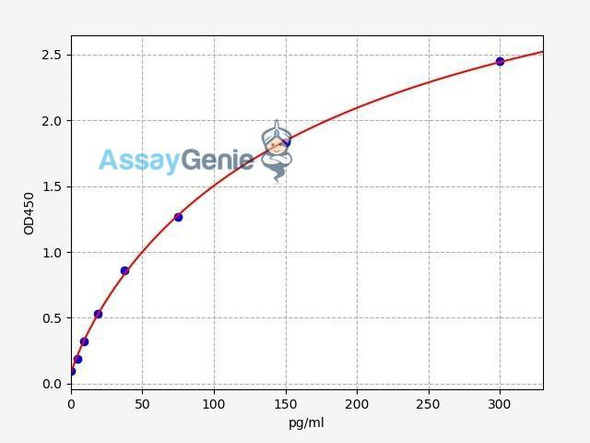
Human IL-6 ELISA Kit (HUFI00180)
- Product Code:
- HUFI00180
- Sensitivity:
- 2.813pg/ml
- Range:
- 4.688-300pg/ml
- ELISA Type:
- Sandwich
