
-
CIDE: The New Bioinformatics Engine Unmasking Secreted Proteins for Precision Immunotherapy(Post)
For decades, the battle against cancer has focused on the cellular 'soldiers' and the genetic 'blueprints' within them. Yet, a vast, invisible world of communication exists between these cells—a secr
Scicomm (Science Communication) tips for beginners! (Post)Science communication (Scicomm) is currently on the up. As rebellion against the increasing distrust of science stemmed from bigoted and ignorant leaders, scientists are turning to s
Tocilizumab: Advancing Therapeutics and Research with Biosimilars(Post)What You Need to Know About TocilizumabWhat is Tocilizumab?Tocilizumab is a monoclonal antibody that targets the interleukin-6 (IL-6) receptor, widely used for managing autoimmune and in
The Role of ACE2 in SARS-CoV-2(Post)Structure, Function, and Detection Assays for COVID-2019 Background The global spread of the novel cor
Co-Immunoprecipitation (co-IP) Protocol(Page) Chronic myelogenous leukaemia (CML) – Review(Post)Chronic myelogenous leukaemia (CML) is a myeloproliferative haematopoietic malignancy, characterised by a karyotypic abnormality present in more than 95% of cases known as the Philadelph
Articular Cartilage Extracellular Matrix(Post)Articular cartilage, a key player in joint function, owes its unique properties to its extracellular matrix (ECM). This complex, highly specialized structure is not only fundamental in maintaining
The Role of Tumor Suppressor Genes in Cancer: Knudson Hypothesis & Oncogenes(Post)Cancer Biology · GeneticsTumour Suppressor Genes: Roles, Examples & CancerTumour suppressor genes are the brakes on cell growth — they restrain proliferation, repair damaged DNA and trigger apoptosis
Privacy Policy(Page)Reagent Genie Website priva
The role of IFN gamma in inflammation, cancer and autoimmune disease(Post)Immunology · CytokinesIFN-gamma: Signalling, Function and Roles in Inflammation, Cancer and AutoimmunityInterferon gamma is the sole type II interferon and one of the most consequential cytokines in i
Phosphatases and PTP1B – Mini review(Post)IntroductionThe human kinome is estimated to contain 518 genes, in comparison to the estimated 180 genes that comprise the phosphatome (Arena et al., 2005). These kinase genes represent a signif
Fluorescence spectroscopy: An early detection tool for cancer.(Post)Millions of people are afflicted with cancer each year. 2016 statistics for the USA alone show over half a million deaths attributed to cancer 1. We have come a long way from our early underst
Innate Lymphoid Cells: ILC1, ILC2 & ILC3(Page) Exosomes - Discovery, Cargo, Biogenesis & Functions(Post)by Ryan Wallis, PhD student, QMUL, Blizard Institute The microscopic world of cell biology was first explored by Robert Hooke in the 17th century and published in his work, Microgra
A Guide To Tau Proteins & Tauopathies(Post)Neuroscience · BiomarkersA Guide to Tau Proteins & TauopathiesTau keeps the neuronal cytoskeleton standing up. When its phosphorylation goes wrong, the same protein becomes the aggregate that defines
The Ubiquitin Proteasome System in Neurodegenerative disease(Post)By Sinead Kinsella PhD The Ubiquitin Proteasome System (UPS) The Ubiquitin Proteasome System (UPS) is a regulatory machinery for protein turnover in t
Transmission of SARS-CoV-2 (COVID-19) via Droplets and Aerosols (Post)Transmission of SARS-CoV-2 (COVID-19) via Droplets and Aerosols What is COVID-19? COVID-19, the disea
CRISPR-Cas Screening for Cell Viability(Post)Key Points Clustered Regularly Interspaced Short Palindromic Repeats (CRISPR) is a method of gene editing that uses t
CD4 T-Helper Differentiation: Th1, Th2, Th17, Treg and Tfh(Post)The antigen tells a CD4 T cell to respond; the cytokine tells it what kind of response to make. A naive CD4⁺ T cell leaving the thymus is uncommitted. Within about seventy-two hours of engaging TCR/C
p53 Protein: Mutations, Cancer Signalling & Tumour Suppression(Post)Cancer Biology · Cell Signallingp53: Structure, Signalling, Regulation and Mutation in Cancerp53 is the most frequently mutated gene in human cancer, and the reason is structural: a single tetrameric
Featured
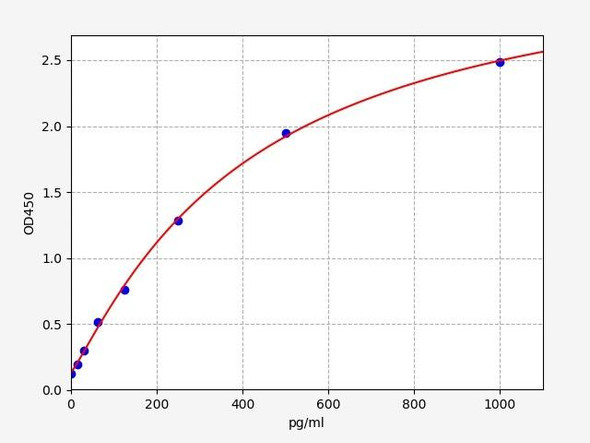

Human CAT (Catalase) ELISA Kit (HUFI07676)
- Product Code:
- HUFI07676
- Detection Method:
- Sandwich ELISA, Double Antibody
- Sensitivity:
- 9.375 pg/mL
- Range:
- 15.625-1000 pg/mL


Human MICA ELISA Kit (HUFI00015)
- Product Code:
- HUFI00015
- Detection Method:
- Sandwich ELISA, Double Antibody
- Sensitivity:
- 46.875 pg/mL
- Range:
- 78.125-5000 pg/mL

Fatty Acid Oxidation (FAO) Assay Kit (BR00001)
- Product Code:
- BR00001
- Instrument:
- Microplate Reader

Anti-Mouse IFNAR-1 In Vivo Antibody - Low Endotoxin (IVMB0202)
- Product Code:
- IVMB0202
- Antibody Type:
- Functional-Grade In Vivo Antibody
- Clone:
- MAR1-5A3
- Protein:
- IFNAR1
- Isotype:
- Mouse IgG1

Anti-Mouse CD25 In Vivo Antibody - Low Endotoxin (IVMB0148)
- Product Code:
- IVMB0148
- Antibody Type:
- Functional-Grade In Vivo Antibody
- Clone:
- PC61
- Protein:
- CD25
- Isotype:
- Rat IgG1 lambda

Anti-Mouse NK1.1 In Vivo Antibody - Low Endotoxin (IVMB0100)
- Product Code:
- IVMB0100
- Antibody Type:
- Functional-Grade In Vivo Antibody
- Clone:
- PK136
- Protein:
- NK1.1
- Isotype:
- Mouse IgG2a kappa

Anti-Mouse PD-1 Antibody [RMP1-14] In Vivo-Low Endotoxin (IVMB0037)
- Product Code:
- IVMB0037
- Antibody Type:
- Functional-Grade In Vivo Antibody
- Clone:
- RMP1-14
- Protein:
- PD-1
- Isotype:
- Rat IgG2a kappa


LSAMP Rabbit Polyclonal Antibody (CAB14248)
- Product Code:
- CAB14248
- Antibody Type:
- Polyclonal Antibody
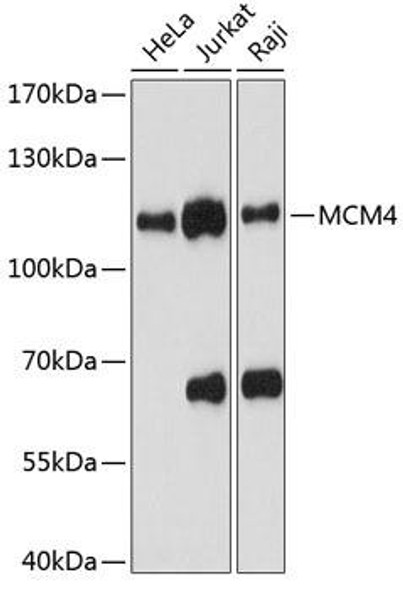
MCM4 Rabbit Polyclonal Antibody (CAB13513)
- Product Code:
- CAB13513
- Antibody Type:
- Polyclonal Antibody

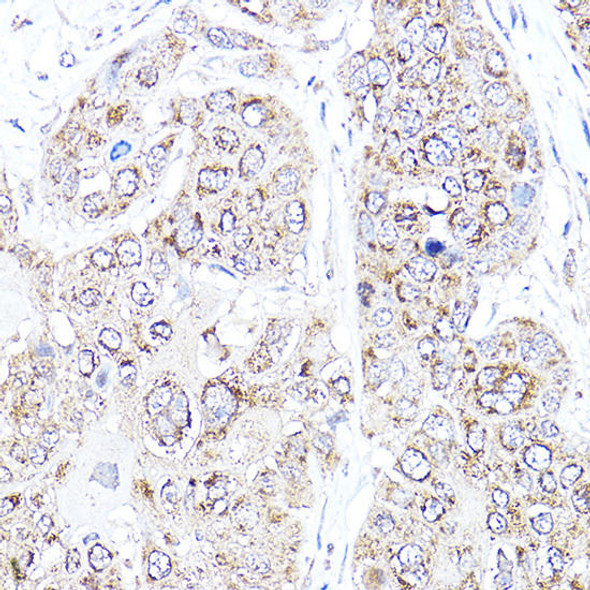
VEGF Rabbit Polyclonal Antibody (CAB12303)
- Product Code:
- CAB12303
- Antibody Type:
- Polyclonal Antibody

MDA ELISA Kit (UNFI0048)
- Product Code:
- UNFI0048
- Detection Method:
- Competitive ELISA, Coated with Antigen
- Sensitivity:
- 4.688 ng/mL
- Range:
- 7.813-500 ng/mL


Dopamine ELISA Kit (UNFI0013)
- Product Code:
- UNFI0013
- Detection Method:
- Competitive ELISA, Coated with Antigen
- Sensitivity:
- 0.938 ng/mL
- Range:
- 1.563-100 ng/mL

Serotonin ELISA Kit (UNFI0018)
- Product Code:
- UNFI0018
- Detection Method:
- Competitive ELISA, Coated with Antigen
- Sensitivity:
- 0.938 ng/mL
- Range:
- 1.563-100 ng/mL

PGE2 ELISA Kit (UNFI0032)
- Product Code:
- UNFI0032
- Detection Method:
- Competitive ELISA, Coated with Antigen
- Sensitivity:
- 18.75 pg/mL
- Range:
- 31.25-2000 pg/mL
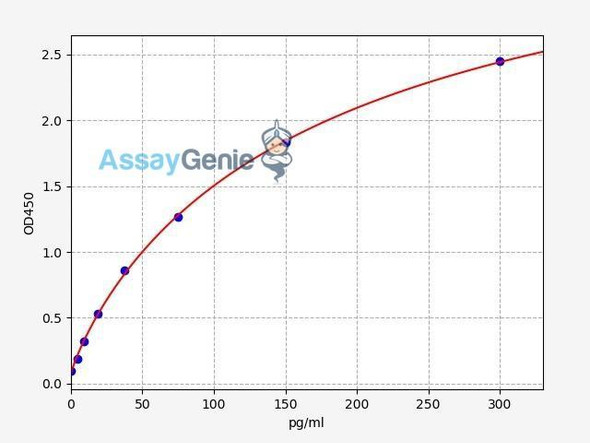
Human IL-6 ELISA Kit (HUFI00180)
- Product Code:
- HUFI00180
- Sensitivity:
- 2.813pg/ml
- Range:
- 4.688-300pg/ml
- ELISA Type:
- Sandwich
