
-
Influenza Hemagglutinin (HA) Subtypes and Flu Virus Strains: What You Need to Know(Post)
The flu is a highly contagious virus that affects the respiratory system. It can cause fever, muscle aches, and coughing. In some cases, it can lead to more serious health complicati
Tau proteins: An Overview (Post)The tau protein is a hot topic in the scientific world right now. This little-known protein has been linked to Alzheimer's disease, Parkinson's disease, and other neurodegenerative disea
Targeting Immune Checkpoints as Cancer Therapy(Post)The advent of immune checkpoint targeting marks a significant milestone in the oncological field, offering a beacon of hope for patients battling cancer. This innovative approach leverages the bod
Mitophagy: The Cell's Cleanup Crew for Healthy Living(Post)Mitophagy, a term derived from the fusion of "mitochondria" and "autophagy," represents a vital cellular process responsible for the targeted degradation and recycling of dysfunctional mitochon
Physiological Roles for IL-33 | Assay Genie(Post)By Charlotte O'Donnell PhD A role for IL-33 in Barrier Function and Epithelial Wound Healing
Unraveling the Synergy: How Growth Factors Cooperate to Promote Tumorigenesis(Post)In the intricate ballet of cellular communication and regulation, growth factors play pivotal roles in guiding the processes of cell growth, division, and differentiation. These proteins are essen
About Us(Page)About Assay Genie | Making Scientists Smile Since 2017
Antigen Processing & Presentation(Page) Sofort anwendbar: Probenverdünnung berechnen für Laborpraxis(Post)Sofort anwendbar: Probenverdünnung berechnen für Laborpraxis Die Verdünnung berechnen Sie mit der Formel C1·V1 = C2·V2. Meist suchen Sie V1, also das Volumen der Ausgangslösung: V1 = (C2·V2)/C1. Wich
Exosomes - Discovery, Cargo, Biogenesis & Functions(Post)by Ryan Wallis, PhD student, QMUL, Blizard Institute The microscopic world of cell biology was first explored by Robert Hooke in the 17th century and published in his work, Microgra
Inflammation and the aging process(Post)by Ryan Wallis, PhD Aging and Disease Imagine a world where everything you do is missing just a little piece and as time goes on you start to lose sense entirely. This is the deva
A Comprehensive Overview of Cell Death(Post)Cell death is an essential aspect of cellular biology that plays a crucial role in development, homeostasis, and disease. In this blog, we try to focus on mechanisms and various type
Inebilizumab: Advancing Research and Clinical Applications(Post)What You Need to Know About InebilizumabWhat is Inebilizumab?Inebilizumab is a humanized monoclonal antibody that targets CD19, a protein expressed on B cells, to treat autoimmune diseas
Hepatocyte growth factor (HGF) (Post)What is Hepatocyte Growth Factor? Hepatocyte growth factor (HGF) is a cytokine that is mainly produced by the liver. HGF is a pleiotrophic cytokine that regulates cell growth, motilit
LATS1/2 Kinases Review(Post)LATS kinases belong to a family of proteins that, in mammals, are comprised of two isoforms, LATS1 and LATS2. Originally identified in Drosophila melanogaster as Warts kinase, LATS1 and LATS2 se
Deprotonation: Unveiling the Chemistry Behind It(Post)Chemistry · Acid-BaseDeprotonation: Mechanism, pKa and Choosing the Right BaseDeprotonation is the removal of a proton from a molecule to give its conjugate base. Whether it happens, and how completel
Understanding the Autophagy Pathway: A Critical Process in Cellular Maintenance(Post)Cell Biology · Protein DegradationThe Autophagy Pathway: Mechanism, Regulation and How to Measure ItAutophagy is the cell’s route for degrading and recycling its own contents — damaged organelles, agg
Carbon Dioxide sensing in Immune Cells(Post)BRIEF HISTORY OF THE “GREEN” EVOLUTION OF OXYGEN AND CARBON DIOXIDE WITHIN OUR ATMOSPHERE Million years ago carbon dioxide (CO2) levels used to be conside
Exploring the Frontier of Immunotherapy: T Cell Expansion(Post)In the realm of immunotherapy, T cell expansion has emerged as a pivotal strategy, holding promise in the treatment of various diseases, particularly cancer. T cells are a critical component of
Cortisol and the Immune Response(Post)Endocrinology · ImmunologyCortisol and the Immune ResponseCortisol is the body’s primary stress hormone — a glucocorticoid released by the adrenal gland that powerfully shapes the immune system. Actin
Featured
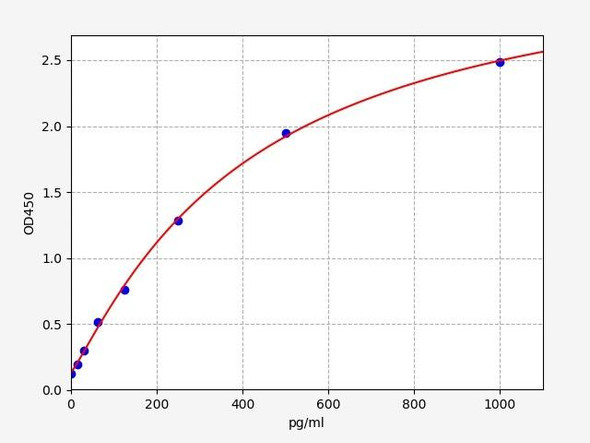

Human CAT (Catalase) ELISA Kit (HUFI07676)
- Product Code:
- HUFI07676
- Detection Method:
- Sandwich ELISA, Double Antibody
- Sensitivity:
- 9.375 pg/mL
- Range:
- 15.625-1000 pg/mL


Human MICA ELISA Kit (HUFI00015)
- Product Code:
- HUFI00015
- Detection Method:
- Sandwich ELISA, Double Antibody
- Sensitivity:
- 46.875 pg/mL
- Range:
- 78.125-5000 pg/mL

Fatty Acid Oxidation (FAO) Assay Kit (BR00001)
- Product Code:
- BR00001
- Instrument:
- Microplate Reader

Anti-Mouse IFNAR-1 In Vivo Antibody - Low Endotoxin (IVMB0202)
- Product Code:
- IVMB0202
- Antibody Type:
- Functional-Grade In Vivo Antibody
- Clone:
- MAR1-5A3
- Protein:
- IFNAR1
- Isotype:
- Mouse IgG1

Anti-Mouse CD25 In Vivo Antibody - Low Endotoxin (IVMB0148)
- Product Code:
- IVMB0148
- Antibody Type:
- Functional-Grade In Vivo Antibody
- Clone:
- PC61
- Protein:
- CD25
- Isotype:
- Rat IgG1 lambda

Anti-Mouse NK1.1 In Vivo Antibody - Low Endotoxin (IVMB0100)
- Product Code:
- IVMB0100
- Antibody Type:
- Functional-Grade In Vivo Antibody
- Clone:
- PK136
- Protein:
- NK1.1
- Isotype:
- Mouse IgG2a kappa

Anti-Mouse PD-1 Antibody [RMP1-14] In Vivo-Low Endotoxin (IVMB0037)
- Product Code:
- IVMB0037
- Antibody Type:
- Functional-Grade In Vivo Antibody
- Clone:
- RMP1-14
- Protein:
- PD-1
- Isotype:
- Rat IgG2a kappa


LSAMP Rabbit Polyclonal Antibody (CAB14248)
- Product Code:
- CAB14248
- Antibody Type:
- Polyclonal Antibody
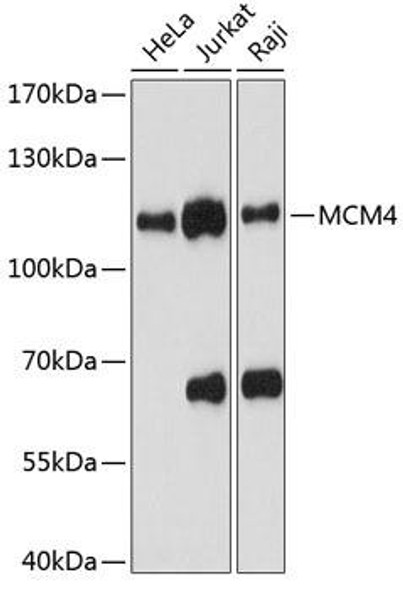
MCM4 Rabbit Polyclonal Antibody (CAB13513)
- Product Code:
- CAB13513
- Antibody Type:
- Polyclonal Antibody

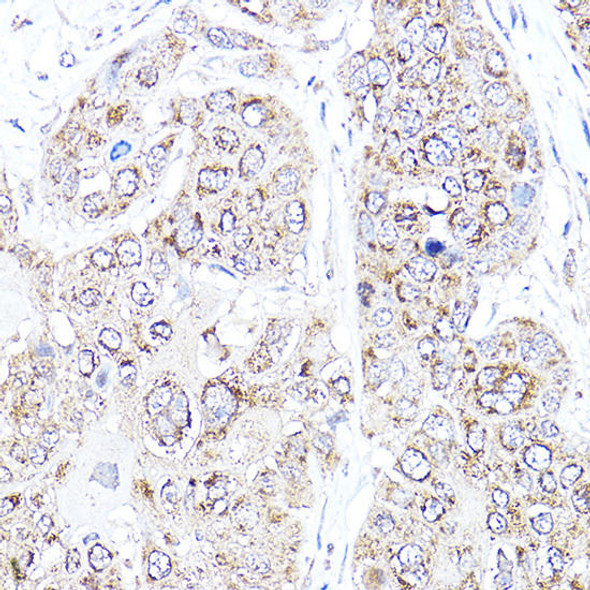
VEGF Rabbit Polyclonal Antibody (CAB12303)
- Product Code:
- CAB12303
- Antibody Type:
- Polyclonal Antibody

MDA ELISA Kit (UNFI0048)
- Product Code:
- UNFI0048
- Detection Method:
- Competitive ELISA, Coated with Antigen
- Sensitivity:
- 4.688 ng/mL
- Range:
- 7.813-500 ng/mL


Dopamine ELISA Kit (UNFI0013)
- Product Code:
- UNFI0013
- Detection Method:
- Competitive ELISA, Coated with Antigen
- Sensitivity:
- 0.938 ng/mL
- Range:
- 1.563-100 ng/mL

Serotonin ELISA Kit (UNFI0018)
- Product Code:
- UNFI0018
- Detection Method:
- Competitive ELISA, Coated with Antigen
- Sensitivity:
- 0.938 ng/mL
- Range:
- 1.563-100 ng/mL

PGE2 ELISA Kit (UNFI0032)
- Product Code:
- UNFI0032
- Detection Method:
- Competitive ELISA, Coated with Antigen
- Sensitivity:
- 18.75 pg/mL
- Range:
- 31.25-2000 pg/mL
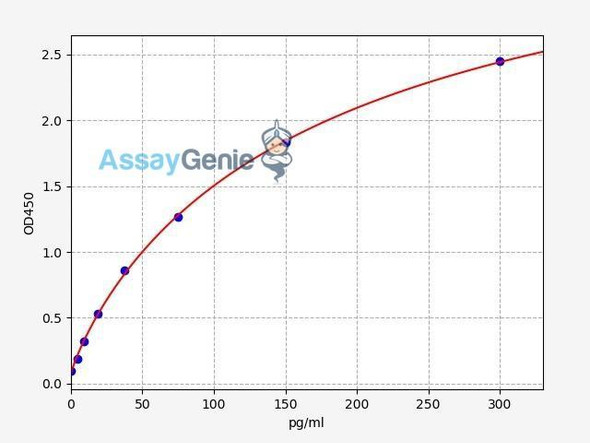
Human IL-6 ELISA Kit (HUFI00180)
- Product Code:
- HUFI00180
- Sensitivity:
- 2.813pg/ml
- Range:
- 4.688-300pg/ml
- ELISA Type:
- Sandwich
