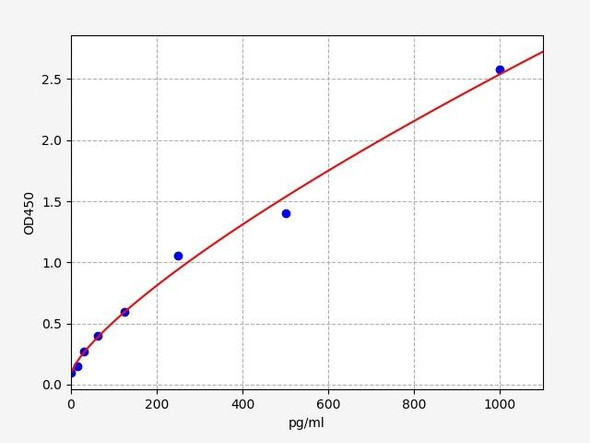
The Canine VEGF (Vascular Endothelial Growth Factor) ELISA Kit is a valuable tool for the precise measurement of VEGF levels in canine samples including serum, plasma, and tissue culture supernatants. This kit offers superior sensitivity and specificity, ensuring accurate and consistent results for a variety of research applications. VEGF is a key signaling protein involved in the formation of new blood vessels, a process known as angiogenesis. It plays a critical role in various physiological processes, including wound healing, organ development, and tumor growth.
By measuring VEGF levels, researchers can gain insights into the angiogenic activity in canine tissues and the role it plays in different diseases and conditions. This canine VEGF ELISA kit provides researchers with a reliable and efficient tool for studying angiogenesis in dogs, allowing for a better understanding of the mechanisms underlying vascular development and the potential implications for canine health and disease.
Product Name:
Canine VEGF ELISA Kit
SKU:
CNFI00022
Reactivity:
Canine
Assay Type:
Sandwich ELISA, Double Antibody
Sensitivity:
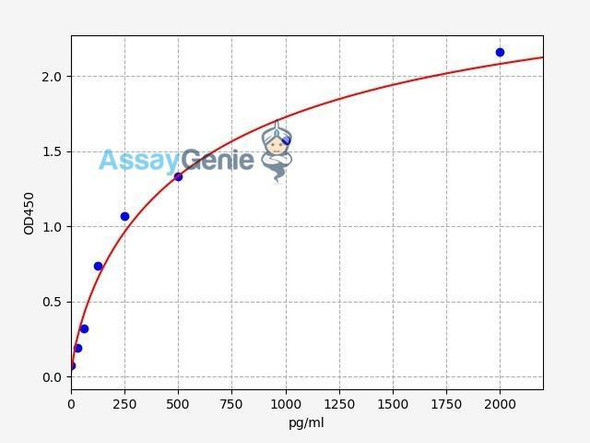
18.75 pg/mL
Range:
31.25-2000 pg/mL
Sample Type:
Serum, Plasma, Cell Culture Supernatant, Cell or Tissue Lysate, Other Liquid Samples
Storage:
2-8°C for 12 months.
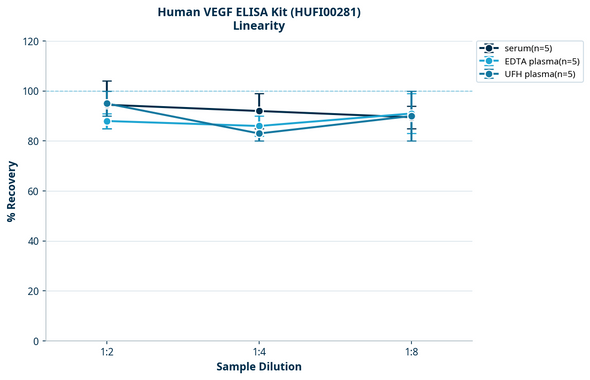
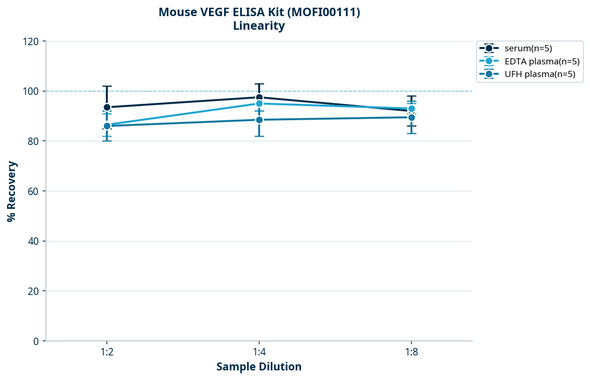
Linearity:
Sample
1:2
1:4
1:8
Serum (n = 5)
86-101%
87-103%
85-103%
EDTA Plasma (n = 5)
91-99%
85-99%
84-101%
Heparin Plasma (n = 5)
80-97%
81-99%
85-99%
Recovery:
Sample
Recovery Range (%)
Average (%)
Serum (n = 5)
89-102
97
EDTA Plasma (n = 5)
85-105
94
Heparin Plasma (n = 5)
89-102
95
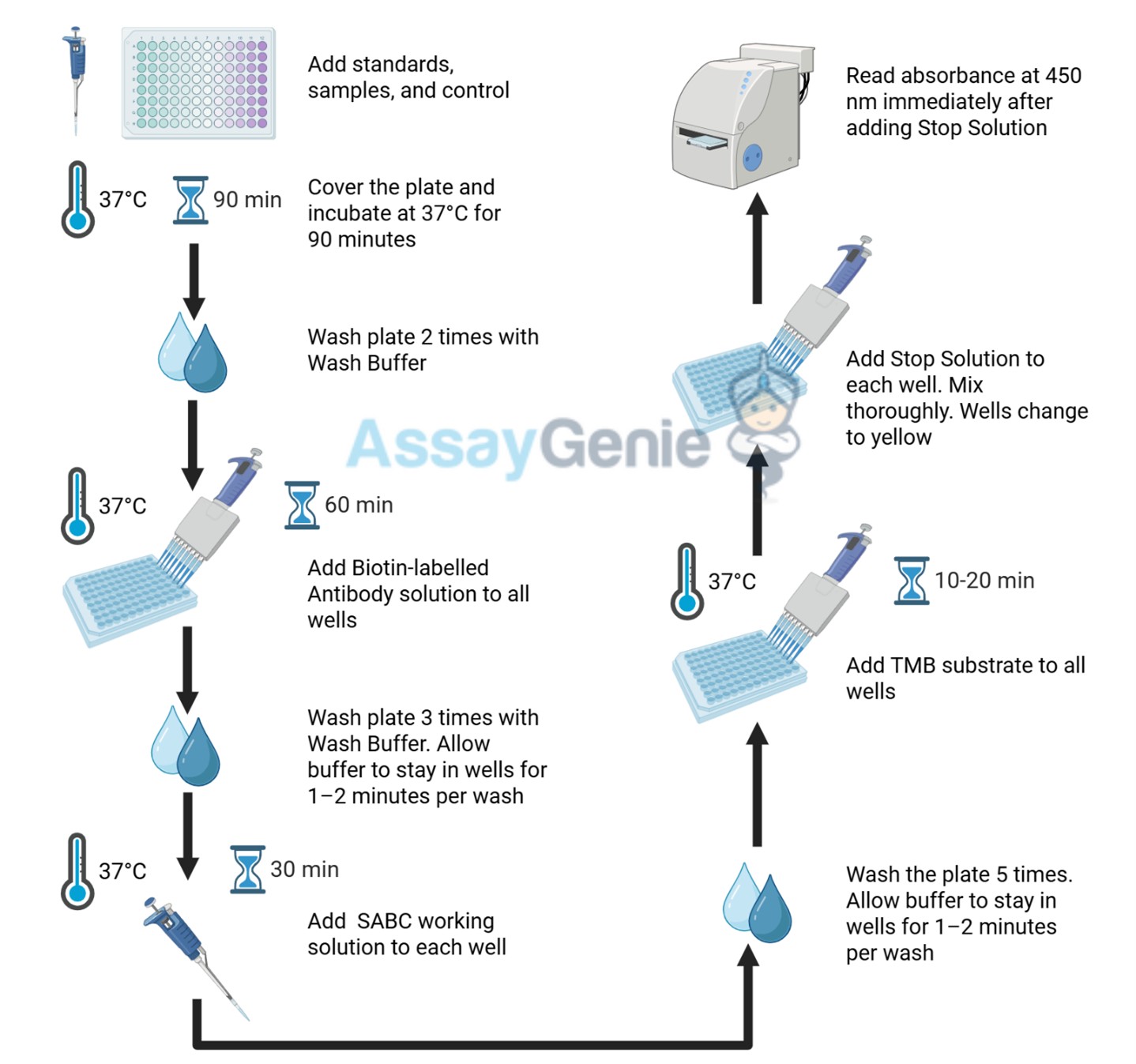
Note:The below protocol is a sample protocol. Protocols are specific to each batch/lot. For the correct instructions please follow the protocol included in your kit.
Step
Procedure
1
Reagent & Plate Preparation: Equilibrate reagents and TMB substrate to room temperature. Set standard, test sample and control (zero) wells on the pre-coated plate and record their positions.
2
Primary Incubation: Prepare standards, samples, blanks and load into designated wells. Incubate plate at 37°C for 90 minutes to allow antigen binding.
3
Detection Antibody Binding: Add biotin-labeled detection antibody and incubate at 37°C for 60 minutes.
4
HRP-Streptavidin Binding: Add HRP-Streptavidin (SABC) and incubate at 37°C for 30 minutes.
5
Color Development: Add TMB substrate and incubate in the dark for 10–20 minutes.
6
Stop Reaction & Reading: Add stop solution and measure absorbance at 450 nm immediately.
Sample Type
Protocol
Serum
Allow blood to clot, centrifuge at 1000 × g for 20 minutes, collect supernatant supernatant and store appropriately.
Plasma
Collect using anticoagulant tubes, centrifuge at 1000 × g for 15 minutes at 2–8°C and collect plasma.
Tissue Homogenate
Homogenize tissue in PBS with protease inhibitors, centrifuge and collect supernatant.
Cell Culture Supernatant
Centrifuge at 2500 rpm for 5 minutes and collect clarified supernatant.
Cell Lysate
Lyse cells using lysis buffer with protease inhibitors, centrifuge and collect protein supernatant.
Other Sample Types
For more information about how to process other sample types, (e.g., body fluids, breast milk & more), please contact our Tech Support Team at techsupport@assaygenie.com.
Component
Quantity
Storage
48T
96T
ELISA Microplate (Dismountable)
8×6
8×12
Place the test strips into a sealed foil bag with the desiccant. Store for 1 month at 2-8°C; Store for 12 months at -20°C.
Lyophilized Standard
1 vial
2 vial
Place the standards into a sealed foil bag with the desiccant. Store for 1 month at 2-8°C; Store for 12 months at -20°C.