
Cell Viability, Cytotoxicity & Proliferation Assays
Measure cell viability, cytotoxicity & growth
Whether you're screening drugs or testing toxicity, our assays quantify cell health three ways — metabolic viability, membrane-damage cytotoxicity and proliferation — with familiar, reliable microplate protocols.

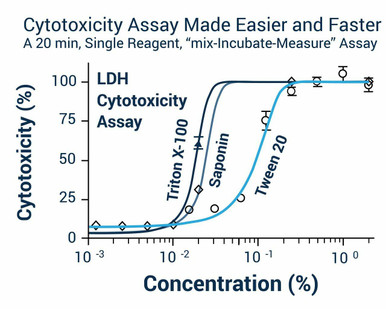
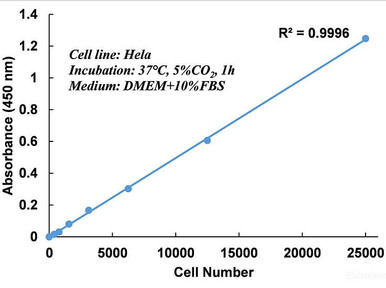
Which cell health assay do you need?
Viability, cytotoxicity and proliferation answer different questions. Pick what you want to measure and we'll show the matching kits.
Cell viability & proliferation range
Filter by read-out or search by assay or product code.
Why choose these assays?
Trusted chemistries for cell-health quantitation.
Three questions, one range
Metabolic viability, membrane-integrity cytotoxicity and proliferation covered.
Familiar & reliable
Classic MTT and modern CCK-8/WST-8 and LDH chemistries you can trust.
Screening-ready
Microplate formats suited to drug screening and toxicity testing.
Simple workflows
Add-and-read designs with straightforward absorbance or fluorescence detection.
Viability, cytotoxicity or proliferation?
These assays answer related but distinct questions. Viability assays (e.g. MTT) report the fraction of metabolically active cells; cytotoxicity assays (e.g. LDH release) report membrane damage and cell death; proliferation assays (e.g. CCK-8/WST-8) report the rate of cell division.
Choosing the right read-out — or combining them — gives an accurate picture of how cells respond to a treatment.
- Viability: MTT and general viability assays
- Cytotoxicity: LDH release and cytotoxicity kits
- Proliferation: CCK-8/WST-8 and MTT proliferation
- Live/dead discrimination by fluorescence
FAQs
What's the difference between viability, cytotoxicity and proliferation assays?
Viability assays measure metabolically active cells, cytotoxicity assays measure cell death or membrane damage (e.g. LDH release), and proliferation assays measure the rate of cell division. They are often used together.
MTT or CCK-8/WST-8 — which should I use?
Both measure metabolic activity via tetrazolium reduction. CCK-8/WST-8 uses a water-soluble formazan (no solubilisation step) and is generally more convenient and sensitive, while MTT is a long-established, economical standard.
How does an LDH assay measure cytotoxicity?
Lactate dehydrogenase released from cells with damaged membranes is measured in the medium; more LDH indicates more cell death, making it a marker of cytotoxicity.
Are these assays suitable for high-throughput screening?
Yes. The microplate formats and add-and-read workflows suit drug screening and toxicity testing in 96-well and higher-density plates.
Setting up a screening assay?
Our technical team can help you pick the right viability, cytotoxicity or proliferation read-out for your cells.