Phospho-S6 Ribosomal Protein (RPS6)-S240/244 Antibody (CABP0537)
The Phospho-S6 Ribosomal Protein (RPS6)-S240/244 Antibody (CABP0537) is a high-quality antibody developed for reliable detection and analysis of target proteins. This antibody, raised in rabbits, is highly specific for human samples and is validated for use in Western blot applications. By binding to the phosphorylated RPS6 protein, this antibody enables precise detection and analysis in a variety of cell types, making it an essential tool for studies in cell signaling and protein phosphorylation.The phosphorylation of RPS6 at Ser240-244 is a critical regulatory event in the mTOR signaling pathway, which plays a key role in cell growth, proliferation, and metabolism.
This antibody is validated for use in WB, IHC-P, IP, ELISA applications and has demonstrated reactivity against Human, Mouse, Rat samples.
Product Name:
Phospho-S6 Ribosomal Protein (RPS6)-S240/244 Antibody
SKU:
CABP0537
Size:
20μL, 100μL
Reactivity:
Human, Mouse, Rat
Conjugate:
Unconjugated
Immunogen:
Synthetic peptide. This information is considered to be commercially sensitive.
Sequence:
STSK S
Tested Applications:
WBIHC-PIPELISA
Recommended Dilution:
WB
1:500 - 1:2000
IHC-P
1:50 - 1:200
IP
0.5μg-4μg antibody for 200μg-400μg extracts of whole cells
ELISA
Recommended starting concentration is 1 μg/mL. Please optimize the concentration based on your specific assay requirements.
Synonyms:
S6, eS6, Phospho-S6 Ribosomal Protein (RPS6)-S240/244
Positive Sample:
HeLa treated with 10% FBS, NIH/3T3 treated with 10% FBS
Cellular Localization:
Cytoplasm, Cytoplasmic Ribonucleoprotein Granule, Cytosol, Cytosolic Ribosome, Endoplasmic Reticulum, Nucleolus, Nucleoplasm, Nucleus, Perinuclear Region Of Cytoplasm.
Calculated MW:
29kDa
Observed MW:
36kDa
Ribosomes, the organelles that catalyze protein synthesis, consist of a small 40S subunit and a large 60S subunit. Together these subunits are composed of 4 RNA species and approximately 80 structurally distinct proteins. This gene encodes a cytoplasmic ribosomal protein that is a component of the 40S subunit. The protein belongs to the S6E family of ribosomal proteins. It is the major substrate of protein kinases in the ribosome, with subsets of five C-terminal serine residues phosphorylated by different protein kinases. Phosphorylation is induced by a wide range of stimuli, including growth factors, tumor-promoting agents, and mitogens. Dephosphorylation occurs at growth arrest. The protein may contribute to the control of cell growth and proliferation through the selective translation of particular classes of mRNA. As is typical for genes encoding ribosomal proteins, there are multiple processed pseudogenes of this gene dispersed through the genome.
Purification Method
Affinity purification
Gene ID
6194
RRID
AB_2771524
Buffer Information
Store at -20℃. Avoid freeze / thaw cycles. Buffer: PBS containing 50% glycerol, preserved with proclin300 or sodium azide, pH 7.3.
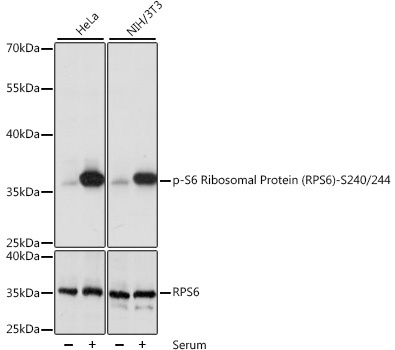
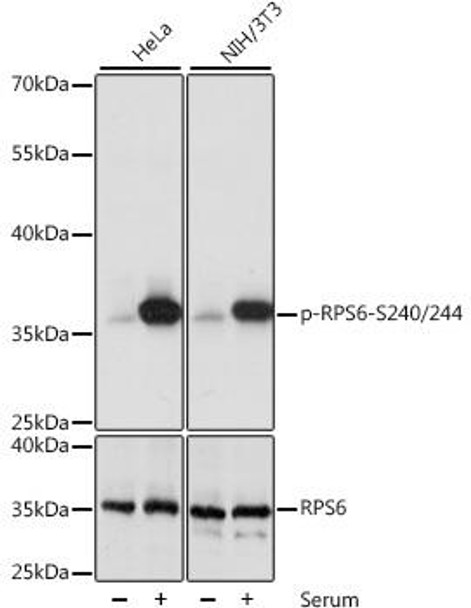
Western blot analysis of various lysates using Phospho-S6 Ribosomal Protein (RPS6)-S240/244 Rabbit pAb (CABP0537) at 1:1000 dilution or RPS6 antibody (CAB6058). HeLa and NIH/3T3 cells were treated with 10% FBS at 37℃ for 30 minutes after serum-starvation overnight. Secondary antibody: HRP-conjugated Goat anti-Rabbit IgG (H+L) (CABS014) at 1:10000 dilution. Lysates/proteins: 25μg per lane. Blocking buffer: 3% BSA. Detection: ECL Basic Kit (AbGn00020). Exposure time: 1s.
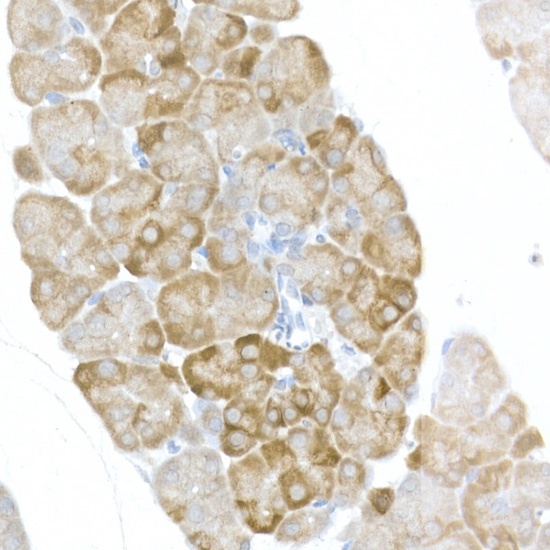
Immunohistochemistry analysis of paraffin-embedded Mouse pancreas using Phospho-S6 Ribosomal Protein (RPS6)-S240/244 Rabbit pAb (CABP0537) at dilution of 1:50 (40x lens). High pressure antigen retrieval performed with 0.01M Citrate buffer (pH 6.0) prior to IHC staining.
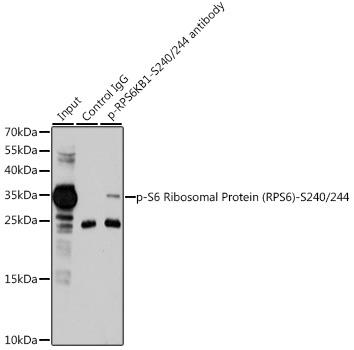
Immunoprecipitation analysis of 200 μg extracts of 293T cells, using 3 μg Phospho-S6 Ribosomal Protein (RPS6)-S240/244 pAb (CABP0537). Western blot was performed from the immunoprecipitate using Phospho-RPS6-S240/244 pAb (CABP0537) at a dilution of 1:1000. 293T cells were treated with PMA/TPA (200 nM) at 37℃ for 30 minutes after serum-starvation overnight.