The Human TXB2 (Thromboxane B2) ELISA Kit offered by Assaygenie is a powerful tool for accurately measuring levels of TXB2 in human samples, including serum, plasma, and cell culture supernatants. This kit is known for its high sensitivity and specificity, ensuring precise and reproducible results for a variety of research applications. Thromboxane B2 is a critical molecule involved in platelet aggregation and vasoconstriction, playing a key role in various pathological conditions such as cardiovascular diseases, inflammation, and clot formation. By measuring TXB2 levels using this ELISA kit, researchers can gain valuable insights into the mechanisms underlying these conditions and potentially develop new therapeutic strategies. Rely on the Human TXB2 (Thromboxane B2) ELISA Kit from Assaygenie for accurate and reliable quantification of TXB2 levels, and propel your research forward in the field of cardiovascular and inflammatory diseases.
Product Name:
Human TXB2 (Thromboxane B2) ELISA Kit
SKU:
HUES03086
Size:
96 Assays
Detection Method:
Colorimetric method, ELISA, Competitive
Assay type:
Competitive-ELISA
Assay time:
2 h 30 min
Sensitivity:
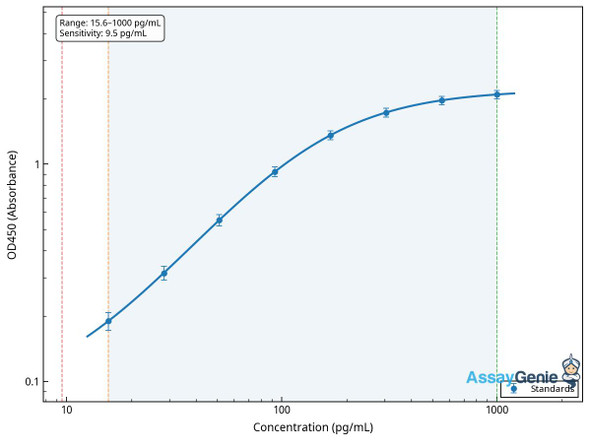
46.88 pg/mL
Detection range:
78.13-5000 pg/mL
Reovery:
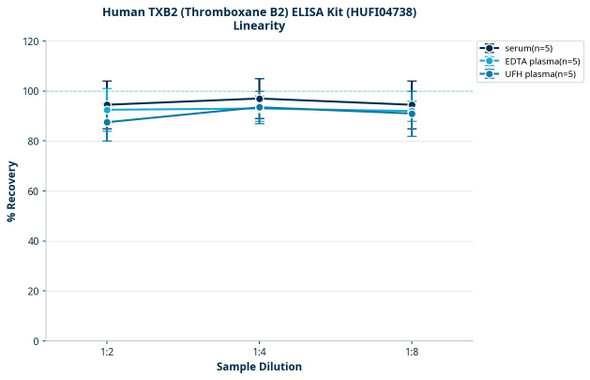
80%-120%
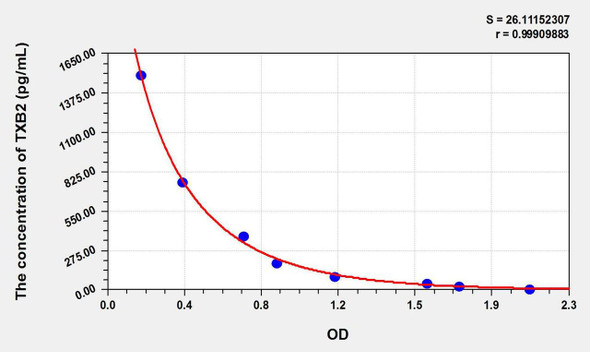
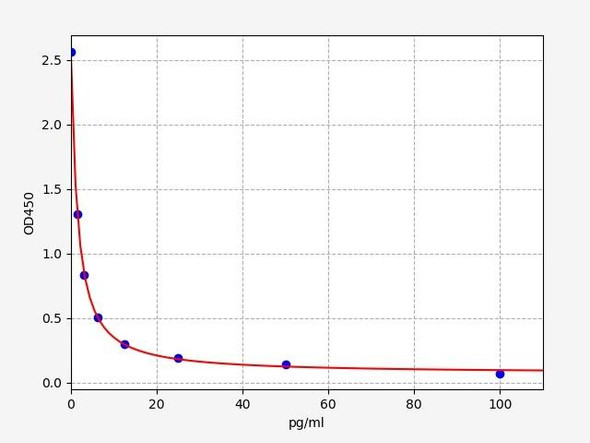
This ELISA kit uses the Competitive-ELISA principle. The micro ELISA plate provided in this kit has been pre-coated with the target antigen. Standards or samples are added along with a biotinylated detection antibody. The target antigen present in the sample competes with the immobilized antigen for binding to the detection antibody. After incubation, Avidin-Horseradish Peroxidase (HRP) conjugate is added. Free components are washed away. The substrate solution is then added, resulting in a color change. The intensity of the color is inversely proportional to the concentration of the target antigen in the sample. The reaction is stopped by the addition of stop solution, and the color changes from blue to yellow. The optical density (OD) is measured at 450 nm ± 2 nm. The concentration of the target protein is calculated by comparing the OD values of the samples to the standard curve.