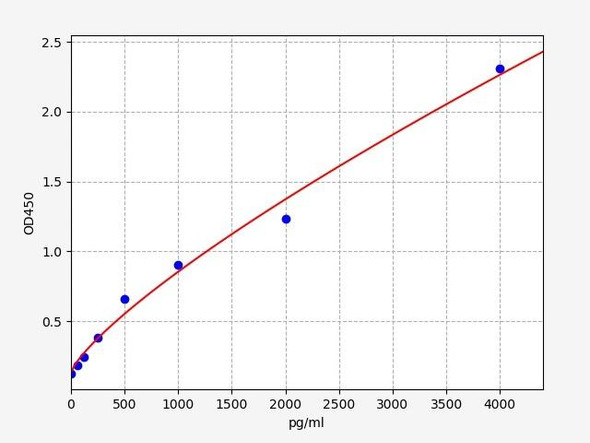
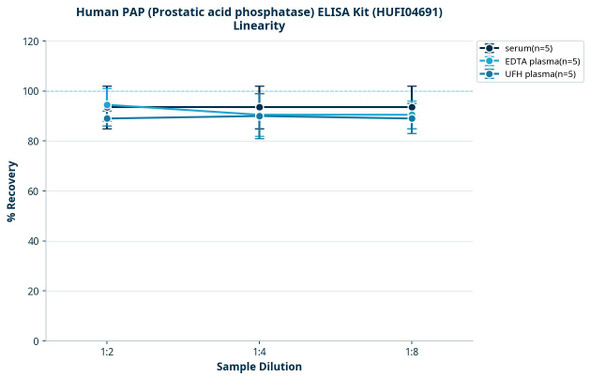
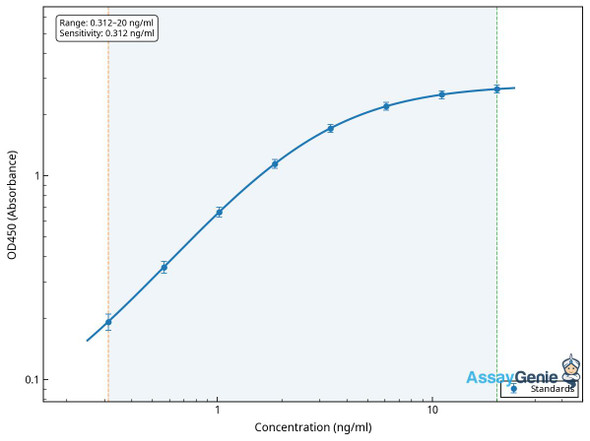
The Mouse ACP3/PAP (Prostatic Acid Phosphatase) ELISA Kit is designed for the quantitative detection of Mouse ACP3/PAP (Prostatic Acid Phosphatase) levels in various biological samples. Protein S (PROS1) is a vitamin K-dependent anticoagulant glycoprotein synthesized in the liver, megakaryocytes, and endothelial cells that functions as an essential cofactor for activated Protein C in the proteolytic inactivation of coagulation factors Va and VIIIa. Inherited or acquired Protein S deficiency leads to a hypercoagulable state associated with an increased risk of venous thromboembolism, making its accurate quantification critical in the evaluation of thrombophilia, anticoagulant monitoring, and coagulation disorder research. Assay Genie's Mouse ACP3/PAP (Prostatic Acid Phosphatase) ELISA Kit offers exceptional sensitivity and specificity with a sensitivity of 46.88 pg/mL, ensuring reliable and reproducible results across a broad range of sample types including serum, plasma and other biological fluids. Manufactured under stringent quality control standards, this ELISA kit provides robust performance and ease of use, making it an outstanding choice for both research and clinical applications. Trust Assay Genie's Mouse ACP3/PAP (Prostatic Acid Phosphatase) ELISA Kit for accurate and dependable quantification of this crucial biomarker in your studies.
This ELISA kit uses the Sandwich-ELISA principle. The micro ELISA plate provided in this kit has been pre-coated with an antibody specific to the target protein. Standards or samples are added to the micro ELISA plate wells and bind to the immobilized antibody. A biotinylated detection antibody specific to the target protein is then added, followed by Avidin-Horseradish Peroxidase (HRP) conjugate. Free components are washed away. The substrate solution is added to each well, resulting in a color change. Only wells containing the target protein, detection antibody, and HRP conjugate will develop a blue color. The reaction is terminated by the addition of stop solution, resulting in a yellow color. The optical density (OD) is measured at 450 nm ± 2 nm. The OD value is directly proportional to the concentration of the target protein in the sample and is determined using a standard curve.