The PCSK2 Polyclonal Antibody (PAC053710) is a valuable tool for research involving PCSK2, a proprotein convertase enzyme involved in the processing of prohormones and neuropeptides. This antibody, generated in rabbits, has high specificity for human samples and is validated for use in Western blot applications. By binding to PCSK2, it enables the detection and analysis of this enzyme in various cell types, making it an ideal choice for studies in endocrinology and neuroscience research.PCSK2 plays a crucial role in the processing of prohormones and neuropeptides, impacting various physiological processes such as metabolism, appetite regulation, and stress response.
Its dysregulation has been implicated in conditions like diabetes, obesity, and neurological disorders, making it a promising target for therapeutic interventions. Investigating the function of PCSK2 is essential for understanding its role in health and disease, paving the way for potential treatments and interventions in these areas.
Antibody Name:
Pcsk2 Antibody (PACO53710)
Antibody SKU:
PACO53710
Size:
50ug
Host Species:
Rabbit
Tested Applications:
ELISA, WB
Recommended Dilutions:
ELISA:1:2000-1:10000, WB:1:500-1:5000
Species Reactivity:
Rat, Human
Immunogen:
Recombinant Rat Neuroendocrine convertase 2 protein (109-637AA)
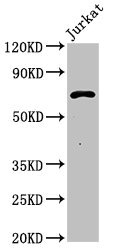
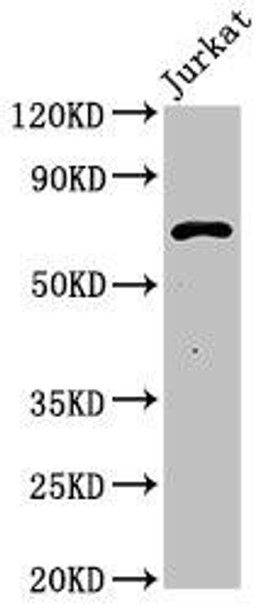
Western Blot. Positive WB detected in: Jurkat whole cell lysate. All lanes: Pcsk1 antibody at 3µg/ml. Secondary. Goat polyclonal to rabbit IgG at 1/50000 dilution. Predicted band size: 71 kDa. Observed band size: 71 kDa.
Background:
Involved in the processing of hormone and other protein precursors at sites comprised of pairs of basic amino acid, residues. Responsible for the release of glucagon from proglucagon in pancreatic A cells (By similarity).
PCSK2: Involved in the processing of hormone and other protein precursors at sites comprised of pairs of basic amino acid residues. Belongs to the peptidase S8 family. Furin subfamily. 2 isoforms of the human protein are produced by alternative splicing.Protein type: Protease; EC 3.4.21.94Chromosomal Location of Human Ortholog: 20p11.2Cellular Component: extracellular space; transport vesicle; membrane; dendrite; perikaryonMolecular Function: protein binding; serine-type endopeptidase activity; protein complex bindingBiological Process: insulin processing; nervous system development; protein autoprocessing; cellular protein metabolic process; proteolysis
UniProt Protein Details:
NCBI Summary:
This gene encodes a member of the subtilisin-like proprotein convertase family, which includes proteases that process protein and peptide precursors trafficking through regulated or constitutive branches of the secretory pathway. The protein undergoes an initial autocatalytic processing event and interacts with a neuroendocrine secretory protein in the ER, exits the ER and sorts to secretory granules, where it is cleaved and catalytically activated during intracellular transport. The encoded protease is packaged into and activated in dense core secretory granules and expressed in the neuroendocrine system and brain. This gene encodes one of the seven basic amino acid-specific members which cleave their substrates at single or paired basic residues. It functions in the proteolytic activation of polypeptide hormones and neuropeptides precursors. Single nucleotide polymorphisms in this gene may increase susceptibility to myocardial infarction and type 2 diabetes. This gene may also play a role in tumor development and progression. Alternatively spliced transcript variants encoding multiple isoforms have been observed for this gene. [provided by RefSeq, Jan 2014]