The PSMC2 Antibody (CAB1985) is a high-quality antibody developed for reliable detection and analysis of target proteins. This antibody, produced in rabbits, is highly specific for human samples and has been validated for use in Western blot applications. By binding specifically to the PSMC2 protein, this antibody enables the detection and analysis of PSMC2 expression in a variety of cell types, making it an essential reagent for studies in cell biology, protein degradation mechanisms, and disease pathways.PSMC2, a key player in the proteasome complex, is crucial for maintaining cellular homeostasis by degrading damaged or misfolded proteins.
This antibody is validated for use in WB, ELISA applications and has demonstrated reactivity against Human, Mouse, Rat samples.
Product Name:
PSMC2 Antibody
SKU:
CAB1985
Size:
20μL, 100μL
Reactivity:
Human, Mouse, Rat
Conjugate:
Unconjugated
Immunogen:
Recombinant protein (or fragment).This information is considered to be commercially sensitive.
Recommended starting concentration is 1 μg/mL. Please optimize the concentration based on your specific assay requirements.
Synonyms:
S7, MSS1, RPT1, Nbla10058, PSMC2
Positive Sample:
HepG2, SW620, BT474, DUCAR3, 293T, mouse spleen, mouse brain, rat testis, rat liver, BT-474, OVCAR3, NCI-H460
Cellular Localization:
Cytoplasm, Nucleus, P-Body.
Calculated MW:
49kDa
Observed MW:
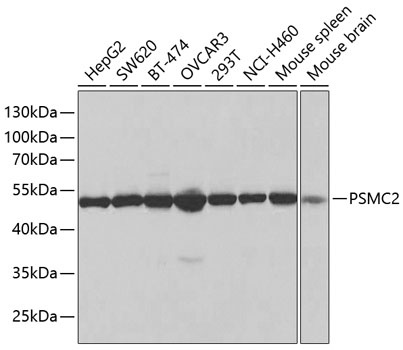
49kDa
The 26S proteasome is a multicatalytic proteinase complex with a highly ordered structure composed of 2 complexes, a 20S core and a 19S regulator. The 20S core is composed of 4 rings of 28 non-identical subunits; 2 rings are composed of 7 alpha subunits and 2 rings are composed of 7 beta subunits. The 19S regulator is composed of a base, which contains 6 ATPase subunits and 2 non-ATPase subunits, and a lid, which contains up to 10 non-ATPase subunits. Proteasomes are distributed throughout eukaryotic cells at a high concentration and cleave peptides in an ATP/ubiquitin-dependent process in a non-lysosomal pathway. An essential function of a modified proteasome, the immunoproteasome, is the processing of class I MHC peptides. This gene encodes one of the ATPase subunits, a member of the triple-A family of ATPases which have a chaperone-like activity. This subunit has been shown to interact with several of the basal transcription factors so, in addition to participation in proteasome functions, this subunit may participate in the regulation of transcription. This subunit may also compete with PSMC3 for binding to the HIV tat protein to regulate the interaction between the viral protein and the transcription complex. Alternative splicing results in multiple transcript variants encoding distinct isoforms.
Purification Method
Affinity purification
Gene ID
5701
RRID
AB_2764011
Buffer Information
Store at -20℃. Avoid freeze / thaw cycles. Buffer: PBS containing 50% glycerol, preserved with proclin300 or sodium azide, pH 7.3.
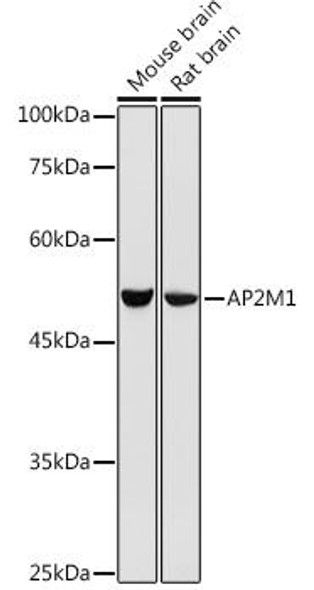
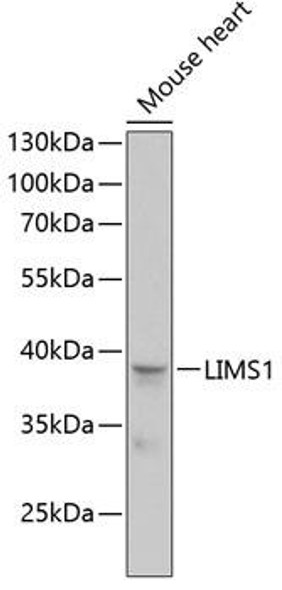
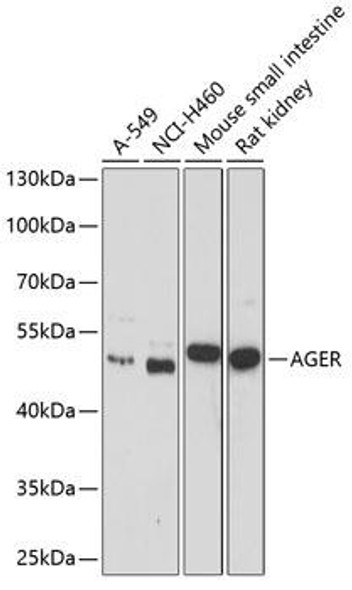
Western blot analysis of various lysates using PSMC2 Rabbit pAb (CAB1985) at 1:1000 dilution. Secondary antibody: HRP-conjugated Goat anti-Rabbit IgG (H+L) (CABS014) at 1:10000 dilution. Lysates/proteins: 25μg per lane. Blocking buffer: 3% nonfat dry milk in TBST. Detection: ECL Basic Kit (AbGn00020). Exposure time: 3s.