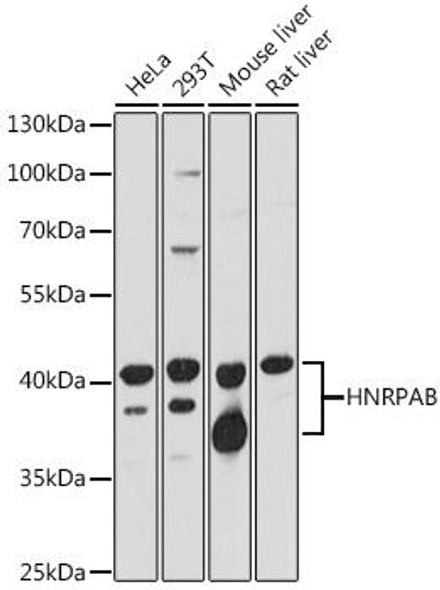
The TNIP3 Polyclonal Antibody (PACO18506) is a powerful tool for researchers studying TNIP3, a key regulator of immune and inflammatory pathways. This antibody, produced in rabbits, exhibits high specificity and sensitivity towards human samples, making it ideal for use in Western blot applications. By binding to TNIP3, this antibody enables the visualization and analysis of TNIP3 expression in a variety of cell types, facilitating research in immunology and inflammatory diseases.TNIP3, also known as ABIN-3, is a critical modulator of immune and inflammatory responses, playing a key role in maintaining immune homeostasis and preventing excessive inflammation.
Dysregulation of TNIP3 has been implicated in various autoimmune disorders, inflammatory conditions, and cancer, highlighting its potential as a therapeutic target. By studying the function of TNIP3, researchers can gain valuable insights into the underlying mechanisms of these diseases and develop novel treatment strategies.Overall, the TNIP3 Polyclonal Antibody (PACO18506) offers researchers a reliable tool for investigating the role of TNIP3 in immune regulation and inflammatory diseases, paving the way for new advancements in the field of immunotherapy and precision medicine.
Antibody Name:
TNIP3 Antibody (PACO18506)
Antibody SKU:
PACO18506
Size:
50ul
Host Species:
Rabbit
Tested Applications:
ELISA, WB
Recommended Dilutions:
ELISA:1:1000-1:2000, WB:1:200-1:1000
Species Reactivity:
Human, Mouse
Immunogen:
Synthetic peptide of human TNIP3
Form:
Liquid
Storage Buffer:
-20°C, pH7.4 PBS, 0.05% NaN3, 40% Glycerol
Purification Method:
Antigen affinity purification
Clonality:
Polyclonal
Isotype:
IgG
Conjugate:
Non-conjugated
Gel: 8%SDS-PAGE, Lysate: 40 μg, Lane: Mouse brain tissue, Primary antibody: PACO18506(TNIP3 Antibody) at dilution 1/200, Secondary antibody: Goat anti rabbit IgG at 1/8000 dilution, Exposure time: 1 minute.
Background:
TNIP3, which called LIND, that was upregulated in monocytes infected with Listeria monocytogenes. The predicted 325-amino acid, protein contains 3 coiled-coil domains and is most likely localized to the nucleus. Binds to zinc finger protein TNFAIP3 and inhibits NF-kappa-B activation induced by tumor necrosis factor, Toll-like receptor 4 (TLR4), interleukin-1 and 12-O-tetradecanoylphorbol-13-acetate. Overexpression inhibits NF-kappa-B-dependent gene expression in response to lipopolysaccharide at a level downstream of TRAF6 and upstream of IKBKB. NF-kappa-B inhibition is independent of TNFAIP3 binding.
Synonyms:
TNFAIP3 interacting protein 3
UniProt Protein Function:
TNIP3: Binds to zinc finger protein TNFAIP3 and inhibits NF- kappa-B activation induced by tumor necrosis factor, Toll-like receptor 4 (TLR4), interleukin-1 and 12-O-tetradecanoylphorbol-13- acetate. Overexpression inhibits NF-kappa-B-dependent gene expression in response to lipopolysaccharide at a level downstream of TRAF6 and upstream of IKBKB. NF-kappa-B inhibition is independent of TNFAIP3 binding.Protein type: InhibitorChromosomal Location of Human Ortholog: 4q27Molecular Function: polyubiquitin bindingBiological Process: MyD88-independent toll-like receptor signaling pathway; negative regulation of I-kappaB kinase/NF-kappaB cascade; inflammatory response; toll-like receptor 4 signaling pathway