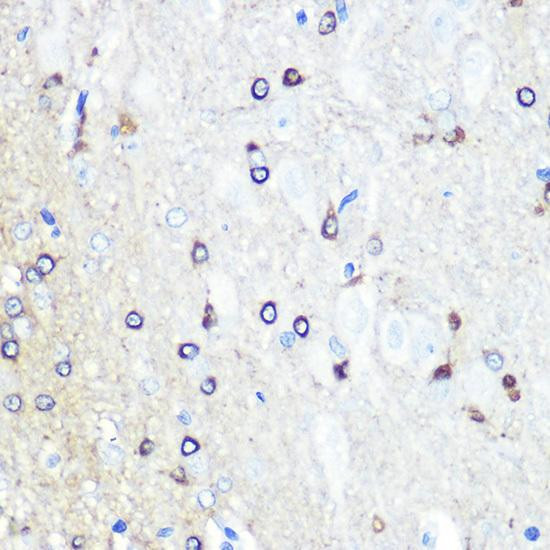
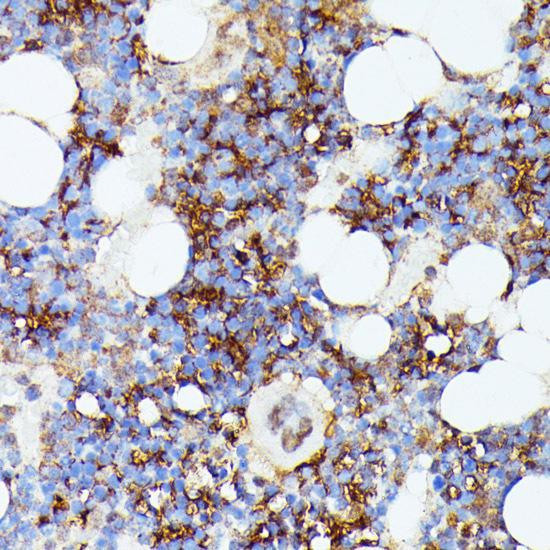
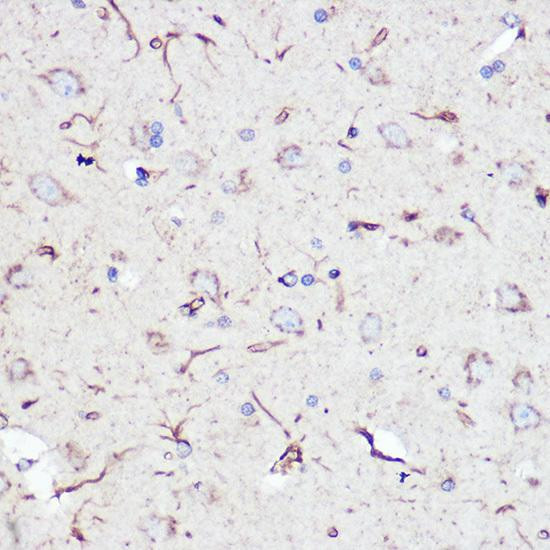
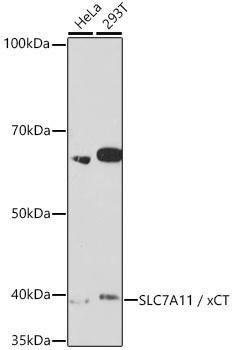
Alzheimer's disease is defined neuropathologically by two protein aggregates: extracellular plaques composed of beta-amyloid peptide and intracellular neurofibrillary tangles built from hyperphosphorylated Tau. Tau is a microtubule-associated protein that normally stabilizes the axonal cytoskeleton and regulates intracellular transport. Its function is governed by phosphorylation, and pathological accumulation of Phospho-Tau at disease-relevant epitopes detaches Tau from microtubules, promotes its self-assembly into paired helical filaments, and drives synaptic and neuronal loss. Two kinases are central to this aberrant modification: GSK-3beta and CDK5, both of which phosphorylate Tau at multiple residues and link metabolic and stress signaling to tangle formation. The amyloid arm originates from sequential cleavage of the amyloid precursor protein, APP / beta-Amyloid. BACE1, the beta-secretase, performs the initial rate-limiting cut, after which the gamma-secretase complex, whose catalytic core is Presenilin1, releases the aggregation-prone amyloid-beta peptide. Accumulation of amyloid-beta is thought to lie upstream of Tau pathology in the amyloid cascade hypothesis, seeding oligomers that impair synaptic plasticity and trigger inflammatory and oxidative responses. Genetic risk is strongly modulated by ApoE, the major lipid-transport apolipoprotein of the brain, whose epsilon4 allele accelerates amyloid deposition and impairs its clearance. Together these molecules describe a coherent disease axis in which APP processing by BACE1 and Presenilin1 generates amyloid-beta, ApoE shapes its handling, and dysregulated GSK-3beta and CDK5 convert Tau into its toxic phosphorylated species. Investigating this network requires reliable detection of total and modified protein pools across plaques, tangles, and surrounding neuropil, in tissue sections, lysates, and biofluids. Understanding how these events intersect remains central to efforts at early diagnosis and disease modification. This pack brings together validated antibodies against Tau, Phospho-Tau, APP / beta-Amyloid, BACE1, Presenilin1, ApoE, GSK-3beta, and CDK5 to support integrated study of the core molecular lesions of Alzheimer's disease.


![Anti-Phospho-Tau-S396 [ARC1573] Monoclonal Antibody (CABP1028)](https://cdn11.bigcommerce.com/s-h68l9z2lnx/images/stencil/1280x1280/products/279072/752222/alzheimers-tau-and-amyloid-antibody-sampler-pack__60614.1785056727.jpg?c=2?imbypass=on "Anti-Phospho-Tau-S396 [ARC1573] Monoclonal Antibody (CABP1028)")

![Anti-BACE1 [ARC0696] Monoclonal Antibody (CAB11533)](https://cdn11.bigcommerce.com/s-h68l9z2lnx/images/stencil/1280x1280/products/279072/754193/alzheimers-tau-and-amyloid-antibody-sampler-pack__62231.1785062960.jpg?c=2?imbypass=on "Anti-BACE1 [ARC0696] Monoclonal Antibody (CAB11533)")


![Anti-CDK5 [ARC53344] Monoclonal Antibody (CAB23502)](https://cdn11.bigcommerce.com/s-h68l9z2lnx/images/stencil/1280x1280/products/279072/754482/alzheimers-tau-and-amyloid-antibody-sampler-pack__89781.1785063824.jpg?c=2?imbypass=on "Anti-CDK5 [ARC53344] Monoclonal Antibody (CAB23502)")