The NUP153 Monoclonal Antibody (CAB2472) is a high-quality antibody developed for reliable detection and analysis of target proteins. NUP153 is an essential component of the nuclear pore complex, which regulates the transport of molecules in and out of the nucleus. This antibody, raised in rabbits, is highly specific and reactive with human samples, making it ideal for use in Western blot and immunofluorescence applications.The NUP153 Polyclonal Antibody allows for the detection and analysis of NUP153 protein expression in various cell types, providing researchers with insights into the function and localization of this key nuclear pore complex protein.
This antibody is validated for use in WB, IHC-P, IF/ICC, ELISA applications and has demonstrated reactivity against Human, Mouse, Rat samples.
Product Name:
NUP153 Monoclonal Antibody
SKU:
CAB2472
Size:
20μL, 100μL
Reactivity:
Human, Mouse, Rat
Clone Number:
ARC1922
Conjugate:
Unconjugated
Immunogen:
Synthetic peptide. This information is considered to be commercially sensitive.
Recommended starting concentration is 1 μg/mL. Please optimize the concentration based on your specific assay requirements.
Synonyms:
N153, HNUP153, NUP153
Positive Sample:
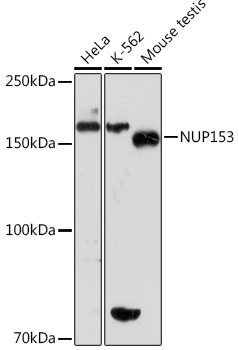
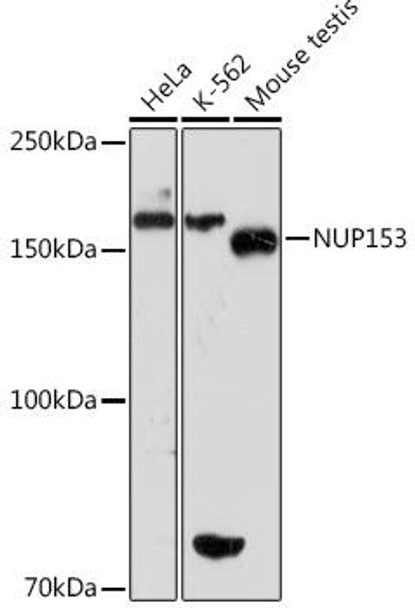
HeLa, K-562, Mouse testis
Cellular Localization:
Nucleus, Nucleus Membrane, Nuclear Pore Complex.
Calculated MW:
154kDa
Observed MW:
154kDa
Nuclear pore complexes regulate the transport of macromolecules between the nucleus and cytoplasm. They are composed of at least 100 different polypeptide subunits, many of which belong to the nucleoporin family. Nucleoporins are glycoproteins found in nuclear pores and contain characteristic pentapeptide XFXFG repeats as well as O-linked N-acetylglucosamine residues oriented towards the cytoplasm. The protein encoded by this gene has three distinct domains: a N-terminal region containing a pore targeting and an RNA-binding domain domain, a central region containing multiple zinc finger motifs, and a C-terminal region containing multiple XFXFG repeats. Alternative splicing results in multiple transcript variants of this gene.
Purification Method
Affinity purification
Gene ID
9972
RRID
AB_2863010
Buffer Information
Store at -20℃. Avoid freeze / thaw cycles. Buffer: PBS containing 50% glycerol and 0.05% BSA, preserved with proclin300 or sodium azide, pH 7.3.
Western blot analysis of various lysates using NUP153 Rabbit mAb (CAB2472) at 1:1000 dilution. Secondary antibody: HRP-conjugated Goat anti-Rabbit IgG (H+L) (CABS014) at 1:10000 dilution. Lysates/proteins: 25μg per lane. Blocking buffer: 3% nonfat dry milk in TBST. Detection: ECL Basic Kit (AbGn00020). Exposure time: 30s.
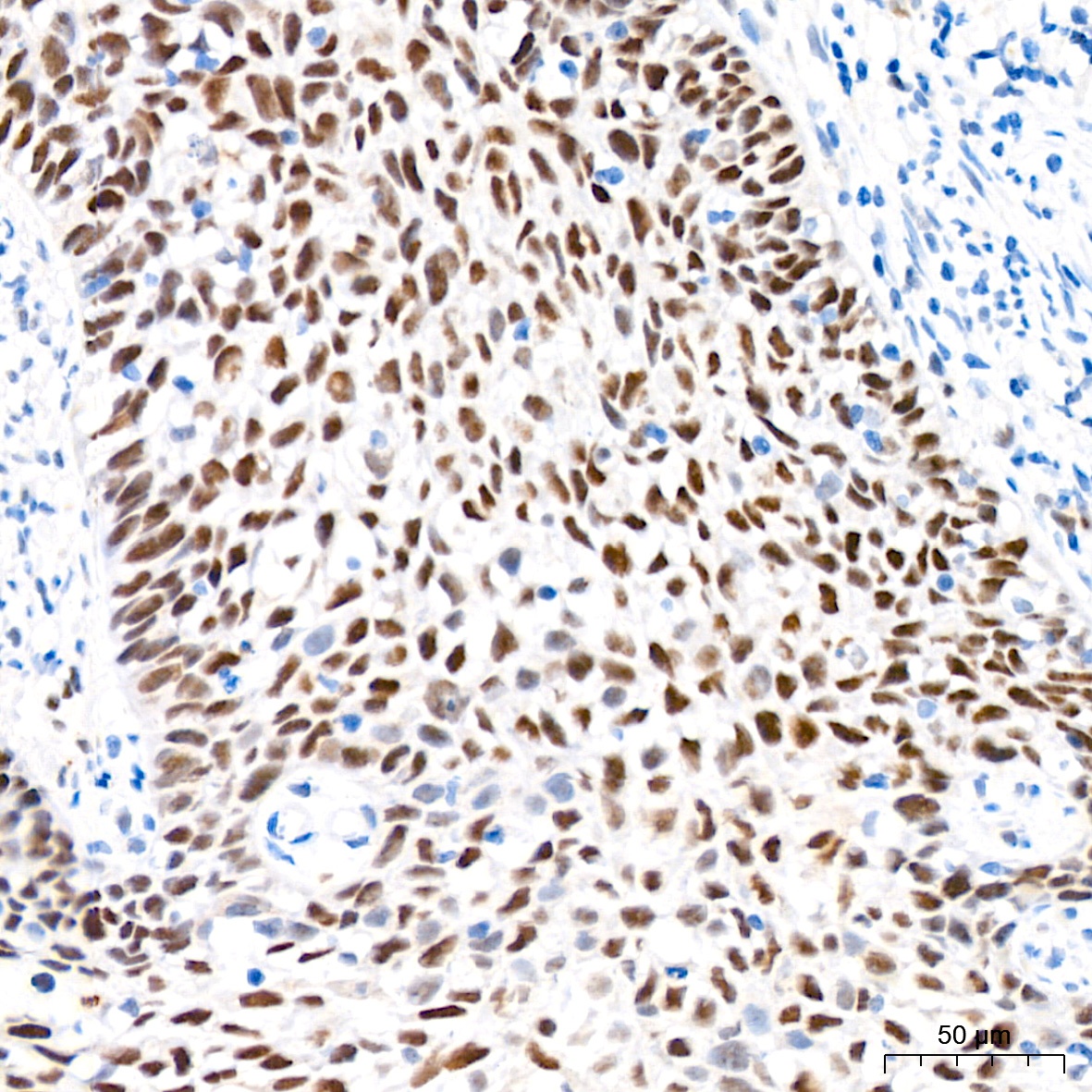
Immunohistochemistry analysis of paraffin-embedded Human cervix cancer tissue using NUP153 Rabbit mAb (CAB2472) at a dilution of 1:200 (40x lens). High pressure antigen retrieval performed with 0.01M Citrate buffer (pH 6.0) prior to IHC staining.
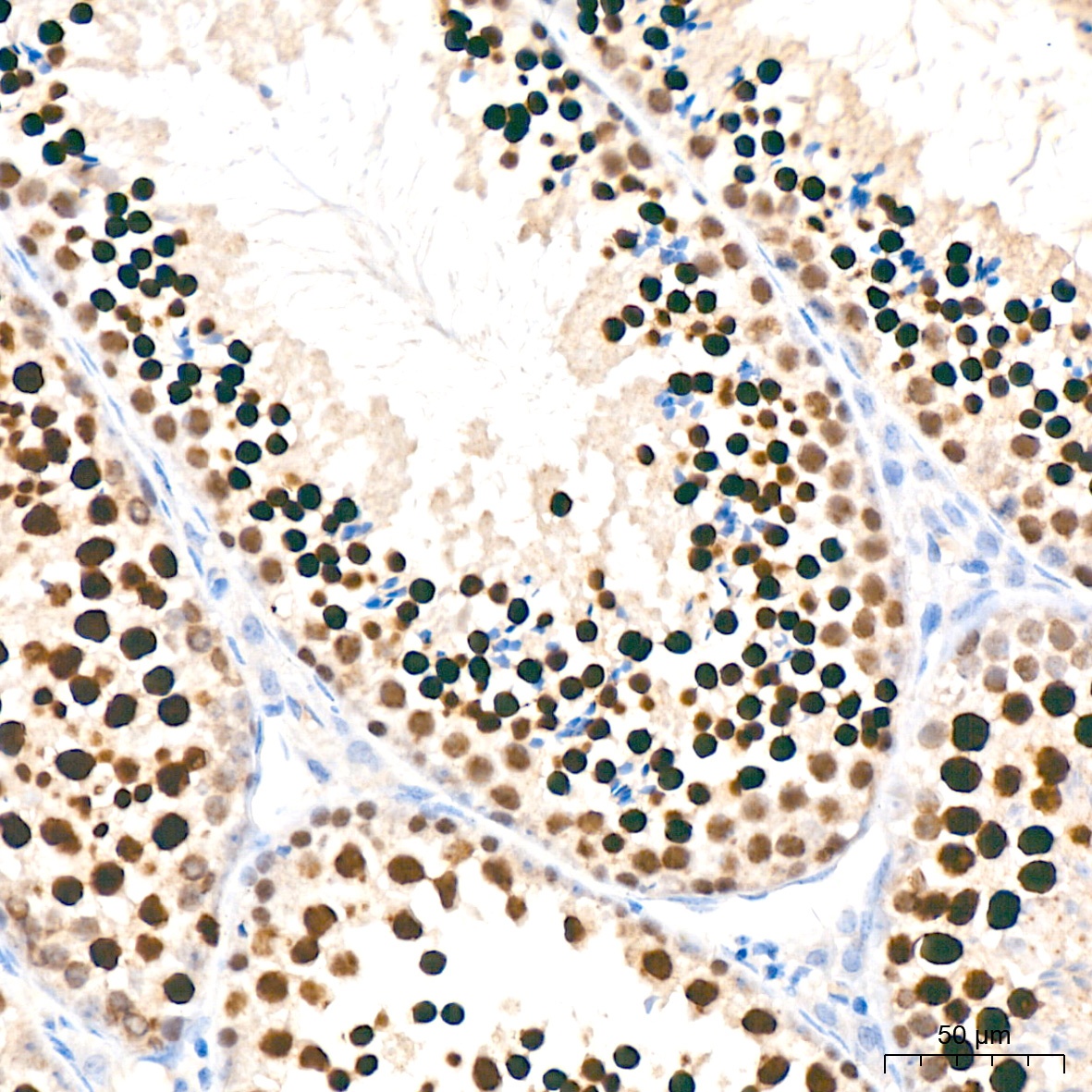
Immunohistochemistry analysis of paraffin-embedded Mouse testis tissue using NUP153 Rabbit mAb (CAB2472) at a dilution of 1:200 (40x lens). High pressure antigen retrieval performed with 0.01M Citrate buffer (pH 6.0) prior to IHC staining.
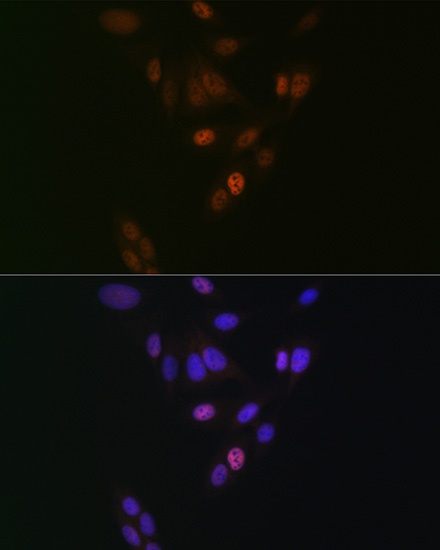
Immunofluorescence analysis of U-2 OS cells using NUP153 Rabbit mAb (CAB2472) at dilution of 1:100 (40x lens). Secondary antibody: Cy3-conjugated Goat anti-Rabbit IgG (H+L) (CABS007) at 1:500 dilution. Blue: DAPI for nuclear staining.



![Anti-NUP153 [R06-7N2] Monoclonal Antibody (AGMB01317)](https://cdn11.bigcommerce.com/s-h68l9z2lnx/images/stencil/590x590/products/272606/678389/anti-nup153-r06-7n2-monoclonal-antibody-agmb01317__32515.1773035650.jpg?c=2 "Anti-NUP153 [R06-7N2] Monoclonal Antibody (AGMB01317)")


