null

Proteins

RECOMBINANT PROTEINS

Recombinant proteins
built for reproducible results

Thousands of high-purity recombinant cytokines, growth factors, receptors, enzymes and viral antigens — across human, mouse, rat and 10+ other species, with His, Fc, Biotin/Avi, GST, FLAG, MBP, Myc and SUMO tags to fit any assay, purification or structural workflow.

✓ Verified purity & bioactivity ✓ Multiple tags & species ✓ Ships to 80+ countries
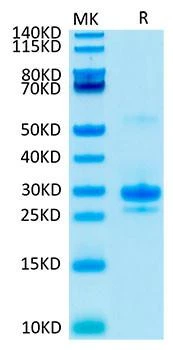
Human EGF · SDS-PAGE Recombinant Human EGF protein
Human EGF GF
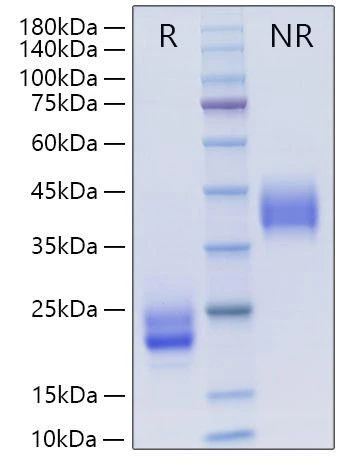
Human IFN-γ · Purity Recombinant Human IFN-gamma protein
Human IFN-γ Cyto
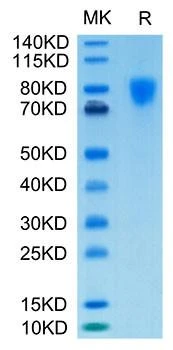
SARS-CoV-2 Spike RBD Recombinant SARS-CoV-2 Spike RBD protein
Spike RBD Viral

5,000+

Recombinant proteins

11 species

Human, mouse, rat & more

8 tag formats

His, Fc, Biotin, GST & more

Bioactive

Activity-verified lots

Overview

Recombinant proteins for research & bioassays

Recombinant proteins are produced by expressing a target gene in a controlled host system — mammalian (HEK293, CHO), E. coli, insect or yeast — then purified to high homogeneity. This lets you supply a defined, animal-free source of cytokines, growth factors, receptors, enzymes and antigens for cell culture, functional assays, immunisation, standard curves, structural biology and interaction studies.

Assay Genie's range spans every major protein type, species and affinity tag, so you can match the right construct to your experiment — whether you need a bioactive growth factor for stem-cell work, a His-tagged receptor ectodomain for SPR/BLI, an Fc-fusion for avidity, or a biotinylated antigen for streptavidin capture. Use the categories below to browse by type, species, tag or research area.

Featured products

Popular recombinant proteins

A curated selection spanning cytokines, growth factors, receptors, enzymes and viral antigens across species and tag formats.

Species specific

Shop by species

Species-matched recombinant proteins for physiologically relevant models.

Tag & format

Shop by tag & format

Choose the tag that matches your detection, purification or immobilisation strategy.

TagTypical sizeWhat it's used for
His~6 aa (HHHHHH)The most common tag — IMAC / Ni-NTA purification with minimal interference; ideal for SPR/BLI and structural work.
Fc~25 kDa (IgG Fc)Fc-fusion drives dimerisation and avidity, adds stability, and enables Protein A/G purification and ELISA capture.
Biotin / AviSite-specific biotinStreptavidin capture, immobilisation and directional coating for SPR, BLI and bead-based assays.
GST~26 kDaPull-downs, improved solubility and glutathione-affinity purification of fusion proteins.
FLAG (DDDDK)8 aa (DYKDDDDK)Detection, immunoprecipitation and gentle competitive elution.
MBP~42 kDaStrong solubility enhancement plus amylose-resin purification for difficult targets.
Myc10 aa (EQKLISEEDL)Detection and IP; often used for multi-tag co-expression tracking.
SUMO~11 kDaBoosts expression and solubility; cleavable to release a native N-terminus.
Why Assay Genie

Proteins you can build a result on

High purity & verified activity

Proteins are purified to high homogeneity and, where relevant, tested for bioactivity so they perform in cell-based and functional assays — with lot data on each datasheet.

Broad tag & species coverage

His, Fc, Biotin/Avi, GST, FLAG, MBP, Myc and SUMO formats across human, mouse, rat and 8+ other species mean you can match the exact construct your workflow needs.

Multiple expression systems

Mammalian (HEK293, CHO), E. coli, insect and yeast systems let us deliver correct folding, glycosylation and endotoxin levels appropriate to your application.

Applications

Where recombinant proteins are used

CC

Cell culture

Bioactive cytokines & growth factors for expansion, differentiation and stimulation.

SC

Standard curves

Defined antigens for ELISA, multiplex and immunoassay calibration.

BI

SPR / BLI

His- and biotin-tagged proteins for kinetics and binding studies.

SB

Structural biology

High-purity proteins for crystallography and cryo-EM.

IM

Immunisation

Antigens for antibody generation and vaccine research.

EA

Enzyme assays

Active kinases, proteases & metabolic enzymes for inhibitor screening.

Looking for bioactive proteins?

Browse our activity-verified range — proteins functionally tested in cell-based or enzymatic assays with activity data supplied on the datasheet.

Not sure which protein construct you need?

Tell us your target, species, tag and application and our technical team will recommend the best-matched recombinant protein for your experiment.

FAQ

Recombinant protein FAQs

Which affinity tag should I choose?

His tags are the default for most applications — small, minimally interfering and easy to purify by Ni-NTA. Choose Fc when you need dimerisation, added stability or Protein A/G capture; biotin/Avi for directional immobilisation on streptavidin (SPR, BLI, beads); and GST, MBP or SUMO when you need extra solubility or a fusion-based pull-down. Match the tag to your detection and purification strategy rather than the protein itself.

What does "bioactive" mean for a recombinant protein?

A bioactive protein has been functionally tested — for example, in a cell proliferation, receptor-binding or enzymatic assay — and shown to produce the expected biological effect. Activity data and the assay used are provided on the product datasheet. Bioactivity matters most for cell culture and functional signalling experiments.

Which expression system is best?

It depends on the protein. Mammalian systems (HEK293, CHO) give human-like folding and glycosylation and suit secreted and complex proteins; E. coli is economical and high-yield for smaller, non-glycosylated proteins; insect and yeast systems sit in between. Each product page lists its expression host so you can choose the format appropriate to your assay.

Do you offer species-specific proteins?

Yes. Many targets are available as human, mouse, rat and other species orthologues so you can work in physiologically relevant models. Use the "Shop by species" links above, or filter within any category by species.

How should I reconstitute and store the protein?

Reconstitute lyophilised proteins in the buffer recommended on the datasheet, add a carrier protein (e.g. 0.1% BSA) for dilute stocks, and aliquot to avoid freeze-thaw cycles. Store as directed — typically −20°C to −80°C for long-term storage. Always check the individual datasheet for target-specific guidance.