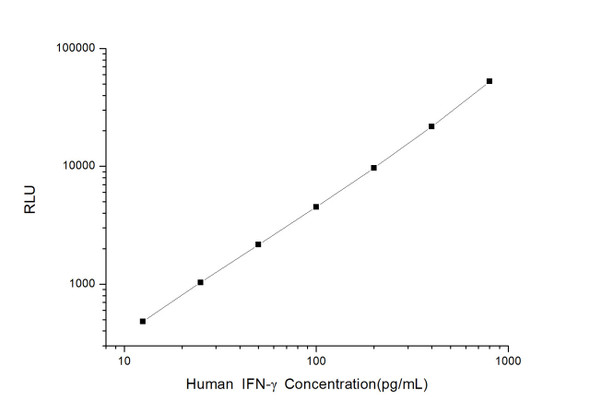
The Mouse IFN-gamma (Interferon-gamma) CLIA Kit is a highly reliable and sensitive assay designed for the accurate quantification of IFN-gamma levels in mouse serum, plasma, and cell culture supernatants. This kit ensures precise and reproducible results, making it ideal for a wide range of research applications.IFN-gamma is a key cytokine involved in immune responses, playing a critical role in combating infections and regulating inflammation. Dysregulation of IFN-gamma levels has been linked to various autoimmune diseases, infectious diseases, and cancer, making it a valuable biomarker for studying these conditions and developing potential therapeutic interventions. Overall, the Mouse IFN-gamma CLIA Kit provides researchers with a powerful tool for studying the immune response and investigating the role of IFN-gamma in various disease states. Its high sensitivity and specificity make it a valuable asset for advancing our understanding of immune function and disease pathology in mouse models.
Product Name:
Mouse IFN-gamma (Interferon Gamma) CLIA Kit
SKU:
MOES00045
Size:
96 Assays
Detection Method:
Chemiluminescence
Assay type:
Sandwich-CLIA
Assay time:
3 h 30 min
Sensitivity:
4.69 pg/mL
Detection range:
7.81-500 pg/mL
Reovery:
80%-120%
This kit uses a sandwich chemiluminescence immunoassay (CLIA) principle. The microplate is pre-coated with an antibody specific to the target protein. Standards or samples are added to the wells and bind to the immobilized antibody. A biotinylated detection antibody is then added, followed by HRP-conjugated streptavidin to form a sandwich complex. After washing to remove unbound components, a chemiluminescent substrate is added. The HRP enzyme catalyzes a light-emitting reaction. The intensity of the emitted light is directly proportional to the concentration of the target protein in the sample. The signal is measured using a luminometer, and the concentration of the analyte is calculated based on a standard curve.