
Oxidative Stress Assays
Measure oxidative stress end to end
Oxidative stress is an imbalance between reactive oxygen species and antioxidant defences, and is linked to cancer, cardiovascular and neurodegenerative disease. Our kits are organised by application so you can quantify radicals, enzymes, antioxidant capacity and oxidative damage on a standard plate reader.
Which oxidative stress assay do you need?
Oxidative stress spans radical production, enzymatic defence and downstream damage. Pick what you want to measure and we'll filter the range below.
All oxidative stress assays
Filter by application or search by analyte, enzyme or product code.
Why choose these assays?
A complete oxidative-stress toolkit for a standard plate reader.
Whole-response coverage
From radical generation to antioxidant enzymes, capacity and oxidative damage markers.
Simple plate-reader workflows
Colorimetric and fluorometric formats validated across serum, plasma, tissue, cells and plants.
Application-organised
Grouped by what you're measuring, so the right kit is easy to find.
Sensitive & reproducible
Validated chemistries for dependable, citable oxidative-stress data.
What is oxidative stress?
Oxidative stress arises when the production of reactive oxygen species (ROS) outpaces the antioxidant systems that detoxify them. ROS are natural by-products of metabolism, but their levels rise with environmental stressors such as pollution, UV and smoke, damaging proteins, DNA and lipids.
Because the response is multi-layered, a full picture usually needs several read-outs: the radicals themselves, the enzymes that clear them, total antioxidant capacity, and the molecular damage that remains.
- Radicals & species: H₂O₂, superoxide, nitric oxide, ROS
- Enzymes: SOD, catalase, GPx, GST, MPO, xanthine oxidase
- Capacity: total antioxidant capacity, vitamins C and E, thiols
- Damage: MDA, TBARS, lipid peroxide, protein carbonyl
FAQs
What is oxidative stress and how is it measured?
Oxidative stress is an imbalance between reactive oxygen species and antioxidant defences. It is measured with a combination of assays for radicals (H2O2, superoxide, NO), antioxidant enzymes (SOD, catalase, GPx), total antioxidant capacity, and oxidative damage markers such as MDA and protein carbonyls.
Which assay best reflects oxidative damage?
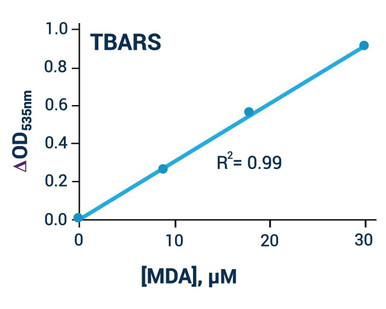
Lipid peroxidation markers such as MDA (measured by the TBARS assay) and protein carbonyls are widely used indicators of oxidative damage. They are often paired with an antioxidant-capacity or enzyme assay for context.
What is total antioxidant capacity?
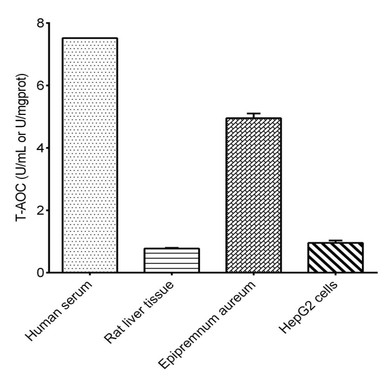
Total antioxidant capacity (TAC) measures the combined ability of all antioxidants in a sample to counter oxidation, giving a single functional read-out of antioxidant defence rather than one specific molecule.
Are the kits colorimetric or fluorometric?
Both formats are available for many analytes; the product name and card indicate the read-out so you can match it to your plate reader.
What sample types are supported?
Compatibility varies by kit and commonly includes serum, plasma, urine, tissue homogenates, cultured cells and, for some kits, plant tissue. Each product page lists validated samples.
Designing an oxidative stress study?
Tell our PhD-level technical team what you're measuring and we'll help you assemble a matched panel of assays.