The pan-TriMethyl-lysine Antibody (CAB18292) is a high-quality antibody developed for reliable detection and analysis of target proteins. This antibody, produced in rabbits, demonstrates high specificity and sensitivity towards trimethylated lysine residues in a wide range of protein samples, making it an ideal choice for Western blot and immunohistochemistry applications.Trimethylation of lysine residues is a key mechanism for regulating various cellular processes, including gene expression, signal transduction, and protein-protein interactions. Dysregulation of lysine methylation has been linked to various diseases, including cancer, neurological disorders, and metabolic conditions.
This antibody is validated for use in WB, ELISA applications and has demonstrated reactivity against Human, Mouse, Rat samples.
Product Name:
pan-TriMethyl-lysine Antibody
SKU:
CAB18292
Size:
20μL, 100μL
Reactivity:
Human, Mouse, Rat
Immunogen:
Synthetic peptide. This information is considered to be commercially sensitive.
Tested Applications:
WBELISA
Recommended Dilution:
WB
1:500 - 1:2000
ELISA
Recommended starting concentration is 1 μg/mL. Please optimize the concentration based on your specific assay requirements.
Positive Sample:
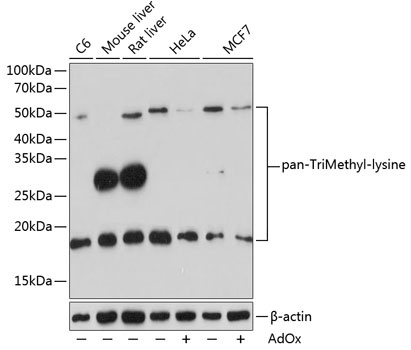
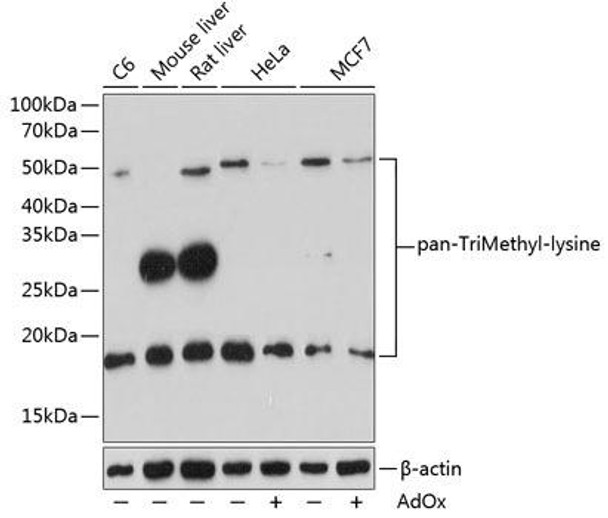
C6, Mouse liver, Rat liver, HeLa, MCF7
Observed MW:
18-55kDa
Methylation of lysine residues is a common regulatory post-translational modification (PTM) that results in the mono-, di-, or tri-methylation of lysine at ε-amine groups by protein lysine methyltransferases (PKMTs).The post-translational ε-amino lysine methylated proteins is an important reversible modification which plays a vital role in the regulation of many cellular processes including chromatin dynamics and gene transcription. Methylation of lysine residues is modulated by specific counteractive enzymes including lysine methylases (KMTs) and demethylases (KDMs). Lysine trimethylation occurs in both histones and non-histone substratres. It has become promising targets for discovery of anti-cancer drugs.
Purification Method
Affinity purification
RRID
AB_2862065
Buffer Information
Store at -20℃. Avoid freeze / thaw cycles. Buffer: PBS containing 50% glycerol, preserved with proclin300 or sodium azide, pH 7.3.
Western blot analysis of various lysates using pan-TriMethyl-lysine pAb (CAB18292) at 1:500 dilution. HeLa and MCF7 cells were treated by ADOX (100 μM) for 24 hours . Secondary antibody: HRP-conjugated Goat anti-Rabbit IgG (H+L) (CABS014) at 1:10000 dilution. Lysates/proteins: 25μg per lane. Blocking buffer: 3% nonfat dry milk in TBST. Detection: ECL Enhanced Kit (AbGn00021). Exposure time: 3min.