Description
| SKU: | RPCB2207 |
| Size: | 10 μg, 20 μg, 50 μg, 100 μg |
| Tag: | N-His |
| Reactivity: | Human |
| Protein Description: | BLNK functions as a central linker protein that bridges kinases associated with the B-cell receptor (BCR) with a multitude of signaling pathways, regulating biological outcomes of B-cell function and development. BLNK plays a role in the activation of ERK / EPHB2, MAP kinase p38 and JNK. BLNK modulates AP1 activation. It is important for the activation of NF-kappa-B and NFAT. BLNK plays an important role in BCR-mediated PLCG1 and PLCG2 activation and Ca2+mobilization and is required for trafficking of the BCR to late endosomes. BLNK may be required for the RAC1-JNK pathway. It plays a critical role in orchestrating the pro-B cell to pre-B cell transition. BLNK also plays an important role in BCR-induced B-cell apoptosis.Defects in BLNK are the cause of agammaglobulinemia type 4 (AGM4) which is a primary immunodeficiency characterized by profoundly low or absent serum antibodies and low or absent circulating B cells due to an early block of B-cell development. |
| Endotoxin: | < 0.01 EU/μg of the protein by LAL method. |
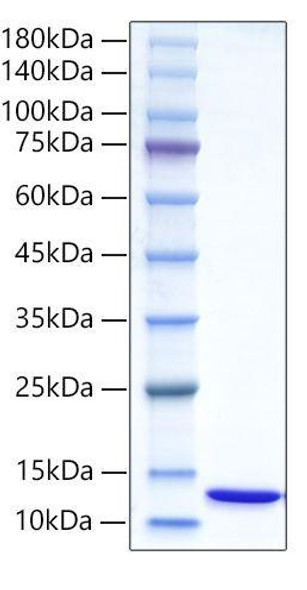
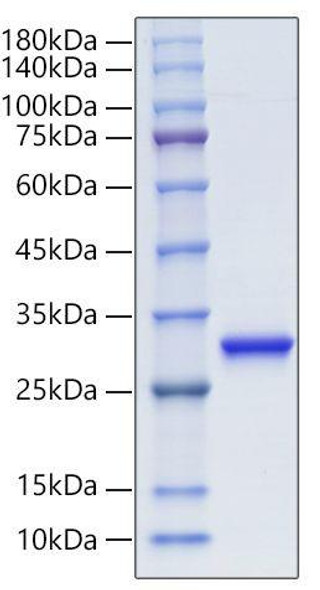
| Purity: | ≥ 95% as determined by reducing SDS-PAGE. |
| Formulation: | Lyophilized from 0.22μm filtered solution in PBS (pH 7.4). |
| Gene ID: | 29760 |
| Storage: | Store at -20℃.Store the lyophilized protein at -20℃ to -80 ℃ up to 1 year from the date of receipt. After reconstitution, the protein solution is stable at -20℃ for 3 months, at 2-8℃ for up to 1 week. |
| Reconstitution: | Centrifuge the vial before opening. Reconstitute to a concentration of 0.1-0.5 mg/mL in sterile distilled water. Avoid vortex or vigorously pipetting the protein. For long term storage, it is recommended to add a carrier protein or stablizer (e.g. 0.1% BSA, 5% HSA, 10% FBS or 5% Trehalose), and aliquot the reconstituted protein solution to minimize free-thaw cycles. |
| Swiss-Prot: | NP_037446.1 |