The TCTP/TPT1 Monoclonal Antibody (CAB2394) is a high-quality antibody developed for reliable detection and analysis of target proteins. The antibody, generated using rabbit monoclonal technology, exhibits high specificity and sensitivity in detecting TCTP in various samples, making it ideal for use in Western blot, immunohistochemistry, and immunofluorescence applications.TCTP, also known as fortilin, has been implicated in multiple cellular processes including cell proliferation, anti-apoptosis, and cell survival under stress conditions.
This antibody is validated for use in WB, IHC-P, IP, ELISA applications and has demonstrated reactivity against Human, Mouse, Rat samples.
Product Name:
TCTP/TPT1 Monoclonal Antibody
SKU:
CAB2394
Size:
20μL, 100μL
Reactivity:
Human, Mouse, Rat
Clone Number:
ARC0743
Conjugate:
Unconjugated
Immunogen:
Synthetic peptide. This information is considered to be commercially sensitive.
Sequence:
Email for sequence
Tested Applications:
WBIHC-PIPELISA
Recommended Dilution:
WB
1:500 - 1:2000
IP
0.5μg-4μg antibody for 200μg-400μg extracts of whole cells
IHC-P
1:50 - 1:200
ELISA
Recommended starting concentration is 1 μg/mL. Please optimize the concentration based on your specific assay requirements.
Synonyms:
HRF, p02, p23, TCTP, TCTP/TPT1
Positive Sample:
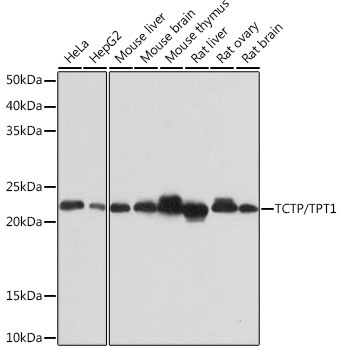
HeLa, HepG2, Mouse liver, Mouse brain, Mouse thymus, Rat liver, Rat ovary, Rat brain,
Cellular Localization:
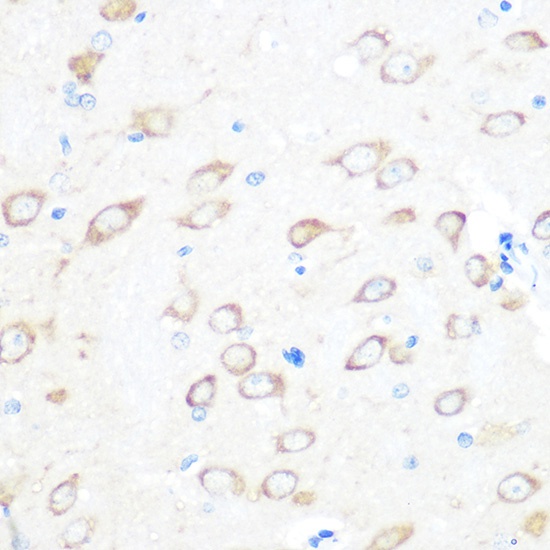
Cytoplasm.
Calculated MW:
20kDa
Observed MW:
23kDa
This gene encodes a protein that is a regulator of cellular growth and proliferation. Its mRNA is highly structured and contains an oligopyrimidine tract (5'-TOP) in its 5' untranslated region that functions to repress its translation under quiescent conditions. The encoded protein is involved in a variety of cellular pathways, including apoptosis, protein synthesis and cell division. It binds to and stabilizes microtubules, and removal of this protein through phosphorylation is required for progression through mitotic and meiotic cell divisions. This gene is known to play a role in carcinogenesis, and is upregulated in some cancer cells. Alternative splicing results in multiple transcript variants encoding different isoforms.
Purification Method
Affinity purification
Gene ID
7178
RRID
AB_2862999
Buffer Information
Store at -20℃. Avoid freeze / thaw cycles. Buffer: PBS containing 50% glycerol and 0.05% BSA, preserved with proclin300 or sodium azide, pH 7.3.
Western blot analysis of various lysates using TCTP/TPT1 Rabbit mAb (CAB2394) at 1:1000 dilution. Secondary antibody: HRP-conjugated Goat anti-Rabbit IgG (H+L) (CABS014) at 1:10000 dilution. Lysates/proteins: 25μg per lane. Blocking buffer: 3% nonfat dry milk in TBST. Detection: ECL Basic Kit (AbGn00020). Exposure time: 10s.
Immunohistochemistry analysis of paraffin-embedded Rat brain using TCTP/TPT1 Rabbit mAb (CAB2394) at dilution of 1:100 (40x lens). Microwave antigen retrieval performed with 0.01M PBS Buffer (pH 7.2) prior to IHC staining.



![Anti-TCTP [R02-5D7] Monoclonal Antibody (AGMB02369)](https://cdn11.bigcommerce.com/s-h68l9z2lnx/images/stencil/590x590/products/273658/677243/anti-tctp-r02-5d7-monoclonal-antibody-agmb02369__25123.1773031965.jpg?c=2 "Anti-TCTP [R02-5D7] Monoclonal Antibody (AGMB02369)")