Description
Glucose Assay Kit (BA0081) (BA0081)
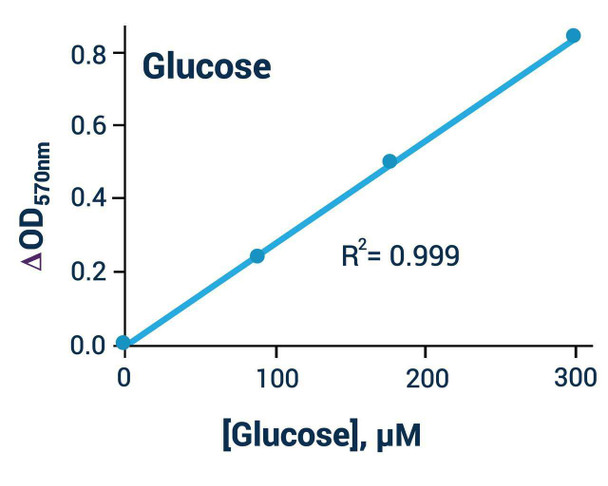
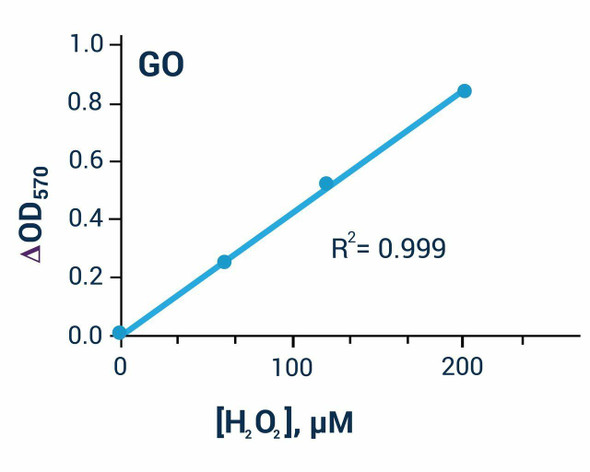
The Glucose Assay Kit (SKU: BA0081) provides a simple, direct and high-throughput method for measuring glucose concentration. Glucose is a key diagnostic parameter for many metabolic disorders; increased levels are associated with diabetes mellitus and hyperactivity of the thyroid, pituitary and adrenal glands, while decreased levels are found in insulin-secreting tumours and related conditions. This kit uses a single working reagent that combines the glucose oxidase reaction and colour reaction in one step. The colour intensity of the reaction product at 570 nm, or the fluorescence intensity at excitation/emission 530/585 nm, is directly proportional to the glucose concentration in the sample. The room-temperature assay requires no 37C heater and can be readily automated.
| Product Name: | Glucose Assay Kit (BA0081) |
| SKU: | BA0081 |
| Detection Method: | Colorimetric or Fluorometric |
| Detection Range: | Colorimetric 5 to 300 uM; fluorometric 1 to 30 uM glucose |
| Sample Type: | Serum, plasma, milk, culture medium and other biological samples (not compatible with urine) |
| Species Reactivity: | All |
| Assay Time: | 30 minutes at room temperature |
| Kit Size: | 100 Assays |
| Equipment Required: | Microplate reader |
| Storage: | -20C |
| Shelf Life: | 6 months after receipt |
| Shipping: | Gel Pack |
Quantitative colorimetric or fluorometric determination of glucose. A single working reagent combines the glucose oxidase reaction and colour reaction; the colour at 570 nm or fluorescence at excitation/emission 530/585 nm is proportional to glucose concentration.
- Sensitive and accurate; uses as little as 20 uL sample
- Colorimetric linear detection range 5 to 300 uM (90 ug/dL to 5.4 mg/dL)
- Fluorometric linear detection range 1 to 30 uM
- Convenient room-temperature assay with no 37C heater required
- Simple, high-throughput single-working-reagent procedure
- Direct assays of glucose in serum, plasma, milk, culture medium and other biological samples
- Drug discovery and pharmacology: effects of drugs on glucose metabolism
- Food and beverages: glucose in food, beverages and similar samples
Note: The below protocol is a sample protocol. Protocols are specific to each batch/lot. For the correct instructions please follow the protocol included in your kit.
| Step | Procedure |
| 1 | Sample treatment. Centrifuge saliva samples for 5 minutes at 14,000 rpm prior to assay. For milk samples, mix 100 uL 6N HCl with 600 uL milk, centrifuge for 5 minutes at 14,000 rpm, transfer the supernatant to a clean tube, add 170 uL 6N NaOH per mL supernatant, mix and centrifuge again (dilution factor n = 1.36). Samples may be assayed fresh or stored in aliquots at -20C, avoiding repeated freeze-thaw cycles. |
| 2 | Equilibrate all components to room temperature and keep thawed enzyme in a refrigerator or on ice during the experiment. |
| 3 | Standards and samples (colorimetric). For the 300 uM standard, mix 15 uL of the 300 mg/dL standard with 818 uL distilled water and dilute in distilled water as shown in the dilution table. Transfer 20 uL standards and samples into separate wells. |
| 4 | Working reagent. For each reaction well, mix 85 uL Assay Buffer, 1 uL Enzyme Mix (vortex briefly before pipetting) and 1 uL Dye Reagent in a clean tube. Transfer 80 uL working reagent into each reaction well and tap the plate to mix. |
| 5 | Incubate for 30 minutes at room temperature and read the optical density at 570 nm (550-585 nm). |
| 6 | Fluorometric procedure. Mix 20 uL of the colorimetric standards with 180 uL distilled water to obtain 30, 18, 9 and 0 uM standards. Transfer 20 uL standards and 20 uL samples into separate wells of a black 96-well plate, add 80 uL working reagent, incubate 30 minutes at room temperature and read fluorescence at excitation 530 nm and emission 585 nm. |
Subtract the blank value (standard #4) from the standard values and plot the dOD or dF against standard concentrations. Determine the slope and calculate [Glucose] = (R-sample - R-blank) / slope x n (uM), where R is the optical density or fluorescence reading and n is the sample dilution factor. Conversions: 1 mg/dL glucose equals 55.5 uM, 0.001% or 10 ppm. If the calculated concentration exceeds 300 uM (colorimetric) or 30 uM (fluorometric), dilute the sample in water, repeat the assay and multiply by the dilution factor.
| Component | Quantity | Storage |
| Assay Buffer | 10 mL | -20C |
| Enzyme Mix | 120 uL | -20C |
| Dye Reagent | 120 uL | -20C |
| Standard (300 mg/dL Glucose) | 1 mL | -20C |