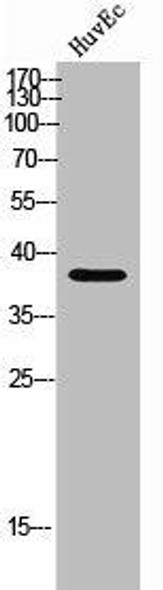
The PARD6G Antibody (PAC048094) is a highly specific and sensitive tool for researchers studying the protein PARD6G, a member of the Par6 family of proteins that play crucial roles in cell polarity and cell division. Raised in rabbits, this polyclonal antibody is optimized for detecting PARD6G in human samples and is validated for use in Western blot applications.PARD6G is a key regulator of cell polarity, playing important roles in cell differentiation, migration, and tissue organization. Dysregulation of PARD6G has been implicated in various diseases, including cancer and neurological disorders.
By targeting PARD6G with this antibody, researchers can gain valuable insights into the function and regulation of this protein in different cell types and disease contexts.With its high reactivity and specificity, the PARD6G Antibody is an invaluable tool for studies in cell biology, developmental biology, and cancer research. By enabling the detection and analysis of PARD6G protein expression, this antibody opens up new possibilities for understanding the molecular mechanisms underlying cell polarity and its implications in human health and disease.
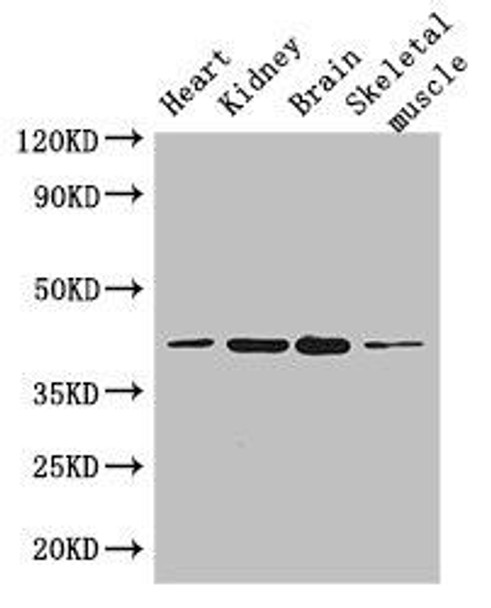
Western Blot. Positive WB detected in: Mouse heart tissue, Mouse kidney tissue, Mouse brain tissue, Mouse skeletal muscle tissue. All lanes: PARD6G antibody at 3.4µg/ml. Secondary. Goat polyclonal to rabbit IgG at 1/50000 dilution. Predicted band size: 41, 13 kDa. Observed band size: 41 kDa..
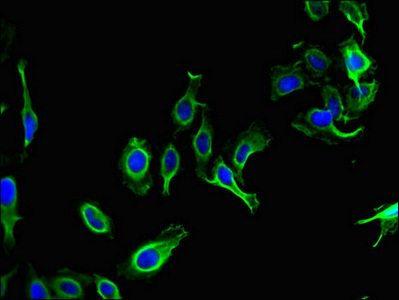
Immunofluorescent analysis of Hela cells using PACO48094 at dilution of 1:100 and Alexa Fluor 488-congugated AffiniPure Goat Anti-Rabbit IgG(H+L).
Background:
Adapter protein involved in asymmetrical cell division and cell polarization processes. May play a role in the formation of epithelial tight junctions. The PARD6-PARD3 complex links GTP-bound Rho small GTPases to atypical protein kinase C proteins (By similarity).
PARD6G: Adapter protein involved in asymmetrical cell division and cell polarization processes. May play a role in the formation of epithelial tight junctions. The PARD6-PARD3 complex links GTP- bound Rho small GTPases to atypical protein kinase C proteins. Belongs to the PAR6 family.Protein type: Motility/polarity/chemotaxis; Adaptor/scaffold; Cell adhesionChromosomal Location of Human Ortholog: 18q23Cellular Component: tight junction; protein complex; plasma membrane; cytosolMolecular Function: protein bindingBiological Process: intercellular junction assembly and maintenance; cell division; cell cycle