
Passaging Hybridoma Cells: A Detailed Guide
Passaging Hybridoma Cells: A Detailed Guide
Hybridomas are productive but temperamental. They grow in suspension, are sensitive to shear and to overgrowth, and — the problem that catches most people out — they lose antibody productivity over successive passages. This guide covers the passage protocol itself, the densities and intervals that keep cultures healthy, banking, subcloning to preserve monoclonality, and how to monitor titre so a decline is caught early.
Browse culture QC reagents →Key takeaways
- Hybridomas grow in suspension, so passaging means diluting or splitting the culture rather than trypsinising an adherent monolayer.
- Passage every two to four days, when density reaches 0.5 to 1 × 10⁶ cells/mL, reseeding at 0.2 to 0.5 × 10⁶ cells/mL.
- Overgrowth is the most common cause of trouble: it depletes glucose and glutamine, acidifies the medium, and suppresses antibody production before viability visibly falls.
- Antibody productivity declines over passage as chromosomes are lost from the fused genome, so periodic subcloning by limiting dilution is required to preserve a productive monoclonal line.
- Bank early and generously at low passage. A validated frozen stock is the only reliable insurance against a line that stops producing.
- Monitor supernatant titre by ELISA on a schedule rather than waiting for a failed experiment to reveal a drop.
- Test routinely for mycoplasma, which alters metabolism and antibody yield while leaving cultures looking normal.
Reagents for hybridoma culture
Hybridoma maintenance depends on catching problems before they cost you a line. The reagents below cover contamination screening, nutrient status, viability and — most importantly — antibody titre.

GenieColor Mycoplasma Detection Kit
Routine screening for the contaminant that suppresses antibody yield while leaving cultures looking healthy.
View product →
MycoGenie Mycoplasma Elimination Kit
For recovering a valuable line that has tested positive rather than discarding it.
View product →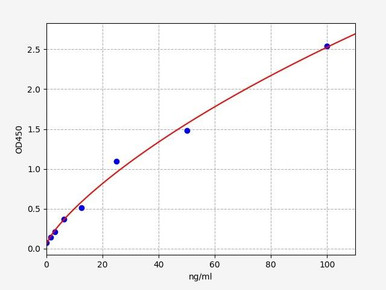
Mouse IgG ELISA Kit
Quantifies antibody in culture supernatant — the way to detect declining productivity early.
View product →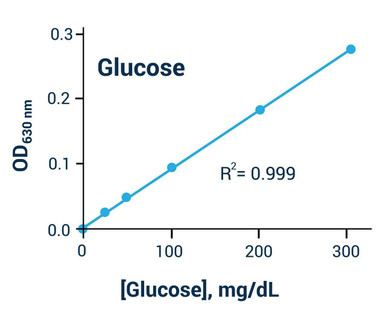
Glucose Assay Kit (Colorimetric)
Measures glucose depletion, the clearest signal that a culture is overdue for passage.
View product →
MTT Cell Viability Assay
Quantitative viability alongside routine trypan blue counting.
View product →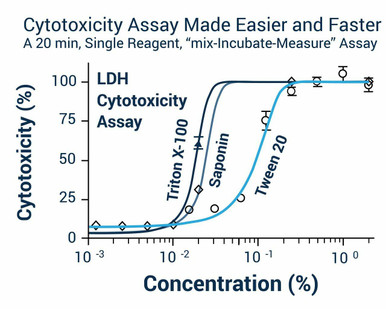
LDH Cytotoxicity Assay Kit
Detects membrane damage from shear stress or over-vigorous handling during passage.
View product →Why hybridomas need particular care
A hybridoma is a fusion of an antibody-secreting B lymphocyte with a myeloma cell, combining the specificity of the former with the immortality of the latter. That hybrid origin explains both its usefulness and its fragility. The fused cell carries chromosomes from two genomes, and that arrangement is not stable indefinitely.
Three consequences follow for routine culture. Hybridomas grow in suspension, so there is no trypsinisation step and passaging is a dilution or split. They are metabolically demanding, consuming glucose and glutamine quickly and acidifying medium faster than many adherent lines. And they are genetically unstable, progressively losing chromosomes over passage — which is why an established line can quietly stop making antibody while continuing to grow perfectly well.
Materials and media
Equipment
- CO₂ incubator at 37 °C with 5% CO₂ and humidification
- Haemocytometer or automated cell counter
- Trypan blue or equivalent viability stain
- T-25 or T-75 flasks; plates, spinner flasks or bioreactors for larger scale
- Wide-bore serological pipettes for gentle handling
- Class II biological safety cabinet and a benchtop centrifuge
Medium
RPMI-1640 or DMEM supplemented with 10 to 20% fetal bovine serum, L-glutamine and, if your local practice permits, penicillin-streptomycin. Points worth attention:
- Serum concentration. Newly established or slow-growing clones often need 20%; well-adapted lines usually tolerate 10%. Reducing serum makes downstream antibody purification easier, but wean gradually over several passages rather than dropping in one step.
- L-glutamine degrades in solution at 37 °C, releasing ammonia which is itself inhibitory. Use a stable dipeptide alternative, or add glutamine fresh from frozen stock rather than relying on medium that has been at temperature for weeks.
- Antibiotics are not a substitute for technique. They mask low-level bacterial contamination and do nothing against mycoplasma. Many labs maintain valuable lines antibiotic-free precisely so contamination declares itself.
- Pre-warm medium before use. Adding cold medium to cells is an avoidable stress.
- HT supplement is needed only in the weeks after fusion, while unfused myeloma cells are being selected against. Established lines do not require HAT or HT.
Passage timing and density
Hybridomas typically double every 18 to 24 hours, which means a culture left an extra day can move from ideal to overgrown. Passage every two to four days according to growth rate, judged on three indicators:
- Density. Passage when the culture reaches 0.5 to 1 × 10⁶ cells/mL, reseeding at 0.2 to 0.5 × 10⁶ cells/mL to leave room for growth. Below roughly 0.1 × 10⁶ cells/mL many hybridomas grow poorly, so over-dilution is a real error rather than a safe default.
- Medium appearance. Yellowing phenol red indicates acidification from lactate accumulation and means the culture is overdue.
- Clumping. Some aggregation is normal in suspension, but increasing clumps suggest density stress.
Where cultures are being characterised or scaled, measuring residual glucose in spent medium turns this from judgement into measurement, and is the most direct way to establish the right interval for a particular clone.
Step-by-step passage protocol
Step 1: Assess density, viability and morphology
Mix the culture gently and take a sample. Count with a haemocytometer or automated counter, and stain with trypan blue to determine viable density — live cells exclude the dye and appear clear, dead cells take it up and appear blue. Target viability above 90%; below 80% indicates a culture in trouble that will not be fixed by passaging alone. Under the microscope, healthy hybridomas are rounded with smooth membranes. Irregular outlines, granularity or extensive debris point to overgrowth or contamination.
Step 2: Dilute or split
If density exceeds 0.5 to 1 × 10⁶ cells/mL, either dilute by removing part of the spent supernatant and replacing with fresh pre-warmed medium, or split by transferring a portion of the suspension into a new flask with fresh medium. A 1:2 or 1:3 split suits most cultures. Dilution is gentler and preserves autocrine factors; splitting is preferable when medium is heavily spent or the flask needs replacing.
If you need to remove spent medium completely, centrifuge at 200 to 300 ×g for five minutes. Hybridomas do not tolerate hard spinning, and higher speeds cost viability for no benefit.
Step 3: Resuspend and transfer
Pipette gently to produce an even suspension — enough to disperse clumps, not enough to shear cells. Wide-bore pipettes help. Transfer the required volume into the new flask containing fresh pre-warmed medium, and label with the clone, passage number and date. Tracking passage number is not bookkeeping; it is how you know when to subclone or return to a frozen stock.
Step 4: Incubate
Return to the incubator at 37 °C and 5% CO₂ with loosened or vented caps for gas exchange. Leave undisturbed for at least four to six hours to allow recovery. Check the following day for even distribution and absence of contamination.
Example protocol at a glance
| Step | Description |
|---|---|
| 1. Determine Density | Count cells, aiming for 0.5 - 1 x 10⁶ cells/mL a |
| 2. Dilute or Split | If high, split 1:2 or 1:3; if within range, dilu |
| 3. Resuspend and Transfer | Pipette gently to mix, and add to a new flask wi |
| 4. Incubate | Place in CO₂ incubator at 37°C, 5% CO₂. |
Best practices for maintenance
- Prevent overgrowth. The single most important habit. Nutrient depletion suppresses antibody production before viability falls, so a culture can look acceptable while yielding poorly.
- Replace medium on schedule. Hybridomas consume glucose and glutamine rapidly; consider pyruvate supplementation for cultures showing stress.
- Minimise shear stress. Handle gently, avoid vigorous pipetting and foaming, and use low centrifugation speeds.
- Test for mycoplasma routinely. It alters metabolism and antibody production while leaving cultures visually normal, and it spreads between lines in a shared incubator. Where a valuable line tests positive, elimination treatment is worth attempting before discarding it.
- Use conditioned medium for fragile clones. Adding 10 to 20% filtered supernatant from a healthy culture can improve growth of newly cloned or slow-recovering lines.
- Keep one line per incubator shelf where possible, and never share pipettes or medium bottles between lines.
- Scale thoughtfully. For large-scale production, spinner flasks or bioreactors give better gas exchange and nutrient consistency than stacking static flasks.
Maintaining antibody productivity
This is the aspect of hybridoma work most often left out of passaging protocols, and the one most likely to cost you months. A hybridoma can grow vigorously while producing progressively less antibody, and by the time a failed experiment reveals it, many passages have gone by.
The cause is genetic. The fused cell carries chromosomes from both parents, and that complement is unstable — cells that stop expending resources on immunoglobulin synthesis grow slightly faster, so non-producing variants are selected for with every passage. Left alone, a culture drifts toward non-producers.
Monitor titre deliberately
Assay supernatant for antibody on a fixed schedule — every five to ten passages, and always before and after banking — rather than only when something looks wrong. A sandwich ELISA against the relevant immunoglobulin class gives a number that can be tracked over time, and it is the difference between noticing a 30% decline early and discovering a dead line late. Normalise to viable cell density so you are measuring productivity per cell rather than culture size.
Subclone periodically
The remedy is to reselect high producers by limiting dilution: plate at a density calculated to deposit roughly one cell or fewer per well, grow the resulting clonal populations, assay each supernatant, and expand the best producers. This restores monoclonality and productivity, and it is worth doing when titre declines, before banking a working stock, and on receipt of any line of uncertain history.
Work from low-passage stocks
The most effective control is not to accumulate passages at all. Bank generously at low passage and return to a fresh vial rather than maintaining one continuous culture for months. Passages are cheap to avoid and expensive to undo.
Cryopreservation and banking
A validated frozen bank is the only real protection against contamination, incubator failure or productivity loss. Bank as soon as a clone is characterised, not once a problem appears.
- Freeze healthy cells. Harvest in mid-exponential growth at above 90% viability. Cells frozen from an overgrown or declining culture recover poorly.
- Use a standard freezing medium of complete growth medium with 10% DMSO, or serum with 10% DMSO for fragile clones. Prepare fresh and keep cold.
- Freeze slowly, thaw quickly. Cool at roughly 1 °C per minute using an insulated container or controlled-rate freezer, then transfer to liquid nitrogen for long-term storage. Thaw rapidly at 37 °C and dilute out the DMSO promptly.
- Bank in two tiers. A master bank at the lowest available passage, untouched, and a working bank derived from it for routine use.
- Validate the bank. Thaw one vial, confirm recovery, viability and — critically — antibody titre. An unvalidated bank is an assumption, not insurance.
- Store across two locations where the line is valuable, and keep written records of passage number, freeze date and titre for every vial.
Troubleshooting
| Issue | Potential cause | Solution |
|---|---|---|
| Low cell viability | Nutrient depletion or high passage density | Increase passage frequency, add fresh medium mor |
| Decreased antibody production | Overgrowth or suboptimal medium composition | Maintain lower density, optimize serum and suppl |
| Slow growth | Low serum concentration or contamination | Increase FBS concentration, test for contaminati |
| Excessive clumping | Cell aggregation at high densities | Gently pipette to dissociate clumps, passage mor |
| High cell death post-passage | Mechanical stress during handling | Handle cells gently, avoid excessive pipetting |
Two patterns are worth recognising beyond the table. If viability is acceptable but titre has fallen, suspect selection for non-producers and subclone rather than adjusting culture conditions. And if growth slows across several unrelated lines at once, suspect the shared input — a medium lot, a serum lot or the incubator — before troubleshooting each culture separately.
Culture QC reagents
Mycoplasma detection and elimination, IgG quantification for titre monitoring, and glucose, viability and cytotoxicity assays — for keeping hybridoma lines healthy and productive.
Browse culture QC reagents →Frequently asked questions
How often should hybridoma cells be passaged?
Every two to four days, depending on growth rate. Passage when density reaches 0.5 to 1 × 10⁶ cells/mL and reseed at 0.2 to 0.5 × 10⁶ cells/mL. With doubling times of 18 to 24 hours, an extra day can take a culture from ideal to overgrown.
Do hybridoma cells need trypsin to passage?
No. Hybridomas grow in suspension, so passaging is a dilution or split rather than an enzymatic detachment. Trypsinisation is for adherent monolayers and would only stress the cells here.
Why has my hybridoma stopped producing antibody?
Almost always selection for non-producing variants. The fused genome is unstable, and cells that stop making immunoglobulin grow marginally faster, so they accumulate with each passage. Subclone by limiting dilution to reselect high producers, or return to a low-passage frozen stock.
What density should I avoid dropping below?
Around 0.1 × 10⁶ cells/mL. Many hybridomas grow poorly when seeded too sparsely, so over-dilution causes real problems rather than being a safe margin.
How do I know when a culture is overdue for passage?
Yellowing of phenol red indicates lactate accumulation and acidification, increasing clumps suggest density stress, and measuring residual glucose in spent medium gives a direct answer. Antibody production falls before viability does, so appearance alone is not sufficient.
Should I use antibiotics in hybridoma medium?
Many labs do, but antibiotics mask low-level bacterial contamination and have no effect on mycoplasma. For a valuable line there is a good argument for antibiotic-free culture with routine mycoplasma screening, so that contamination declares itself rather than persisting.
When should I bank a new hybridoma clone?
As soon as it is characterised and growing well, at the lowest passage possible. Freeze from mid-exponential growth at above 90% viability, bank in master and working tiers, and validate by thawing a vial and confirming both recovery and titre.
Recent Posts
-
Suspected Plague Death at a Siberian Anti-Plague Institute: What Researchers Should Know
Infectious Disease · News AnalysisSuspected Plague Death at a Siberian Anti-Plague Institute: What …6th Oct 2026 -
LPS ELISA Troubleshooting: The Importance of Sample Nature
Quick answer A researcher measuring circulating lipopolysaccharide (LPS) in human serum …25th Sep 2026 -

Sekundärantikörper wählen: Die Regel, die im Labor wirklich zählt
Sekundärantikörper wählen: Die Regel, die im Labor wirklich zählt Wählen Sie einen Sekundärantikörp …24th Sep 2026