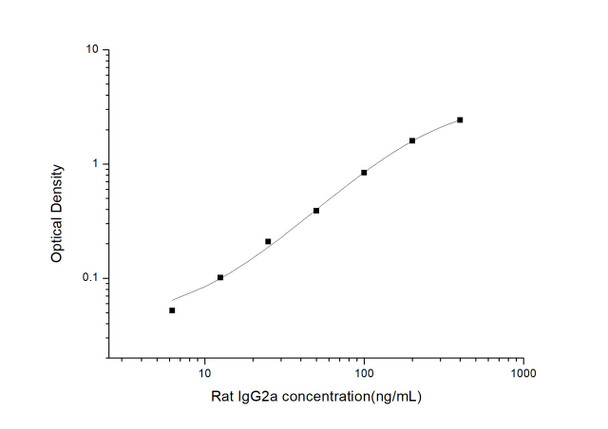
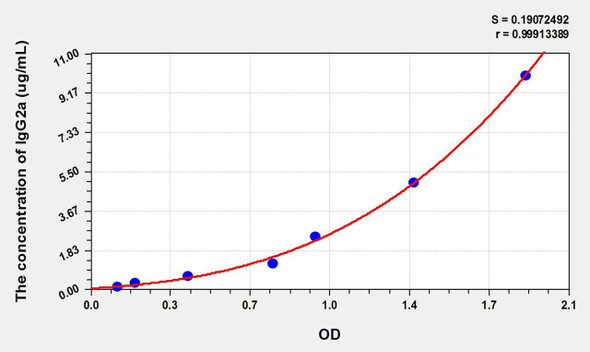
The Rat IgG2a (Immunoglobulin G2a) ELISA Kit is specifically designed for the accurate detection of rat IgG2a levels in serum, plasma, and cell culture supernatants. This kit is highly sensitive and specific, ensuring precise and reproducible results for a variety of research applications.Immunoglobulin G2a is an important antibody isotype with diverse functions in the immune response, including opsonization, neutralization of pathogens, and activation of complement. Monitoring IgG2a levels can provide valuable insights into the immune status and response in various disease models and experimental settings. Whether studying autoimmune diseases, infectious diseases, or immunological responses, the Rat IgG2a ELISA Kit is a valuable tool for researchers looking to accurately measure and analyze IgG2a levels in rat samples. Trust in the reliability and performance of this kit to advance your research and uncover new insights into immune function and disease pathology.
Product Name:
Rat IgG2a (Immunoglobulin G2a) ELISA Kit
SKU:
RTES01043
Size:
96 Assays
Detection Method:
Colorimetric method, ELISA, Sandwich
Assay type:
Sandwich-ELISA
Assay time:
3 h 30 min
Sensitivity:
3.75 ng/mL
Detection range:
6.25-400 ng/mL
Reovery:
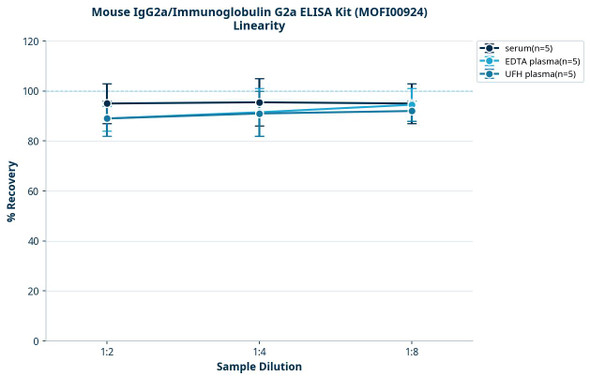
80%-120%
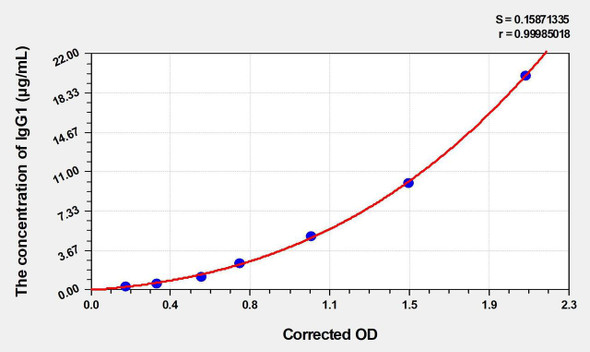
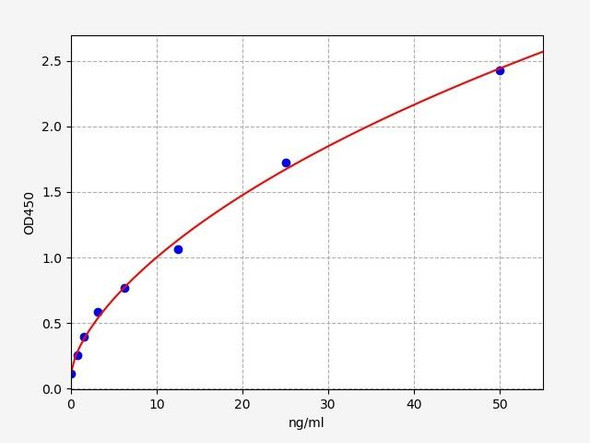
This ELISA kit uses the Sandwich-ELISA principle. The micro ELISA plate provided in this kit has been pre-coated with an antibody specific to the target protein. Standards or samples are added to the micro ELISA plate wells and bind to the immobilized antibody. A biotinylated detection antibody specific to the target protein is then added, followed by Avidin-Horseradish Peroxidase (HRP) conjugate. Free components are washed away. The substrate solution is added to each well, resulting in a color change. Only wells containing the target protein, detection antibody, and HRP conjugate will develop a blue color. The reaction is terminated by the addition of stop solution, resulting in a yellow color. The optical density (OD) is measured at 450 nm ± 2 nm. The OD value is directly proportional to the concentration of the target protein in the sample and is determined using a standard curve.