
Blog
CD8+ T Cells: Understanding the Role of Cytotoxic T Cells in Immunity
Immunology · T LymphocytesCD8+ T Cells: Cytotoxic Mechanisms, Memory and ExhaustionCD8+ T cells kill infected and transformed cells directly, and they do it with a specificity nothing else in the immune system matches: a T cell receptor reading an 8 to 10 amino acid peptide displayed on MHC class I. This guide covers how they are primed, the two killing pathways, the memory subsets that persist afterwards, and the exhaustion programme that checkpoint inhibitors are designed to reverse.Browse CD8 reagents →MHC class IWhat CD8 cells read8–10 aaPeptide length presentedPerforinDelivers granzymes into the targetPD-1Marks exhaustionKey takeawaysCD8+ T cells recognise short peptides presented on MH
…
23rd Sep 2024

Th17 Cell Differentiation: Insights into Immunological Dynamics
Th17 cells, a subset of T helper cells characterized by their production of interleukin-17 (IL-17), play a significant role in the immune system's response to pathogens and in the pathology of autoimmune diseases. This article delves into the mechanisms of Th17 cell differentiation, exploring the interplay of cytokines, transcription factors, and their implications for health and disease. Initiation of Th17 Differentiation: The Cytokine Prelude The Role of TGF-β and IL-6 Th17 differentiation begins with the orchestration of specific cytokines, notably transforming growth factor-beta (TGF-β) and interleukin-6 (IL-6). TGF-β sets the stage for a bifurcated pathway that can le
…
25th May 2024
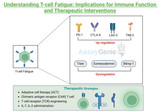
Understanding T Cell Fatigue: Implications for Immune Function and Therapeutic Interventions
T cells are central players in adaptive immunity, responsible for recognizing and eliminating infected or aberrant cells. Upon encountering antigens, T cells undergo clonal expansion and differentiation into effector or memory cells, executing various functions to eliminate the threat. However, in scenarios of persistent antigen exposure, such as chronic infections or cancer, T cells can become functionally exhausted, leading to compromised immune responses. This phenomenon, known as T cell fatigue or exhaustion, has garnered significant attention due to its implications for immune function and therapeutic interventions. Mechanisms of T Cell Fatigue: T cell fatigue is chara
…
9th Apr 2024

Exploring the Frontier of Immunotherapy: T Cell Expansion
In the realm of immunotherapy, T cell expansion has emerged as a pivotal strategy, holding promise in the treatment of various diseases, particularly cancer. T cells are a critical component of the adaptive immune system, orchestrating immune responses against pathogens and malignant cells. Harnessing the potential of T cells through expansion techniques offers a novel avenue for enhancing their therapeutic efficacy. This article delves into the mechanisms, applications, and advancements in T cell expansion, illuminating its transformative impact on medical science. Understanding T Cell Expansion T cells, a type of lymphocyte, play a central role in adaptive immunity by rec
…
8th Mar 2024
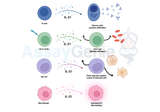
The Intricacies of IL-21 Signaling: Impact on Diverse Immune Cell Types
Interleukin-21 (IL-21) stands out as a pivotal cytokine in the complex network of immune system communication. Its role in regulating various immune cell types has drawn considerable attention from researchers seeking to unravel the intricate web of signaling pathways and biological effects it elicits. In this article, we will delve into the nuanced world of IL-21 signaling and explore its profound impacts on different immune cell populations. IL-21: An Overview IL-21 belongs to the family of cytokines, which are small proteins crucial for intercellular communication. Produced mainly by activated CD4+ T cells, particularly T follicular helper (Tfh) cells and Th17 cells, IL-
…
31st Jan 2024

CD25 Marker
CD25, a key molecule in immune regulation, is integral to the function of activated lymphocytes and regulatory T cells. It's central in mediating immune responses, with implications in autoimmune diseases and cancer. Key Takeaways: CD25, part of the IL-2 receptor, is crucial in immune response regulation. Found on T cells, NK cells, Tregs, and others; upregulated during immune activation. Vital for cellular immune responses and maintaining immune homeostasis. Serves as a biomarker in autoimmune diseases, allergies, and certain cancers. Targeted in immunotherapy for diseases like multiple sclerosis and various cancers. What is CD25? CD25, also known as Cluster o
…
22nd Jan 2024
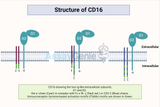
Understanding CD16: A Comprehensive Overview
CD16, also known as FcγRIII (Fc gamma receptor III), plays a crucial role in the immune system, serving as a receptor for the Fc region of immunoglobulin G (IgG). This receptor is a key player in mediating various immune responses and has implications in both innate and adaptive immunity. In this article, we will delve into the structure, functions, and significance of CD16 in the context of immune regulation. Structure of CD16: CD16 is a transmembrane glycoprotein that belongs to the immunoglobulin superfamily. It exists in two main isoforms: CD16A (FcγRIIIA) and CD16B (FcγRIIIB). CD16A is expressed on the surface of natural killer (NK) cells, macrophages, and neutrophils, while
…
5th Jan 2024
Understanding CD16: A Comprehensive Overview
CD16, also known as FcγRIII (Fc gamma receptor III), plays a crucial role in the immune system, serving as a receptor for the Fc region of immunoglobulin G (IgG). This receptor is a key player in mediating various immune responses and has implications in both innate and adaptive immunity. In this article, we will delve into the structure, functions, and significance of CD16 in the context of immune regulation. Key Takeways CD16, also known as FcγRIII, is crucial in both innate and adaptive immunity. There are two isoforms: CD16A on NK cells, macrophages, and neutrophils, and CD16B mainly on neutrophils. Functions include Antibody-Dependent Cellular Cytotoxicity (ADCC),
…
5th Jan 2024
Natural Killer Cells: A Guide
Immunology · Innate LymphocytesNatural Killer Cells: Receptors, Subsets and FunctionNK cells kill without prior sensitisation and without antigen-specific receptors, using a balance of activating and inhibitory signals to distinguish healthy cells from infected or transformed ones. This guide covers missing-self recognition, the receptor families that implement it, the CD56-bright and CD56-dim subsets that do quite different jobs, the developmental stages and their markers, and the adaptive NK cells that complicate the textbook claim that NK cells have no memory.Browse NK cell reagents →CD56 & CD16Markers defining the two subsets~90%Of blood NK cells are CD56-dimMissing selfThe core reco
…
28th Jul 2023
T cell Immunophenotyping - A Guide
Immunology · Flow CytometryT Cell Immunophenotyping: Markers, Subsets and Panel DesignImmunophenotyping identifies cell populations by the proteins on their surface. For T cells that means resolving naive from memory, helper from cytotoxic, and effector from regulatory — distinctions that require the right combination of markers rather than any single one. This guide gives the marker sets for each major subset, how to combine them into a panel, and how the results are used.Browse flow antibodies →CD3The pan-T cell gating markerCD4 / CD8Helper and cytotoxic lineage splitCD45RA / RONaive versus memory discrimination5Subset marker tables in this guideKey takeawaysNo single marker defines a T ce
…
18th Jul 2023

Antigen Presenting Cells (APCs) and cancer immunotherapy
Explore antigen presentation's crucial role in adaptive immunity and its impact on cancer immunotherapy, highlighting the diversity and function of MHC class I molecules. Key Takeaways Antigen presentation by MHC class I is key for adaptive immunity. Specialized cells, antigen-presenting cells (APCs), present antigens to T cells. MHC-I molecules' polymorphism enables diverse antigen presentation. Cancer immunotherapy leverages antigen presentation to target tumor cells. What is Antigen Presentation? Our immune system has various mechanisms to defend against pathogens, with adaptive immunity being a crucial component. Adaptive immunity enables our immune syst
…
16th Jul 2023
The PD-1 Pathway and Cancer Immunotherapy
The initial identification of PD-1 as a potential target for cancer treatment occurred in the late 1990s and early 2000s through studies exploring the regulation of T-cell responses. The development and approval of PD-1 inhibitors, such as pembrolizumab and nivolumab, for the treatment of various cancers have since transformed the landscape of cancer immunotherapy. The use of PD-1 pathway inhibitors in cancer treatment has rapidly gained recognition and has become a cornerstone of modern immunotherapeutic approaches.
Table of Contents
Jump to a section:
- PD-1 Pathway in Cancer
- Immune Checkpoints
- Cancer Immunothera
…
20th Jun 2023
Dendritic Cells - Markers, Activation & Subtypes
Immunology · Antigen PresentationDendritic Cells: Markers, Activation and SubtypesDendritic cells are the professional antigen-presenting cells that decide whether an immune response happens at all. They are also awkward to identify, because no single marker is exclusive to them — they are defined by a combination of positive markers and the absence of other lineages. This guide covers the markers that actually work, how activation and cross-presentation function, and the real subsets, including which cells share the name without sharing the lineage.Browse DC marker antibodies →cDC1 / cDC2 / pDCThe main human subsetsCD11c & HLA-DRThe core conventional DC gateType I IFNPlasmacytoid DC sig
…
12th Jun 2023
ILC2: The Immune Cell That Fights Allergies and Infections
ILC2 - Function, Cytokines, and Role in Health and Disease
A quick guide to IL2C
Our immune system is composed of various types of cells that work together to protect us from harmful pathogens, such as viruses and bacteria. One type of immune cell that has recently gained attention is the innate lymphoid cell type 2 (ILC2). ILC2s are a type of white blood cell that play a critical role in protecting us against infections and allergies. In this article, we will explore what ILC2s
…
25th Jan 2023
T Cell Types, Activation, Polarization & Function
T Cell Types, Activation, Polarization & Function A comprehensive guide to T cells! Introduction T-cells, vital components of the immune system, encompass various functions and types, including cytotoxic T cells, helper T cells, and regulatory T cells. Their activation and polarization play critical roles in immune responses. Understanding T-cell biology is essential for effective immune defense and therapeutic applications. Key Takeaways T-cells have diverse functions, including cytotoxicity, immune regulation, and coordination. Helper T cells activate through interactions with antigen-presenting cells and cytokines. T-ce
…
12th Apr 2022
Complete T Helper Cell Guide: Th1, Th2, Th17 & Functions
The Th1 Pathway In this guide, we will explore the differences between TH1 and TH2 cells, their crucial roles in the immune system, and the contributions of cytokines and transcription factors to their differentiation. Furthermore, we will examine some common diseases associated with these cell types and possible treatment options, providing a comprehensive overview of T helper cell biology and its relevance to human health. Key Takeaways T helper cells (TH1 and TH2) are integral in activating immune responses, with distinct functions. Cytokines play a crucial role in determining TH cell differentiation. Imbalances in TH cell subsets can lead to va
…
9th Mar 2022