
Blog
Polatuzumab: Redefining Targeted Therapies in B-Cell Lymphoma
What You Need to Know About PolatuzumabWhat is Polatuzumab??Polatuzumab vedotin is an antibody-drug conjugate targeting CD79b, a component of the B-cell receptor, used primarily in B-cell lymphomas like DLBCL.What is the mechanism of action for Polatuzumab?It delivers a cytotoxic payload directly to B cells by binding to CD79b, leading to selective cell death with reduced off-target effects.What are the clinical applications of Polatuzumab?Polatuzumab is used in combination therapies for relapsed/refractory DLBCL and is being explored for front-line treatment.Is Polatuzumab safe?It has a manageable safety profile, with common side effects including neutropenia, peripheral neuro
…
9th May 2025
IgA Test – Normal Ranges, Results & What They Mean
Clinical · Immunology Guide
IgA Test: Normal Ranges, Results & What They Mean [2026]
What the immunoglobulin A blood test measures, how results are interpreted against the normal reference range, and the clinical conditions — from selective IgA deficiency to celiac disease — that shift IgA levels up or down.
Browse ELISA Kits →
70–400ADULT IgA mg/dL
1 of 5ANTIBODY ISOTYPES
MucosalFIRST-LINE DEFENCE
BloodSIMPLE SAMPLE TEST
The IgA test, also known as immunoglobulin A test, is a diagnostic tool used to measure the levels of IgA
…
7th May 2025
Milatuzumab: Unveiling Its Role in Cancer Immunotherapy and Research
What You Need to Know About MilatuzumabWhat is Milatuzumab?Milatuzumab is a humanized monoclonal antibody targeting CD74, a molecule involved in antigen presentation and cell signaling.What is the mechanism of action for Milatuzumab?Milatuzumab binds CD74, interrupting survival pathways and triggering antibody-dependent cell-mediated cytotoxicity (ADCC).Is Milatuzumab safe?Milatuzumab has shown manageable safety in early trials, though further studies are needed to fully define its toxicity profile.What diseases is Milatuzumab being studied for?Milatuzumab has been investigated in hematological malignancies like multiple myeloma and chronic lymphocytic leukemia, and autoimmune
…
2nd May 2025
Guselkumab: Advancing Psoriasis and Autoimmune Disease Research Through IL-23 Targeting
Quick Facts About GuselkumabWhat is Guselkumab?Guselkumab is a biologic therapy that selectively targets the p19 subunit of interleukin-23 (IL-23), playing a critical role in inflammatory autoimmune conditions.What is the mechanism of action for Guselkumab?It inhibits IL-23 signaling by binding to the p19 subunit, disrupting downstream inflammatory pathways involved in diseases like psoriasis and psoriatic arthritis.Is Guselkumab safe?Clinical trials have shown Guselkumab to have a favorable safety profile, with most side effects being mild to moderate, such as upper respiratory infections and injection-site reactions.What conditions does Guselkumab treat?Guselkumab is FDA-appr
…
27th Mar 2025
Narsoplimab: Targeting MASP-2 to Advance Therapies in Immune-Mediated Disorders
Quick Facts About NarsoplimabWhat is Narsoplimab?Narsoplimab is a human monoclonal antibody that targets MASP-2, a key enzyme in the lectin pathway of the complement system.What is the mechanism of action for Narsoplimab?Narsoplimab inhibits MASP-2, blocking the activation of the lectin complement pathway and reducing inflammatory damage in immune-mediated diseases.What are the clinical applications of Narsoplimab?It has been studied in IgA nephropathy, HSCT-TMA, and other inflammatory conditions, with emerging evidence in COVID-19-related trials.Is Narsoplimab FDA-approved?Narsoplimab has received Breakthrough Therapy designation, but full FDA approval is pending further data
…
26th Mar 2025
Farletuzumab: Advancing Antibody-Drug Conjugate Research in Ovarian Cancer
Quick Facts About FarletuzumabWhat is Farletuzumab?Farletuzumab is a humanized monoclonal antibody targeting folate receptor alpha (FRα), a protein overexpressed in ovarian and other epithelial cancers.What is the mechanism of action for Farletuzumab?It binds to FRα on tumor cells and mediates cytotoxic effects via antibody-dependent cellular cytotoxicity (ADCC), complement-dependent cytotoxicity (CDC), and internalization.What are the clinical applications of Farletuzumab?It has been explored in clinical trials for epithelial ovarian cancer, particularly in combination with agents like carboplatin, paclitaxel, or eribulin.Is Farletuzumab used with Ecteribulin?Yes. Farletuzumab
…
26th Mar 2025
Ulviprubart: A Breakthrough in Autoimmune Disease Treatment
Quick Facts About UlviprubartWhat is Ulviprubart?Ulviprubart is an experimental complement inhibitor designed to modulate immune responses in autoimmune diseases.What is the mechanism of action for Ulviprubart?Ulviprubart targets the complement system, reducing excessive immune activation and preventing tissue damage.What are the clinical applications of Ulviprubart?Research is evaluating Ulviprubart’s potential in treating autoimmune diseases such as lupus, rheumatoid arthritis, and atypical hemolytic uremic syndrome.1.) Understanding UlviprubartUlviprubart represents a significant advancement in immunotherapy, particularly for autoimmune diseases where excessive compleme
…
19th Mar 2025
Obinutuzumab: Advancing Targeted Therapy in Hematologic Cancers
Quick Facts About ObinutuzumabWhat is Obinutuzumab?Obinutuzumab is a monoclonal antibody targeting CD20, primarily used in treating B-cell malignancies such as chronic lymphocytic leukemia (CLL) and follicular lymphoma.What is the mechanism of action for Obinutuzumab?Obinutuzumab works by binding to CD20 on B-cells, inducing direct cell death and enhancing antibody-dependent cellular cytotoxicity (ADCC) and phagocytosis.What are the clinical applications of Obinutuzumab?It is approved for CLL and follicular lymphoma, often in combination with other therapies such as venetoclax or bendamustine.1.) Understanding ObinutuzumabObinutuzumab, a next-generation glycoengineered monoclon
…
19th Mar 2025
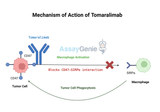
Tomaralimab: Unveiling the Role of Anti-CD47 in Cancer Research
Quick Facts About TomaralimabWhat is Tomaralimab?Tomaralimab is an anti-CD47 monoclonal antibody designed to enhance immune system recognition of cancer cells by blocking the "don't eat me" signal.What is the mechanism of action for Tomaralimab?Tomaralimab inhibits CD47, a protein that allows cancer cells to evade macrophage-mediated phagocytosis. By blocking CD47, it promotes immune clearance of tumors.What are the clinical applications of Tomaralimab?It has been investigated in hematologic malignancies and solid tumors, with ongoing research into its potential combination therapies.1.) Understanding TomaralimabTomaralimab represents a significant advancement in immuno-oncolog
…
11th Mar 2025
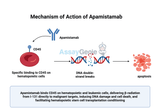
Apamistamab: Advancing Leukemia Treatment through Targeted Radioimmunotherapy
Quick Facts About ApamistamabWhat is Apamistamab?Apamistamab is a monoclonal antibody that targets the CD45 antigen on hematopoietic cells.How does Apamistamab work?When labeled with the radioactive isotope Iodine-131, Apamistamab delivers targeted radiation to CD45-expressing cells, aiding in the eradication of malignant cells.What are the clinical applications of Apamistamab?Apamistamab is primarily used in conditioning regimens before hematopoietic cell transplantation for patients with relapsed or refractory acute myeloid leukemia (AML).1.) Understanding ApamistamabApamistamab, also known as Iomab-B when conjugated with Iodine-131, is an innovative therapeutic agent designe
…
11th Mar 2025
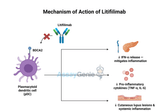
Litifilimab: A Promising Anti-BDCA2 Antibody for Lupus Treatment
Quick Facts About LitifilimabWhat is Litifilimab?Litifilimab is a monoclonal antibody developed by Biogen targeting BDCA2, a receptor on plasmacytoid dendritic cells (pDCs), to regulate immune response in lupus.What is the mechanism of action of Litifilimab?Litifilimab inhibits BDCA2, reducing inflammatory cytokine production and modulating the immune system, potentially benefiting lupus patients.What are the clinical applications of Litifilimab?Litifilimab is being investigated for systemic lupus erythematosus (SLE) and cutaneous lupus erythematosus (CLE), with Phase 3 trials ongoing.1.) Understanding LitifilimabDeveloped by Biogen, Litifilimab has shown promising results in e
…
11th Mar 2025
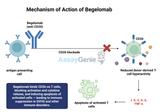
Begelomab: Mechanism of Action, Clinical Applications & Biosimilars
Quick Facts About BegelomabWhat is Begelomab?Begelomab is a monoclonal antibody that targets CD26, a key molecule involved in immune regulation. It has been studied for its potential applications in treating T-cell mediated disorders, including graft-versus-host disease (GVHD).How Does Begelomab Work?Begelomab binds to CD26, modulating immune responses by affecting T-cell activation and signaling pathways. This makes it a promising candidate for managing autoimmune conditions and post-transplant complications.What Are the Clinical Applications of Begelomab?Begelomab has been explored in clinical settings for treating steroid-refractory acute GVHD, a severe complication followin
…
8th Mar 2025
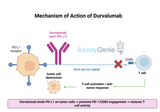
Durvalumab: Advancing Immunotherapy in Cancer Treatment
Quick Facts About DurvalumabWhat is Durvalumab?Durvalumab (Imfinzi) is a PD-L1 checkpoint inhibitor used in immunotherapy to treat various cancers, including non-small cell lung cancer (NSCLC) and small cell lung cancer (SCLC).How does Durvalumab work?Durvalumab blocks PD-L1, restoring the immune system's ability to recognize and attack cancer cells.What are the clinical applications of Durvalumab?It is FDA-approved for treating NSCLC, SCLC, and biliary tract cancer and is being explored in combination therapies.What are the side effects of Durvalumab?Common side effects include fatigue, cough, and immune-related reactions such as pneumonitis and colitis.1.) Understanding Durva
…
8th Mar 2025
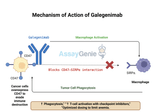
Galegenimab: Unlocking the Potential of Anti-CD47 in Cancer Research
Quick Facts About GalegenimabWhat is Galegenimab?Galegenimab is an anti-CD47 monoclonal antibody designed to block the "don't eat me" signal, enhancing the immune system's ability to eliminate cancer cells.How Does Galegenimab Work?By targeting CD47, Galegenimab prevents cancer cells from evading macrophage-mediated phagocytosis, a critical mechanism in immune response.What Are the Clinical Applications of Galegenimab?Galegenimab is being investigated for its potential in treating hematologic malignancies and solid tumors, particularly in combination with other immunotherapies.1.) Understanding GalegenimabGalegenimab represents a significant advancement in immuno-oncology by ta
…
8th Mar 2025
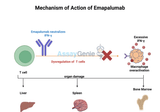
Emapalumab: Unlocking the Potential of Targeting IFN-γ in HLH Treatment
Quick Facts About EmapalumabWhat is Emapalumab?Emapalumab is a fully human monoclonal antibody that neutralizes interferon-gamma (IFN-γ). It is the first FDA-approved therapy for primary HLH, a life-threatening hyperinflammatory condition.What is the mechanism of action of Emapalumab?Emapalumab binds to and neutralizes IFN-γ, reducing excessive immune activation in HLH patients. By targeting this key cytokine, it helps control inflammation and prevent tissue damage.What are the clinical applications of Emapalumab?Emapalumab is primarily used to treat pediatric and adult patients with primary HLH who are unresponsive to conventional treatments. It is also being explored for seco
…
8th Mar 2025
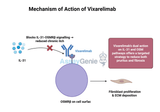
Vixarelimab: A Novel Approach to Targeting Prurigo Nodularis and Fibrosis
Quick Facts About VixarelimabWhat is Vixarelimab?Vixarelimab is an investigational monoclonal antibody developed to target oncostatin M receptor beta (OSMRβ), a key pathway involved in pruritus and fibrosis.What is the mechanism of action for Vixarelimab?Vixarelimab works by inhibiting OSMRβ, which plays a crucial role in inflammatory and fibrotic signaling. By blocking this pathway, it may help reduce itch severity and fibrosis progression in certain diseases.What are the clinical applications of Vixarelimab?Vixarelimab has been investigated for prurigo nodularis (PN) and idiopathic pulmonary fibrosis (IPF). Research is also exploring its potential for other fibrotic condition
…
8th Mar 2025
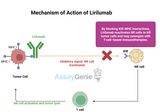
Lirilumab: Unlocking the Potential of Anti-KIR Therapy in Cancer Research
Quick Facts About LirilumabWhat is Lirilumab?Lirilumab is an anti-KIR monoclonal antibody designed to enhance natural killer (NK) cell activity by blocking killer-cell immunoglobulin-like receptors (KIRs), which inhibit NK cell function.How Does Lirilumab Work?By targeting inhibitory KIRs on NK cells, Lirilumab prevents these cells from being suppressed by tumor cells, potentially enhancing immune-mediated cancer cell elimination.What Are the Clinical Applications of Lirilumab?Lirilumab has been investigated in clinical trials for hematologic malignancies and solid tumors, often in combination with other immunotherapies like nivolumab.1.) Understanding LirilumabLirilumab, a mon
…
8th Mar 2025
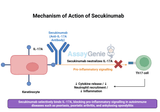
Secukinumab: A Comprehensive Guide to Its Mechanism, Applications, and Biosimilar Advancements
Quick Facts About SecukinumabWhat is SecukinumabSecukinumab is a monoclonal antibody that targets interleukin-17A (IL-17A), a key cytokine involved in inflammatory and autoimmune responses.How Does Secukinumab Work?It binds to IL-17A, preventing it from interacting with its receptor, thereby reducing inflammation associated with conditions like psoriasis and ankylosing spondylitis.What Are the Clinical Applications of Secukinumab?Secukinumab is approved for treating moderate-to-severe plaque psoriasis, psoriatic arthritis, ankylosing spondylitis, and hidradenitis suppurativa.What Are the Side Effects of Secukinumab?Common side effects include upper respiratory infections, heada
…
8th Mar 2025
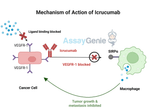
Icrucumab: Exploring the Role of Anti-Angiogenic Therapy in Cancer Research
Quick Facts About IcrucumabWhat is Icrucumab?Icrucumab is a monoclonal antibody that targets vascular endothelial growth factor receptor-1 (VEGFR-1) to inhibit tumor angiogenesis.How Does Icrucumab Work?By blocking VEGFR-1, Icrucumab prevents tumor blood vessel formation, limiting cancer growth and metastasis.What Are the Clinical Applications of Icrucumab?Icrucumab has been investigated for various cancers, including colorectal and lung cancers, though research is ongoing to determine its efficacy.1.) Understanding IcrucumabIcrucumab is a humanized monoclonal antibody developed to target vascular endothelial growth factor receptor 1 (VEGFR-1), a crucial mediator of tumor angio
…
27th Feb 2025
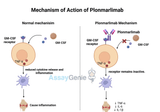
Plonmarlimab: Advancing Anti-GM-CSF Therapy in Inflammatory Diseases
Quick Facts About PlonmarlimabWhat is Plonmarlimab?Plonmarlimab is a monoclonal antibody targeting GM-CSF, a cytokine involved in inflammation and immune responses.How does Plonmarlimab work?It inhibits GM-CSF, reducing inflammatory cytokine release and immune cell activation, making it a potential treatment for autoimmune conditions.What are the clinical applications of Plonmarlimab?It has been studied in conditions like rheumatoid arthritis and COVID-19-induced hyperinflammation.Is Plonmarlimab safe?Early trials suggest a favorable safety profile, but ongoing research continues to evaluate long-term effects.1.) Understanding PlonmarlimabPlonmarlimab is a humanized monoclonal
…
27th Feb 2025
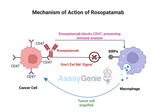
Rosopatamab: Unveiling the Potential of Anti-CD47 Therapy in Cancer Research
Quick Facts About RosopatamabWhat is Rosopatamab?Rosopatamab is a monoclonal antibody targeting CD47, a critical immune checkpoint that helps cancer cells evade immune detection. By blocking CD47, Rosopatamab enhances macrophage-mediated phagocytosis of cancer cells.What is the mechanism of action for Rosopatamab?Rosopatamab binds to CD47, preventing its interaction with SIRPα on macrophages. This action disrupts the “don’t eat me” signal, allowing the immune system to recognize and destroy malignant cells.What are the clinical applications of Rosopatamab?Rosopatamab is being explored in clinical research for treating hematologic malignancies and solid tumors. Studies suggest i
…
27th Feb 2025
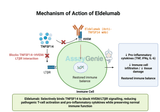
Eldelumab: Unlocking the Potential of Anti-TNFSF14 in Inflammatory Diseases
Quick Facts About EldelumabWhat is Eldelumab?Eldelumab is a monoclonal antibody targeting TNFSF14 (LIGHT), a key regulator in immune system signaling, with potential applications in inflammatory diseases.How does Eldelumab work?Eldelumab blocks the interaction between TNFSF14 and its receptors, reducing excessive immune activation linked to conditions such as inflammatory bowel disease (IBD) and rheumatoid arthritis.What are the clinical applications of Eldelumab?Eldelumab has been investigated in autoimmune diseases, particularly ulcerative colitis and Crohn’s disease, for its role in modulating inflammatory pathways.1.) Understanding EldelumabEldelumab is a human monoclonal a
…
26th Feb 2025
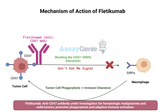
Fletikumab: Unlocking the Potential of Anti-CD47 Therapy in Cancer Research
Quick Facts About FletikumabWhat is Fletikumab?Fletikumab is an investigational monoclonal antibody targeting CD47, a key immune checkpoint that enables cancer cells to evade immune destruction.How Does Fletikumab Work?Fletikumab blocks CD47, a "don’t eat me" signal used by cancer cells, allowing macrophages and other immune cells to identify and destroy malignant cells more effectively.What Are the Clinical Applications of Fletikumab?Ongoing research explores Fletikumab’s potential in treating various cancers, particularly hematologic malignancies and solid tumors, by enhancing immune-mediated tumor clearance.Is Fletikumab Safe?While promising, early studies indicate potential
…
26th Feb 2025
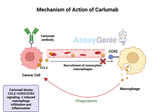
Carlumab: Exploring Its Mechanism, Clinical Potential, and Research Biosimilars
Quick Facts About CarlumabWhat is Carlumab?Carlumab is a monoclonal antibody developed to target CC-chemokine ligand 2 (CCL2), a key mediator in inflammatory diseases and cancer progression.What is the mechanism of action of Carlumab?Carlumab binds to CCL2, inhibiting its interaction with receptors and reducing inflammation-related signaling pathways that contribute to disease progression.What are the clinical applications of Carlumab?Carlumab has been explored for conditions such as cancer, fibrosis, and inflammatory diseases. Although clinical trials faced challenges, ongoing research continues to assess its therapeutic potential.1.) Understanding CarlumabCarlumab is a fully
…
25th Feb 2025