
Blog
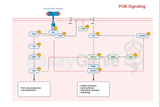
Adipokines and Insulin Signaling Pathways: An In-Depth Exploration
The prevalence of obesity and its associated metabolic disorders has risen dramatically in recent decades, presenting a significant global health challenge. Adipose tissue, once considered merely a storage site for excess energy, is now recognized as an active endocrine organ secreting a myriad of bioactive molecules known as adipokines. Among these adipokines, a key player in metabolic regulation is insulin, a hormone produced by the pancreas. Adipokines: Key Regulators of Metabolism Adipokines function as critical mediators between adipose tissue and various organs, influencing metabolic processes such as glucose homeostasis, lipid metabolism, and inflammation. Lep
…
18th Jan 2024
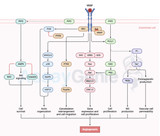
VEGF-A VEGFR-2 Signaling: Decoding the Blueprint of Angiogenesis for Therapeutic Insights
The orchestration of angiogenesis, the process by which new blood vessels form from pre-existing ones, is a complex symphony regulated by various molecular players. At the forefront of this intricate dance is the VEGF-A VEGFR-2 signaling pathway, a pivotal mechanism that propels the growth and maintenance of blood vessels. In this comprehensive exploration, we delve into the molecular details of this pathway, shedding light on its fundamental role in angiogenesis and its implications in both health and disease. VEGF-A: A Master Regulator of Angiogenesis: Vascular Endothelial Growth Factor A (VEGF-A) stands as a beacon among the VEGF family of growth factors. Produced
…
18th Jan 2024
JAK-STAT Signaling Pathway: A Comprehensive Exploration
Progression of the JAK STAT Signalling Pathway Cellular communication is a complex network of molecular interactions that govern various physiological processes. Among the many signaling pathways, the Janus kinase-signal transducer and activator of transcription (JAK-STAT) pathway plays a pivotal role in mediating signals from the cell surface to the nucleus. This pathway is essential for regulating immune responses, cell proliferation, differentiation, and survival. In this article, we will delve into the intricacies of the JAK-STAT signaling pathway, exploring its components, activation mechanisms, and physiological significance. Components of the JAK-STAT Signaling
…
18th Jan 2024

Unraveling the Complexity of the Notch Signaling Pathway: A Key Player in Development and Disease
The Notch signaling pathway is a highly conserved cellular communication system that plays a crucial role in various biological processes, including embryonic development, tissue homeostasis, and immune system function. Discovered over a century ago, the Notch pathway has since emerged as a complex and versatile signaling network that regulates cell fate decisions and maintains tissue integrity. This article aims to provide an overview of the Notch signaling pathway, its components, and its diverse roles in development and disease. Basic Components of the Notch Signaling Pathway: The Notch pathway consists of a family of transmembrane receptors, known as Notch receptors, a
…
17th Jan 2024

Unlocking Cellular Adaptation: The HIF Enhancer Pathway and Its Implications in Hypoxia Response
Hypoxia, or low oxygen levels, poses a significant challenge to cells, necessitating rapid and efficient adaptation mechanisms. The Hypoxia-Inducible Factor (HIF) pathway is a well-known regulator of cellular responses to hypoxia, orchestrating the expression of genes involved in angiogenesis, erythropoiesis, and glycolysis. It plays a pivotal role in cellular adaptation to low oxygen conditions, ensuring survival and homeostasis in diverse physiological and pathological settings. Recent studies have uncovered an additional layer of complexity in HIF regulation, known as the HIF enhancer pathway. This article explores the mechanisms, regulation, and significance of the HIF enhancer pa
…
12th Jan 2024
MAPK Signaling: Unraveling the Pathway of Mitogen Stimulation
Cell Signalling · Kinase CascadesMAPK Signaling: The Pathway of Mitogen StimulationThe mitogen-activated protein kinase (MAPK) pathway is one of the most important signalling cascades in biology, converting extracellular cues — growth factors, mitogens and stress — into changes in gene expression that control proliferation, differentiation, survival and apoptosis. This guide covers how the pathway is initiated, the three-tiered kinase module, the ERK, JNK and p38 branches, its role in the cell cycle, and its importance in disease.Browse ELISA Kits →3-tierMAP3K → MAP2K → MAPKERKPROLIFERATIONJNK / p38STRESSRAS/RAFCANCER TARGETContentsIntroduction to MAPK Signaling in Cellular ProcessesThe Mech
…
5th Jan 2024
Understanding the mTOR Signaling Pathway: A Key Player in Cell Growth and Metabolism
Cell Signalling · MetabolismThe mTOR Signalling PathwaymTOR is a master regulator of cell growth, metabolism and survival, integrating nutrient, growth-factor and energy signals through two complexes — mTORC1 and mTORC2. This guide covers its structure, regulation, disease roles and therapeutic targeting.Browse Signalling Antibodies →2COMPLEXES (mTORC1/2)PI3KUPSTREAM ACTIVATORRapamycinCLASSIC INHIBITORGrowth& METABOLISM CONTROLQuick answerThe mTOR (mechanistic target of rapamycin) pathway is a central regulator of cell growth, metabolism and survival. mTOR acts through two complexes — mTORC1 and mTORC2 — integrating signals from nutrients, growth factors and energy status. Its dysr
…
5th Jan 2024
Understanding the Gut-Brain Axis
Neuroscience · MicrobiomeUnderstanding the Gut-Brain AxisThe gut-brain axis is the dynamic, bidirectional communication system that links the gastrointestinal tract with the central nervous system. Through neural, hormonal and immune signals — and the trillions of microbes in between — the gut and brain hold a continuous dialogue that shapes mood, cognition, behaviour and health.Explore gut-brain ELISA kits →~90%of the body’s serotonin is in the gut500Mneurons in the enteric nervous system2-waygut ↔ brain communicationVagusnerve the main neural highwayKey TakeawaysThe gut-brain axis is a two-way communication network between the gut and the central nervous system.It works through neural (vag
…
24th Aug 2023
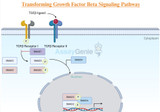
Deciphering the Intricacies of TGF-Beta Signaling Pathway
Transforming Growth Factor-Beta (TGF-β) signaling pathway plays a pivotal role in orchestrating various cellular processes, ranging from embryonic development to tissue homeostasis and immune response modulation. This intricate pathway is crucial for maintaining cellular balance, and dysregulation can contribute to a myriad of diseases, including cancer, fibrosis, and immune disorders. In this article, we delve into the key components and mechanisms that characterize the TGF-β signaling pathway. Key Components of TGF-Beta Signaling Pathway: TGF-β Ligands: The TGF-β family comprises multifunctional cytokines, with TGF-β1, TGF-β2, and TGF-β3 being
…
24th Aug 2023
The role of IFN gamma in inflammation, cancer and autoimmune disease
Immunology · CytokinesIFN-gamma: Signalling, Function and Roles in Inflammation, Cancer and AutoimmunityInterferon gamma is the sole type II interferon and one of the most consequential cytokines in immunity — activating macrophages, driving Th1 differentiation and upregulating antigen presentation. It is also genuinely double-edged: the same cytokine that supports tumour immunosurveillance can promote tumour survival, and its chronic presence contributes to autoimmune pathology. This guide covers the receptor and JAK-STAT pathway, its regulation, and both sides of its clinical role.Browse IFN-gamma reagents →Type IIThe only type II interferonIFNGR1/2Receptor subunits engagedJAK1 / JAK2Kinas
…
22nd Aug 2023
Characteristics of scaffold protein
Scaffold Proteins Environmental stimuli result in different biological responses including cell growth, proliferation or apoptosis. How cells translate specific stimuli into a specific cellular response is not well understood. Scaffold proteins are evolutionarily conserved proteins that play important roles in coordinating signalling events in eukaryotic cells. These proteins, conserved through evolution, serve as essential organizers, helping cells translate external cues into specific actions. This blog post delves into the practical world of scaffold proteins, exploring their fundamental functions and shedding light on how they influence cellular signaling pathways. Key T
…
18th Aug 2023
JAK-STAT Signalling and Cytokines: The What, How, and Why
Cell Signalling · CytokinesJAK-STAT Signalling: Mechanism, Regulation and InhibitorsJAK-STAT is the shortest route from a cytokine outside the cell to a change in gene transcription — receptor engagement, kinase activation, transcription factor phosphorylation, nuclear entry. There are only four JAKs and seven STATs, yet they carry signalling for most interleukins, all interferons and several growth factors. This guide covers the mechanism, the negative feedback that limits it, and the inhibitors built to block it.Browse JAK-STAT antibodies →4 JAKsJAK1, JAK2, JAK3, TYK27 STATsFrom six genesTyr705The STAT3 activation siteSOCSThe built-in off switchKey takeawaysThere are four JAKs: JAK1, JAK2,
…
16th Aug 2023

CXCL16 – Review
CXCL16
CXCL16, a unique member of the CXC chemokine family, stands at the crossroads of immune modulation and vascular biology. Initially discovered as a chemokine, CXCL16 operates beyond its chemotactic role by serving as a transmembrane protein that can bind to its receptor, CXCR6. This dual functionality endows CXCL16 with the ability to regulate immune cell trafficking, particularly those expressing CXCR6, and to participate in diverse physiological processes such as inflammation, atherosclerosis, and tissue repair. CXCL16's intriguing capacity to bridge immune responses with vascular dynamics underscores its significance as a multifaceted player
…
15th Aug 2023
TNF cytokines and their Receptors
The human body is a complex and intricate system where various components work together to maintain health and combat potential threats. Among these essential players are the TNF cytokines, a superfamily of cell-signaling proteins that play a crucial role in regulating the immune system and other critical physiological processes. These cytokines, along with their corresponding receptors, form a dynamic network that orchestrates immune responses, inflammation, cell survival, and much more. In this blog post, we'll delve into the world of TNF cytokines and their receptors, exploring their structural features, functions, and the significant impact they have on our health and w
…
27th Jul 2023

Leukemia Inhibitory Factor (LIF)
Leukemia Inhibitory Factor (LIF) is a cytokine that plays a crucial role in various physiological processes within the human body. It has gained significant attention in the field of leukemia research due to its multifaceted functions and potential therapeutic applications. In this blog the molecular structure, biological sources, signaling pathways, and the role of LIF in leukemia will be discussed.
Table of Contents
Jump to a section:
- LIF Expression
- LIF Signaling
- LIF in Leukemia
- LIF Related Kits
- LIF in Stem Cell Culture
.nav__list {
list-style: none;
}
.nav__list a{
font-family: Popp
…
13th Jul 2023
VEGF: Inflammation and Tumourigenesis
What is VEGF?
Vascular Endothelial Growth Factors (VEGFs) are a group of homodimeric polypeptides, and are master regulators of vascular development, maintenance and angiogenesis. VEGF is also a potent growth factor, and is produced by macrophages and CD4+ and CD8+ T cells. Members of the VEGF family include 5 structurally related proteins (VEGFA-D, and placental growth factor (PIGF), which are further individually subdivided based on alternative splicing. VEGF acts as a potent stimulator of angiogenesis, promoting the growth and survival of endothelial cells, and is essential for embryonic development and tissue repair in adults.
The discovery of VEGF and it
…
12th Jul 2023
Growth Factors: Key Players in Biological Processes
Cell Signalling · Growth FactorsGrowth Factors: Families, Receptors and Signalling PathwaysGrowth factors are secreted proteins that instruct cells whether to divide, differentiate, migrate or survive. Despite covering families as different as FGF, TGF-beta, EGF, insulin, VEGF and PDGF, they converge on a small number of receptor types and an even smaller number of downstream pathways. This guide covers each major family, the receptor class it uses, and why that distinction matters more than the ligand itself.Browse growth factor ELISA kits →8Major families covered23Members of the FGF familyRTKsThe dominant receptor classPI3K & MAPKThe shared downstream pathwaysKey takeawaysGrowth factor
…
20th Jun 2023
An Introduction into EV Markers
Extracellular Vesicles
What are Extracellular Vesicles?
Extracellular vesicles (EVs) are tiny, spherical structures that are released by cells into the extracellular environment. They are usually composed of a lipid bilayer membrane and contain various biomolecules, such as proteins, lipids, and RNA. EVs play a critical role in intercellular communication, as they are capable of transferring functional molecules and information between cells. This allows cells to coordinate their activities, pro
…
22nd Feb 2023
A Quick Guide To Mycoprotein
Mycoprotein is an alternative source of protein that can be used in place of meat. It is made from a fungi called Fusarium venenatum, and is consumed by vegetarians and vegans as a meat substitute. It is also a good source of iron and B vitamins. Mycoprotein has a chewy texture and can be used in many different recipes. Mycoprotein can be found in many different stores and can be found in the refrigerated or frozen section. Mycoprotein is also available online. Mycoprotein can be used in many different recipes. It can be cooked and used as a meat substitute in burgers, tacos, stir-fries, and more. Mycoprotein can also be used as an ingredient in pasta dishes, soups, and salads. If
…
4th Aug 2022
Protein Kinases: Overview, Classification and Therapeutic Potential
Cell Signalling · EnzymologyProtein Kinases: Function, Classification, Structure and InhibitorsProtein kinases transfer a phosphate group from ATP onto specific residues of target proteins, switching their activity on or off. Around 500 of them make up the human kinome, and because they sit at the control points of nearly every pathway, they are among the most heavily pursued drug targets in medicine. This guide covers what they do, how they are classified, their conserved architecture, how they are regulated, and how inhibitors work.Browse kinase proteins →~500Protein kinases in the human kinome3Classes by target residueSer / Thr / TyrResidues that get phosphorylatedMg²⁺Cofactor required fo
…
13th Jun 2022
EGF Family
Epidermal Growth Factor (EGF) is a protein that stimulates cell growth and differentiation by binding to its receptor epidermal growth factor receptor (EGFR) which triggers ligand-induced dimerization which activates the intrinsic protein-tyrosine kinase activity of EGFR. This in turn initiates a signal transduction cascade that results in various biochemical changes within the cell being targeted by EGF. This ultimately leads to DNA synthesis and cell proliferation. Members of this protein family are all similar due to their shared structural and functional characteristics.
Each member of the EGF family have at least one common structural motif, the EGF domain, which is character
…
23rd May 2022
The Notch Signalling Pathway: Its Steps and Impacts
Notch signalling pathway review
The Notch signalling pathway is a highly conserved intercellular signalling pathway that regulates various cellular processes. The Notch receptor is a transmembrane protein that is activated by the binding of Notch ligands, which are secreted proteins. There are four known Notch ligands: Jagged, Delta, Serrate, and Lag-related protein. Notch receptors are activated by the binding of a Notch ligand to the receptor's extracellular domain. This binding results in the proteolytic cleavage of the receptor by furin-like proteases. The cleaved Notch intracellular domain (NICD) of the receptor translocates to the nucleus where it interacts with transcription
…
4th Mar 2022
Insulin Signaling and RTK: An Overview
Cell Signalling · MetabolismInsulin Signalling & Receptor Tyrosine KinasesInsulin controls metabolism and growth through the insulin receptor — a receptor tyrosine kinase that branches into the metabolic PI3K–AKT arm and the mitogenic RAS–MAPK/ERK arm. This guide covers the receptors, cascades, negative regulators and disease links.Browse Signalling Antibodies →RTKINSULIN RECEPTOR CLASS2SIGNALLING BRANCHESGLUT4GLUCOSE-UPTAKE OUTPUTT2DRESISTANCE & DISEASEQuick answerInsulin signalling begins when insulin binds the insulin receptor — a receptor tyrosine kinase (RTK) — triggering autophosphorylation and recruitment of IRS adaptor proteins. Signalling then branches into two arms: t
…
23rd Feb 2022
Exosomes - Discovery, Cargo, Biogenesis & Functions
by Ryan Wallis, PhD student, QMUL, Blizard Institute
The microscopic world of cell biology was first explored by Robert Hooke in the 17th century and published in his work, Micrographia, in 1665. He marvelled at the revelation that an organism such as a cork plant was actually comprised of tiny “Cellula” resembling the small chambers occupied by monks. His insight into this invisible domain was the first in a line of discoveries which have transformed our understanding of biology, health and disease. As technology has progressed, scientific discovery has flourished, and the invention of electron microscopy has allowed us to observe the world on an even smaller
…
20th Jan 2022