The Androgen Receptor Monoclonal Antibody (CAB19611) is a high-quality antibody developed for reliable detection and analysis of target proteins. The androgen receptor gene is more than 90 kb long and codes for a protein that has 3 major functional domains: the N-terminal domain, DNA-binding domain, and androgen-binding domain. The protein functions as a steroid-hormone activated transcription factor. Upon binding the hormone ligand, the receptor dissociates from accessory proteins, translocates into the nucleus, dimerizes, and then stimulates transcription of androgen responsive genes. This gene contains 2 polymorphic trinucleotide repeat segments that encode polyglutamine and polyglycine tracts in the N-terminal transactivation domain of its protein. Expansion of the polyglutamine tract from the normal 9-34 repeats to the pathogenic 38-62 repeats causes spinal bulbar muscular atrophy (SBMA, also known as Kennedy's disease). Mutations in this gene are also associated with complete androgen insensitivity (CAIS). Alternative splicing results in multiple transcript variants encoding different isoforms. RRID AB_2862699 Gene ID 367 Swiss Prot Synonym KD; AIS; AR8; TFM; DHTR; SBMA; HYSP1; NR3C4; SMAX1; HUMARA; Androgen Receptor
This antibody is validated for use in WB, IHC-P, IP, ELISA, IF-P, mIHC applications and has demonstrated reactivity against Human, Mouse, Rat samples.
Product Name:
Androgen Receptor Monoclonal Antibody
SKU:
CAB19611
Size:
100μL, 20μL
Reactivity:
Human, Mouse, Rat
Clone Number:
ARC0090
Conjugate:
Unconjugated
Immunogen:
Synthetic peptide. This information is considered to be commercially sensitive.
Tested Applications:
WBIHC-PIPELISAIF-PmIHC
Recommended Dilution:
WB
1:1000 - 1:2000
IP
0.5μg-4μg antibody for 400μg-600μg extracts of whole cells
IF-P
1:200 - 1:800
IHC-P
1:200 - 1:800 m
IHC
1:200 - 1:800
ELISA
Recommended starting concentration is 1 μg/mL. Please optimize the concentration based on your specific assay requirements.
The androgen receptor gene is more than 90 kb long and codes for a protein that has 3 major functional domains: the N-terminal domain, DNA-binding domain, and androgen-binding domain. The protein functions as a steroid-hormone activated transcription factor. Upon binding the hormone ligand, the receptor dissociates from accessory proteins, translocates into the nucleus, dimerizes, and then stimulates transcription of androgen responsive genes. This gene contains 2 polymorphic trinucleotide repeat segments that encode polyglutamine and polyglycine tracts in the N-terminal transactivation domain of its protein. Expansion of the polyglutamine tract from the normal 9-34 repeats to the pathogenic 38-62 repeats causes spinal bulbar muscular atrophy (SBMA, also known as Kennedy's disease). Mutations in this gene are also associated with complete androgen insensitivity (CAIS). Alternative splicing results in multiple transcript variants encoding different isoforms. RRID AB_2862699 Gene ID 367 Swiss Prot Synonym KD; AIS; AR8; TFM; DHTR; SBMA; HYSP1; NR3C4; SMAX1; HUMARA; Androgen Receptor
Purification Method:
Affinity purification
Gene ID:
367
RRID:
AB_2862699
Buffer Information:
Store at -20℃. Avoid freeze / thaw cycles. Buffer: PBS containing 50% glycerol and 0.05% BSA, preserved with proclin300 or sodium azide, pH 7.3.
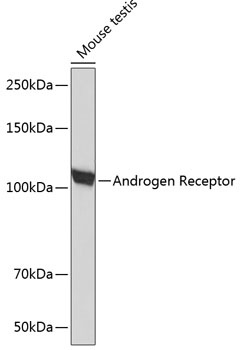
Western blot analysis of lysates from mouse testis, using Androgen Receptor Rabbit mAb (CAB19611) at 1:1000 dilution. Secondary antibody: HRP-conjugated Goat anti-Rabbit IgG (H+L) (AS014) at 1:10000 dilution. Lysates/proteins: 25μg per lane. Blocking buffer: 3% nonfat dry milk in TBST. Detection: ECL Basic Kit (AbGn00020). Exposure time: 90s.
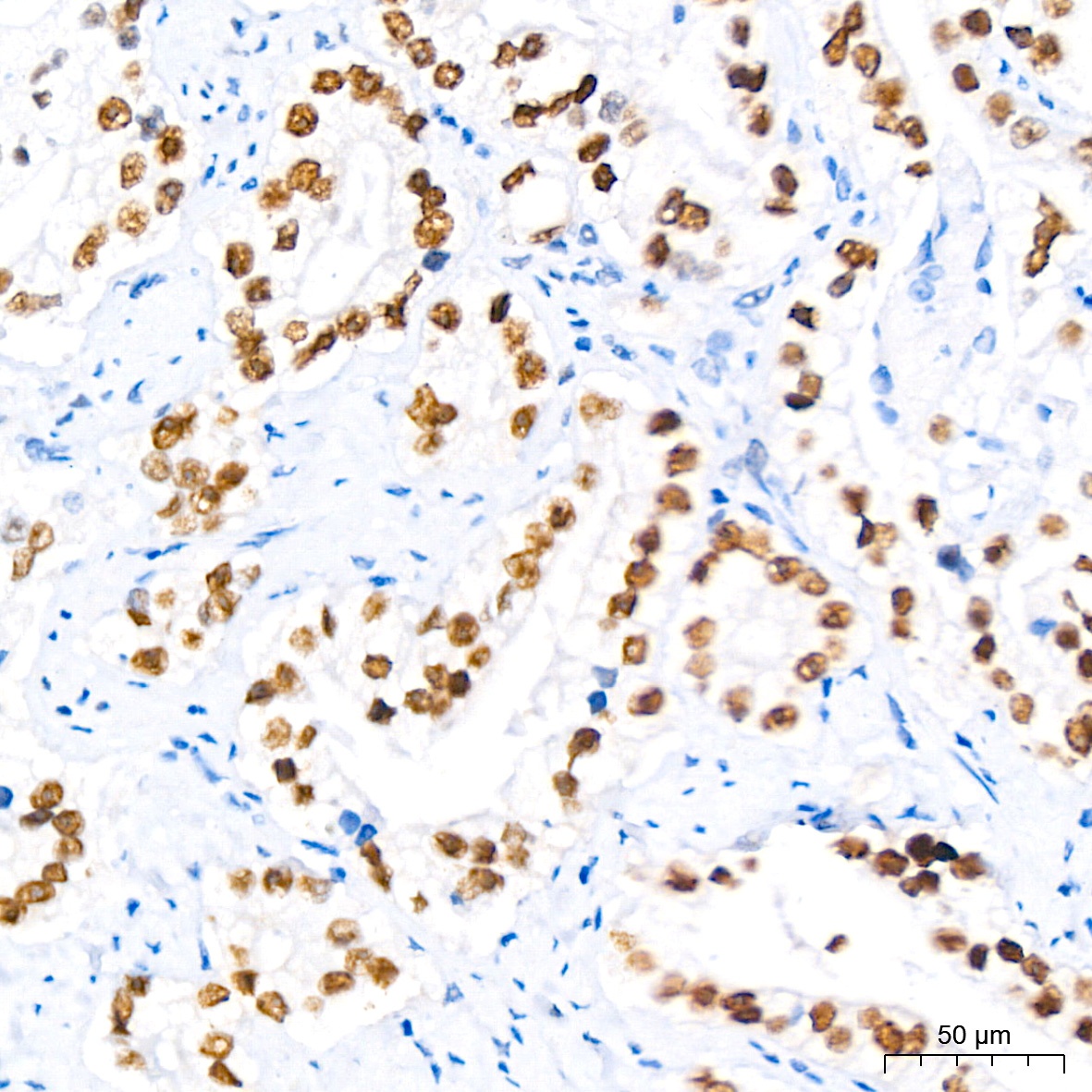
Immunohistochemistry analysis of paraffin-embedded Human prostate cancer tissue using Androgen Receptor Rabbit mAb (CAB19611) at dilution of 1:500 (40x lens). High pressure antigen retrieval performed with 0.01M Citrate Buffer (pH 6.0) prior to IHC staining.
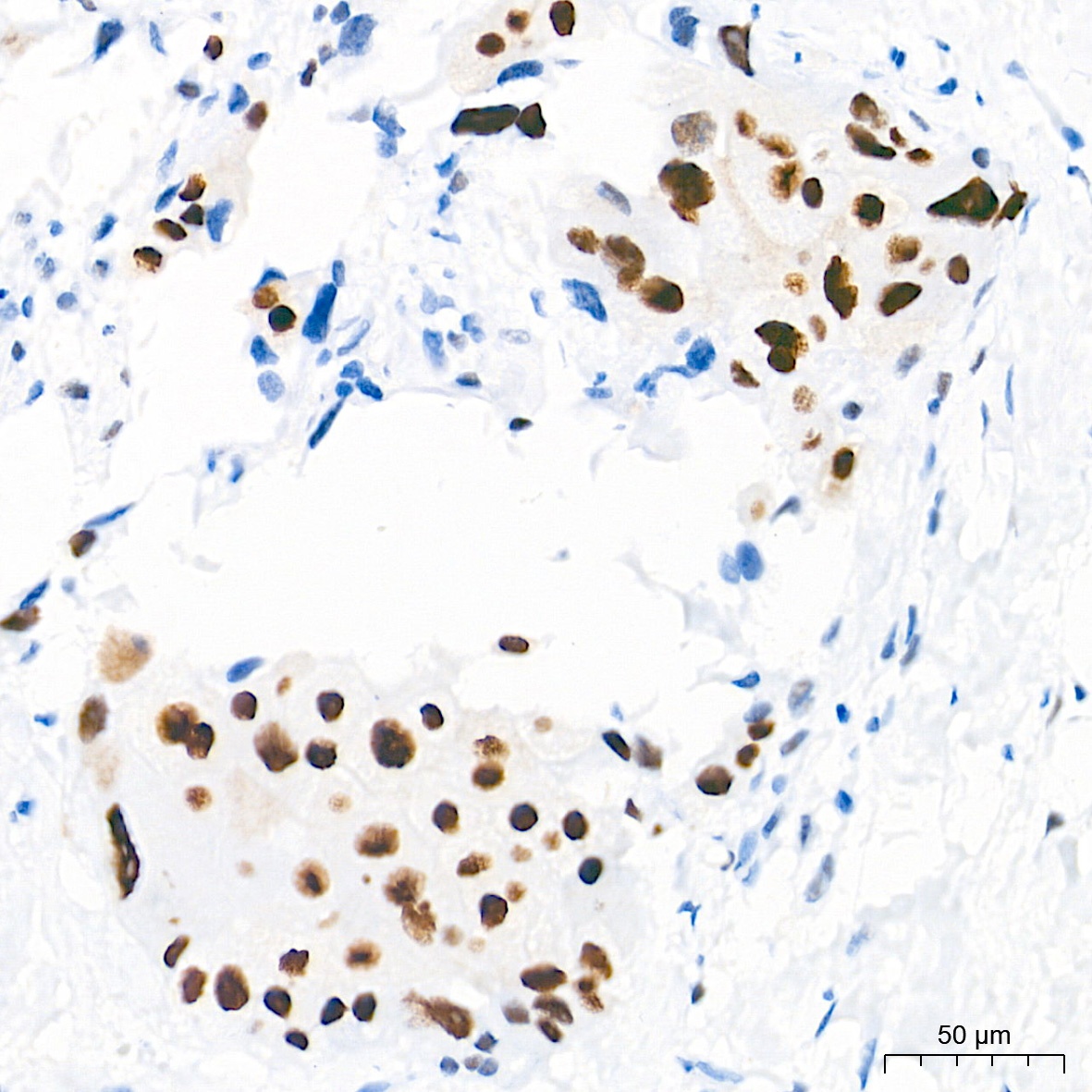
Immunohistochemistry analysis of paraffin-embedded Human breast cancer tissue using Androgen Receptor Rabbit mAb (CAB19611) at a dilution of 1:500 (40x lens). High pressure antigen retrieval performed with 0.01M Tris-EDTA Buffer (pH 9.0) prior to IHC staining.
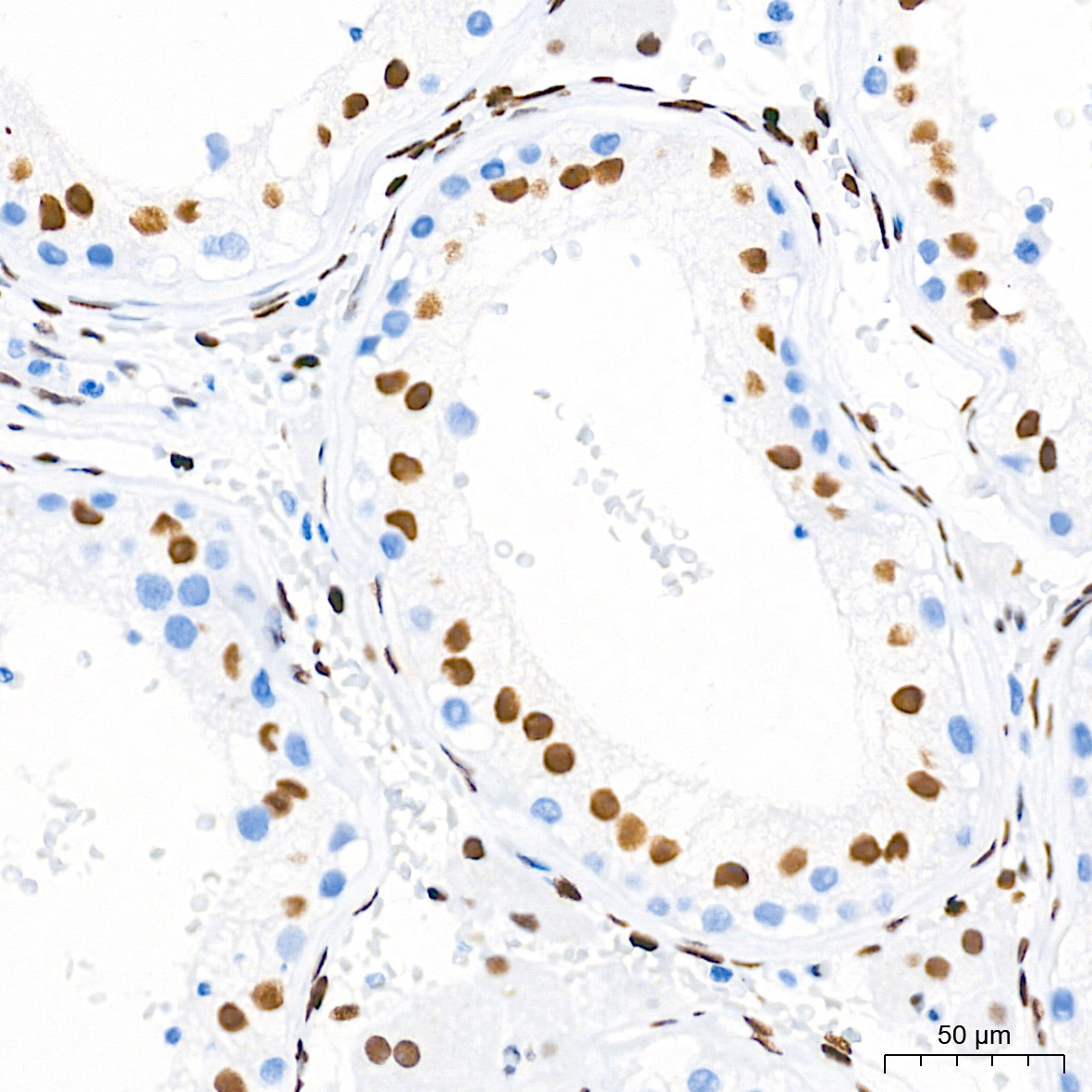
Immunohistochemistry analysis of paraffin-embedded Human testis tissue using Androgen Receptor Rabbit mAb (CAB19611) at a dilution of 1:500 (40x lens). High pressure antigen retrieval performed with 0.01M Tris-EDTA Buffer (pH 9.0) prior to IHC staining.
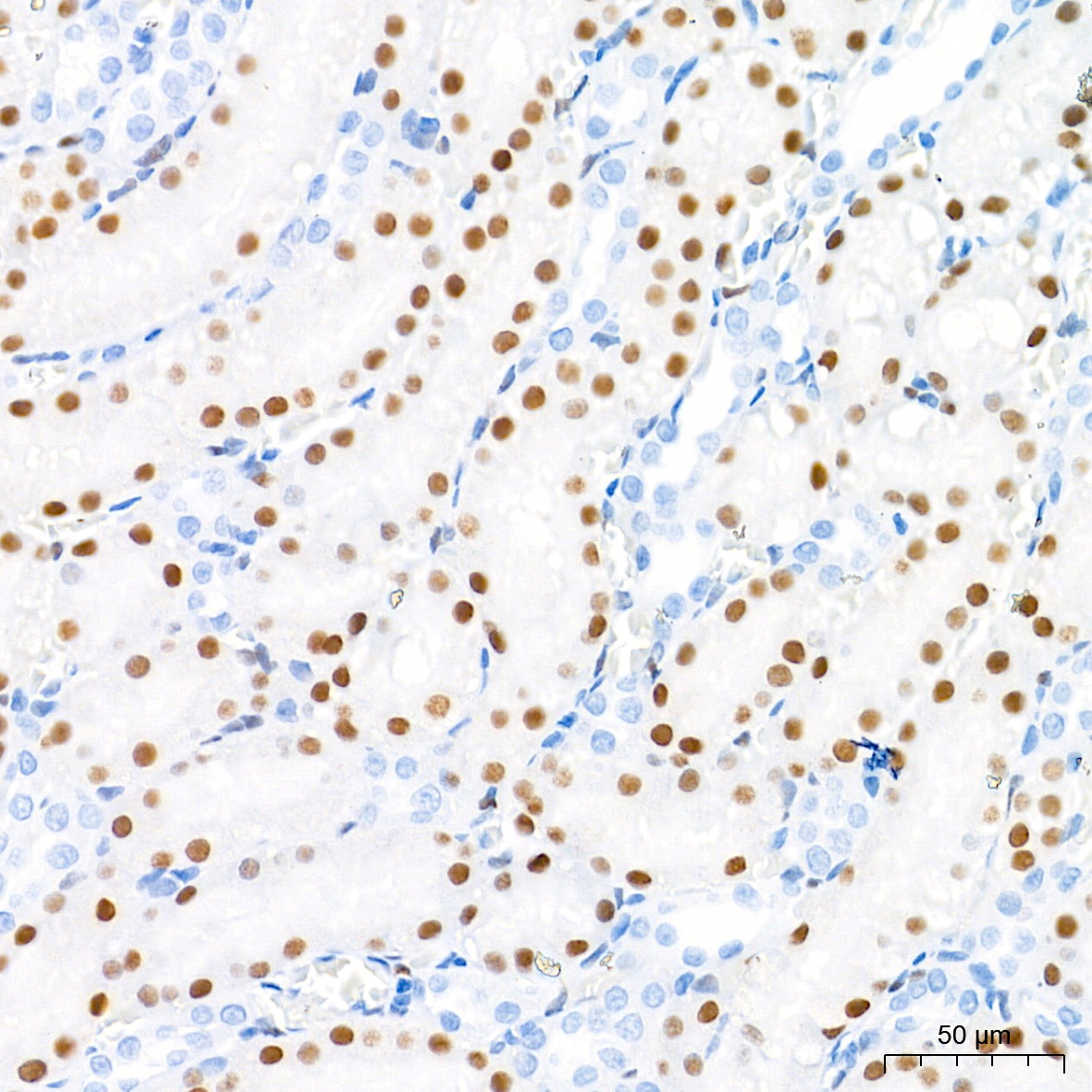
Immunohistochemistry analysis of paraffin-embedded Rat kidney tissue using Androgen Receptor Rabbit mAb (CAB19611) at a dilution of 1:500 (40x lens). High pressure antigen retrieval performed with 0.01M Tris-EDTA Buffer (pH 9.0) prior to IHC staining.
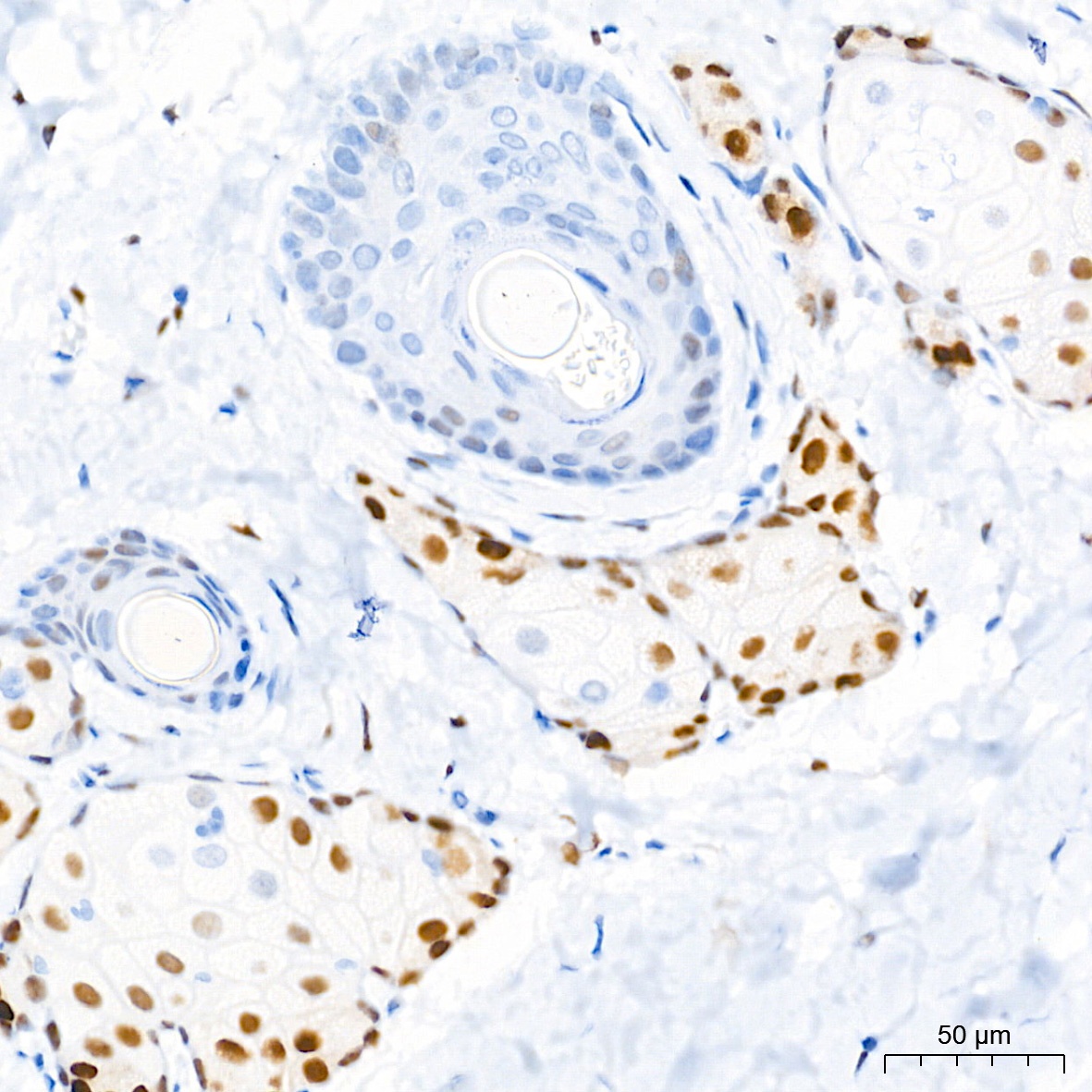
Immunohistochemistry analysis of paraffin-embedded Rat skin tissue using Androgen Receptor Rabbit mAb (CAB19611) at a dilution of 1:500 (40x lens). High pressure antigen retrieval performed with 0.01M Tris-EDTA Buffer (pH 9.0) prior to IHC staining.
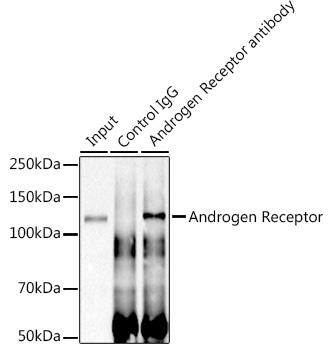
Immunoprecipitation analysis of 600 μg extracts of Mouse testis cells using 3 μg Androgen Receptor antibody (CAB19611). Western blot was performed from the immunoprecipitate using Androgen Receptor antibody (CAB19611) at a dilution of 1:1000.
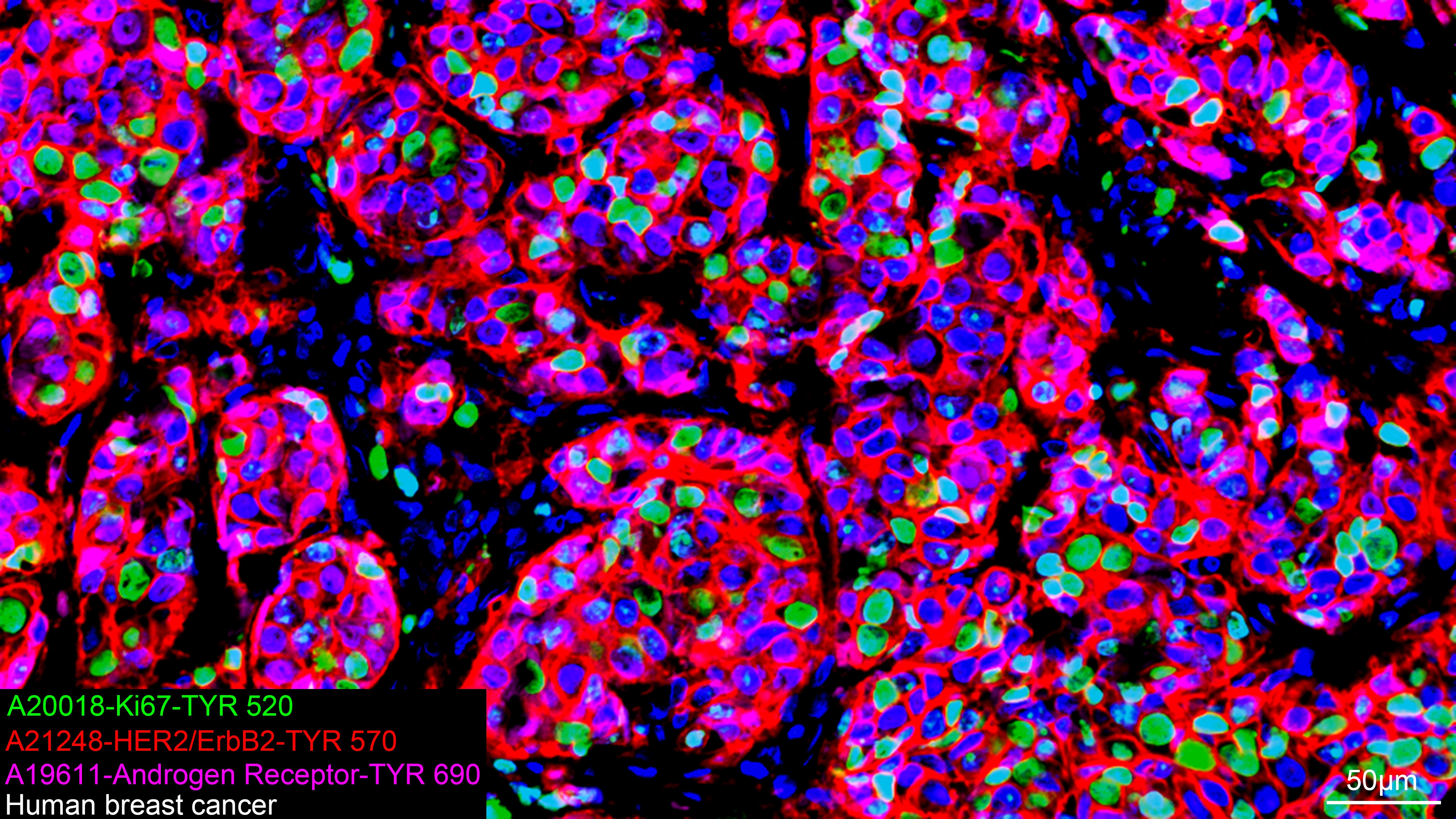
The multiplex IHC analysis on paraffin-embedded Human breast cancer tissue using the following specific primary antibodies and tyramide signal amplification (TSA) reagents (RK05903) : Ki67 Rabbit mAb (A20018, 1:500) with TSA-TYR-520 (Green), HER2/ErbB2 Rabbit mAb (A21248, 1:200) with TSA-TYR-570 (Red), and Androgen Receptor Rabbit mAb (CAB19611, 1:400) with TSA-TYR-690 (Magenta). DAPI (Blue) was used for nuclear staining. Prior to multiplex IHC staining, high-pressure antigen retrieval was performed using 0.01M citrate buffer at pH 6.0. The analysis was completed using a 20x objective lens.