Description
ATP Assay Kit (Luminescent) (BA0080) (BA0080)
The ATP Assay Kit (Luminescent) (SKU: BA0080) provides a rapid, non-radioactive method for measuring intracellular ATP. Adenosine 5'-triphosphate is the chemical energy currency of the cell and a key indicator of cellular activity, widely used as a measure of cell viability and cytotoxicity in research and drug discovery. In this assay the single working reagent lyses cells to release ATP, which in the presence of luciferase reacts immediately with the substrate D-luciferin to produce light. The light intensity is a direct measure of intracellular ATP concentration. This homogeneous, cell-based assay is performed in microplates and is compatible with liquid handling systems for high-throughput screening in 96-well and 384-well plates.
| Product Name: | ATP Assay Kit (Luminescent) (BA0080) |
| SKU: | BA0080 |
| Detection Method: | Bioluminescent |
| Detection Range: | As low as 0.02 uM ATP or a single cell |
| Sample Type: | Cells (suspension and adherent), tissue and other biological samples |
| Species Reactivity: | All |
| Assay Time: | Read within 1 minute after adding reconstituted reagent |
| Kit Size: | 100 Assays |
| Equipment Required: | Microplate reader |
| Storage: | -20C |
| Shelf Life: | 12 months after receipt |
| Shipping: | Gel Pack |
Rapid bioluminescent determination of ATP. A single working reagent lyses cells to release ATP, which reacts with luciferase and D-luciferin to produce light; the light intensity is directly proportional to the ATP concentration.
- Safe, non-radioactive assay
- Sensitive and accurate; as little as 0.02 uM ATP or a single cell can be quantified
- Homogeneous and convenient mix-incubate-measure format with no wash or transfer steps
- Robust and amenable to high-throughput screening, with Z' factors greater than 0.5 in 96-well and 384-well plates
- ATP determination in cells and other biological samples
Note: The below protocol is a sample protocol. Protocols are specific to each batch/lot. For the correct instructions please follow the protocol included in your kit.
| Step | Procedure |
| 1 | Standard curve. Prepare 500 uL of 30 uM ATP premix by mixing 5 uL of 3 mM standard and 495 uL distilled water; for cell culture samples, dilute the ATP in culture media. Dilute the standard as shown in the standard-curve table and transfer 10 uL standards into wells of a white opaque 96-well plate. |
| 2 | Samples. Use 10 uL sample per well in separate wells. For tissue samples, homogenise 20 mg sample in 200 uL cold phosphate-buffered saline, spin at 12,000 g for 5 minutes to pellet debris and transfer 1-10 uL supernatant to each well, bringing the volume to 10 uL with PBS. Test several doses and choose readings within the standard-curve range. |
| 3 | For suspension cells, transfer 10 uL of the cultured cells (10^3-10^4) into a white opaque 96-well plate. For adherent cells, culture 10^3-10^4 cells in a white opaque microplate and remove the culture medium immediately before adding 90 uL reconstituted reagent. |
| 4 | Assay. Bring Assay Buffer and Substrate to room temperature and thaw the enzyme on ice or at 4C; fresh reconstitution is recommended. For each 96-well reaction, mix 95 uL Assay Buffer with 1 uL Substrate and 1 uL ATP Enzyme, then add 90 uL reconstituted reagent to each well and mix by tapping the plate. |
| 5 | Read luminescence on a luminometer within 1 minute after adding the reconstituted reagent. |
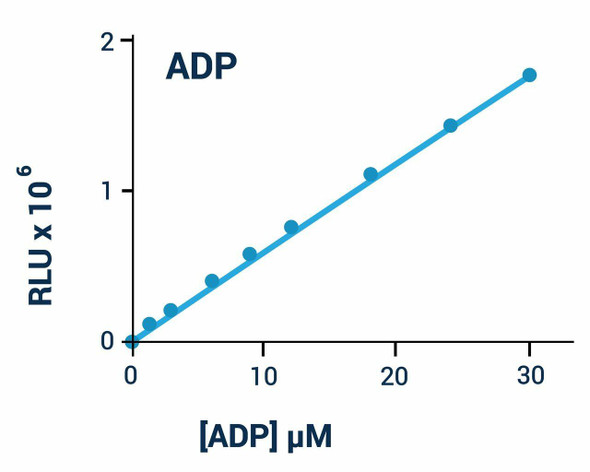
Plot the relative light units (RLU) of the standards against ATP concentration to obtain the standard curve. Determine the ATP concentration of each sample from the standard curve, multiplying by any dilution factor applied during sample preparation.
| Component | Quantity | Storage |
| Assay Buffer | 10 mL | -20C |
| Substrate | 120 uL | -20C |
| ATP Enzyme | 120 uL | -20C |
| Standard (3 mM ATP) | 100 uL | -20C |
| Badriyah S. AlotaibiBadriyah S. Alotaibi et al. | Exploring the link between pyrethroids exposure and dopaminergic degeneration through morphometric, immunofluorescence, and in-silico approaches: the therapeutic role of chitosan-encapsulated curcumin nanoparticles | Neuropharmacology 2024 | PubMed ID: 38751787 |