KDM6A Antibody is a premium polyclonal that offers outstanding performance and reliability for demanding research applications. Rigorously validated for ELISA, IHC, this antibody ensures consistent, reproducible results across multiple experimental platforms. Demonstrates excellent reactivity with Human samples, providing researchers with confidence in cross-species compatibility. Conveniently packaged in 50ug format to meet your experimental needs. For optimal performance, store at -20°C or -80°C and maintains stability for 12 months. Backed by rigorous quality control testing to ensure superior performance in your critical research applications.
Product Name:
KDM6A Antibody (PACO55826)
SKU:
PACO55826
Size:
50μg
Isotype:
IgG
Host Species:
Rabbit
Reactivity:
Human
Immunogen:
Recombinant Human Lysine-specific demethylase 6A protein (620-749AA)
Immunogen Species:
Homo sapiens (Human)
Uniprot No:
O15550
Form:
Liquid
Tested Applications:
ELISAIHC
Recommended Dilution:
IHC 1:200-1:500
Synonyms:
bA386N14.2 (ubiquitously transcribed X chromosome tetratricopeptide repeat protein (UTX) antibody, bA386N14.2 antibody, bA386N14.2 ubiquitously transcribed X chromosome tetratricopeptide repeat protein UTX antibody, DKFZp686A03225 antibody, Histone demethylase UTX antibody, KABUK2 antibody, Kdm6a antibody, KDM6A_HUMAN antibody, Lysine (K) specific demethylase 6A antibody, Lysine K specific demethylase 6A antibody, Lysine specific demethylase 6A ubiquitously transcribed tetratricopeptide repeat gene X chromosome antibody, Lysine-specific demethylase 6A antibody, MGC141941 antibody, Ubiquitously...Read more
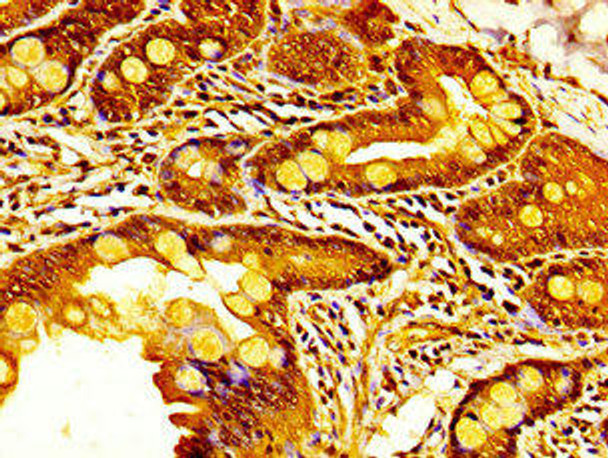
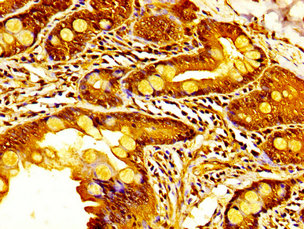
IHC image of PACO55826 diluted at 1:400 and staining in paraffin-embedded human small intestine tissue performed on a Leica BondTM system. After dewaxing and hydration, antigen retrieval was mediated by high pressure in a citrate buffer (pH 6.0). Section was blocked with 10% normal goat serum 30min at RT. Then primary antibody (1% BSA) was incubated at 4°C overnight. The primary is detected by a biotinylated secondary antibody and visualized using an HRP conjugated SP system.