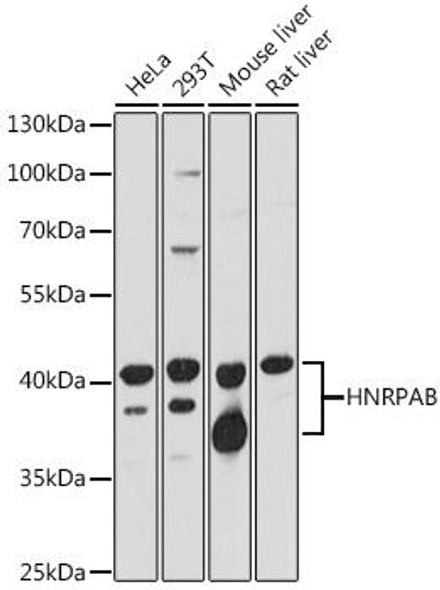
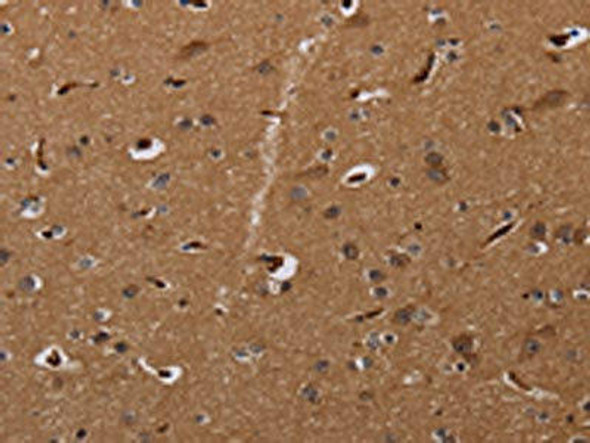
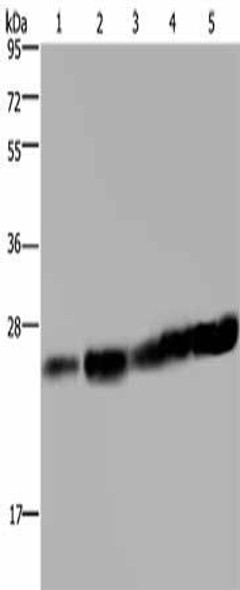
The PCDHA5 Antibody (PACO11097) is a polyclonal antibody specifically designed for research involving PCDHA5, a cell adhesion molecule belonging to the protocadherin family. This antibody, raised in rabbits, exhibits high reactivity with human samples and has been validated for use in various applications, including Western blotting.PCDHA5 is known to play a critical role in cell-cell adhesion and communication, particularly in the nervous system. Its expression has been linked to neural development, synaptogenesis, and synaptic plasticity, making it a key player in processes like learning and memory.
Research on PCDHA5 may provide insights into neurodevelopmental disorders, cognitive function, and neurological diseases.With its ability to specifically bind to the PCDHA5 protein, this antibody enables researchers to detect and analyze PCDHA5 expression in different cell types and tissues. Its versatility makes it an excellent tool for studies in neuroscience, developmental biology, and related fields. By understanding the function and signaling pathways of PCDHA5, researchers may uncover potential therapeutic targets for neurological conditions and cognitive disorders.
PCDHA5: Potential calcium-dependent cell-adhesion protein. May be involved in the establishment and maintenance of specific neuronal connections in the brain. 3 isoforms of the human protein are produced by alternative splicing.Protein type: Cell adhesion; Membrane protein, integralChromosomal Location of Human Ortholog: 5q31Cellular Component: integral to plasma membraneBiological Process: cell adhesion; nervous system development
UniProt Protein Details:
NCBI Summary:
This gene is a member of the protocadherin alpha gene cluster, one of three related gene clusters tandemly linked on chromosome five that demonstrate an unusual genomic organization similar to that of B-cell and T-cell receptor gene clusters. The alpha gene cluster is composed of 15 cadherin superfamily genes related to the mouse CNR genes and consists of 13 highly similar and 2 more distantly related coding sequences. The tandem array of 15 N-terminal exons, or variable exons, are followed by downstream C-terminal exons, or constant exons, which are shared by all genes in the cluster. The large, uninterrupted N-terminal exons each encode six cadherin ectodomains while the C-terminal exons encode the cytoplasmic domain. These neural cadherin-like cell adhesion proteins are integral plasma membrane proteins that most likely play a critical role in the establishment and function of specific cell-cell connections in the brain. Alternative splicing has been observed and additional variants have been suggested but their full-length nature has yet to be determined. [provided by RefSeq, Jul 2008]