The PCSK6 Polyclonal Antibody (PACO55718) is a valuable tool for researchers studying PCSK6, a protein involved in various cellular processes, including tissue remodeling and inflammation. This antibody, raised in rabbits, offers high reactivity with PCSK6 in human samples and has been validated for use in Western blot applications.PCSK6, also known as proprotein convertase subtilisin/kexin type 6, plays a critical role in the cleavage of precursor proteins into their active forms. Dysregulation of PCSK6 has been linked to various diseases, including cancer and cardiovascular disorders.
By using this antibody, researchers can detect and analyze PCSK6 protein levels in different cell types, providing valuable insights into its function and potential as a therapeutic target.Studying PCSK6 with this antibody can lead to a better understanding of its role in disease progression and may contribute to the development of novel treatments that target PCSK6 activity. This antibody is a valuable tool for researchers in the fields of molecular biology, biochemistry, and drug discovery.
Antibody Name:
PCSK6 Antibody (PACO55718)
Antibody SKU:
PACO55718
Size:
50ug
Host Species:
Rabbit
Tested Applications:
ELISA, IHC
Recommended Dilutions:
ELISA:1:2000-1:10000, IHC:1:200-1:500
Species Reactivity:
Human
Immunogen:
Recombinant Human Proprotein convertase subtilisin/kexin type 6 protein (596-710AA)
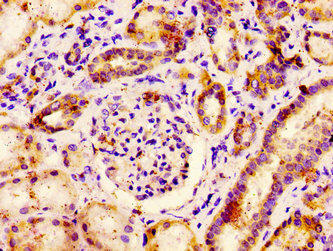
IHC image of PACO55718 diluted at 1:400 and staining in paraffin-embedded human kidney tissue performed on a Leica BondTM system. After dewaxing and hydration, antigen retrieval was mediated by high pressure in a citrate buffer (pH 6.0). Section was blocked with 10% normal goat serum 30min at RT. Then primary antibody (1% BSA) was incubated at 4°C overnight. The primary is detected by a biotinylated secondary antibody and visualized using an HRP conjugated SP system.
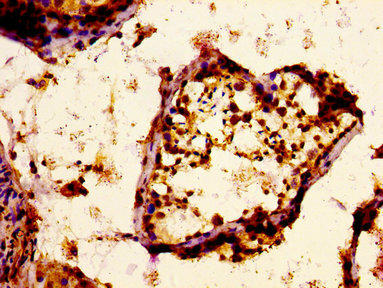
IHC image of PACO55718 diluted at 1:400 and staining in paraffin-embedded human testis tissue performed on a Leica BondTM system. After dewaxing and hydration, antigen retrieval was mediated by high pressure in a citrate buffer (pH 6.0). Section was blocked with 10% normal goat serum 30min at RT. Then primary antibody (1% BSA) was incubated at 4°C overnight. The primary is detected by a biotinylated secondary antibody and visualized using an HRP conjugated ABC system.
Background:
Serine endoprotease that processes various proproteins by cleavage at paired basic amino acid, , recognizing the RXXX[KR]R consensus motif. Likely functions in the constitutive secretory pathway, with unique restricted distribution in both neuroendocrine and non-neuroendocrine tissues.
PCSK6: Likely to represent an endoprotease activity within the constitutive secretory pathway, with unique restricted distribution in both neuroendocrine and non-neuroendocrine tissues and capable of cleavage at the RX(K/R)R consensus motif. Belongs to the peptidase S8 family. 8 isoforms of the human protein are produced by alternative splicing.Protein type: Secreted; Secreted, signal peptide; EC 3.4.21.-; ProteaseChromosomal Location of Human Ortholog: 15q26.3Cellular Component: cell surface; extracellular matrix; extracellular space; Golgi lumenMolecular Function: endopeptidase activity; heparin binding; nerve growth factor binding; serine-type endopeptidase activityBiological Process: glycoprotein metabolic process; nerve growth factor processing; nerve growth factor production; peptide hormone processing; protein processing; regulation of BMP signaling pathway; secretion by cell
UniProt Protein Details:
NCBI Summary:
This gene encodes a member of the subtilisin-like proprotein convertase family, which includes proteases that process protein and peptide precursors trafficking through regulated or constitutive branches of the secretory pathway. The encoded protein undergoes an initial autocatalytic processing event in the ER to generate a heterodimer which exits the ER and sorts to the trans-Golgi network where a second autocatalytic event takes place and the catalytic activity is acquired. The encoded protease is constitutively secreted into the extracellular matrix and expressed in many tissues, including neuroendocrine, liver, gut, and brain. This gene encodes one of the seven basic amino acid-specific members which cleave their substrates at single or paired basic residues. Some of its substrates include transforming growth factor beta related proteins, proalbumin, and von Willebrand factor. This gene is thought to play a role in tumor progression and left-right patterning. Alternatively spliced transcript variants encoding different isoforms have been identified. [provided by RefSeq, Feb 2014]