The PTRF Antibody (CAB18331) is a high-quality antibody developed for reliable detection and analysis of target proteins. This gene encodes a protein that enables the dissociation of paused ternary polymerase I transcription complexes from the 3' end of pre-rRNA transcripts. This protein regulates rRNA transcription by promoting the dissociation of transcription complexes and the reinitiation of polymerase I on nascent rRNA transcripts. This protein also localizes to caveolae at the plasma membrane and is thought to play a critical role in the formation of caveolae and the stabilization of caveolins. This protein translocates from caveolae to the cytoplasm after insulin stimulation. Caveolae contain truncated forms of this protein and may be the site of phosphorylation-dependent proteolysis. This protein is also thought to modify lipid metabolism and insulin-regulated gene expression. Mutations in this gene result in a disorder characterized by generalized lipodystrophy and muscular dystrophy.
This antibody is validated for use in WB, IHC-P, IF/ICC, ELISA applications and has demonstrated reactivity against Human, Mouse, Rat samples.
Product Name:
PTRF Antibody
SKU:
CAB18331
Size:
100μL, 20μL
Reactivity:
Human, Mouse, Rat
Immunogen:
Recombinant protein (or fragment).This information is considered to be commercially sensitive.
Tested Applications:
WBIHC-PIF/ICCELISA
Recommended Dilution:
WB
1:500 - 1:2000
IHC-P
1:50 - 1:200
IF/ICC
1:50 - 1:200
ELISA
Recommended starting concentration is 1 μg/mL. Please optimize the concentration based on your specific assay requirements.
This gene encodes a protein that enables the dissociation of paused ternary polymerase I transcription complexes from the 3' end of pre-rRNA transcripts. This protein regulates rRNA transcription by promoting the dissociation of transcription complexes and the reinitiation of polymerase I on nascent rRNA transcripts. This protein also localizes to caveolae at the plasma membrane and is thought to play a critical role in the formation of caveolae and the stabilization of caveolins. This protein translocates from caveolae to the cytoplasm after insulin stimulation. Caveolae contain truncated forms of this protein and may be the site of phosphorylation-dependent proteolysis. This protein is also thought to modify lipid metabolism and insulin-regulated gene expression. Mutations in this gene result in a disorder characterized by generalized lipodystrophy and muscular dystrophy.
Purification Method
Affinity purification
Gene ID
284119
RRID
AB_2862102
Buffer Information
Store at -20℃. Avoid freeze / thaw cycles. Buffer: PBS containing 50% glycerol, preserved with proclin300 or sodium azide, pH 7.3.
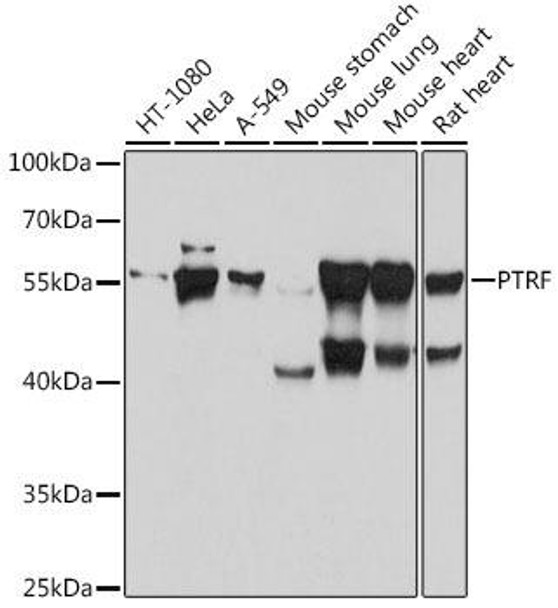
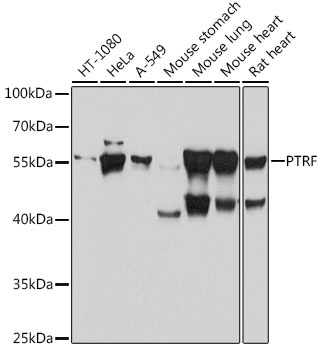
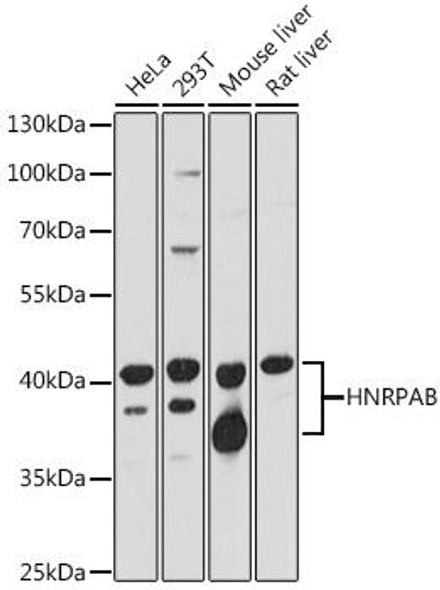
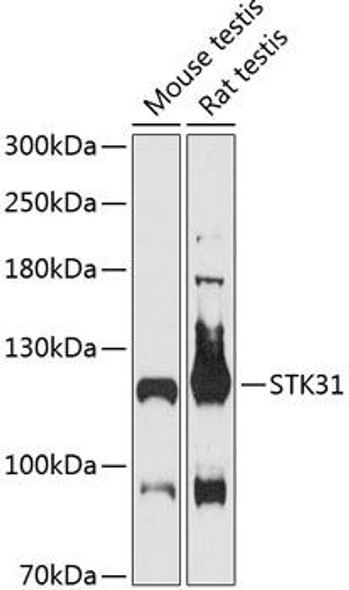
Western blot analysis of various lysates using PTRF Rabbit pAb (CAB18331) at 1:1000 dilution. Secondary antibody: HRP-conjugated Goat anti-Rabbit IgG (H+L) (AS014) at 1:10000 dilution. Lysates/proteins: 25μg per lane. Blocking buffer: 3% nonfat dry milk in TBST. Detection: ECL Basic Kit (AbGn00020). Exposure time: 10s.
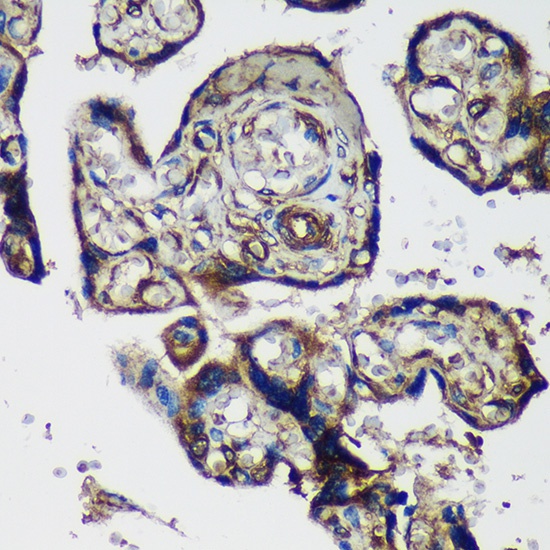
Immunohistochemistry analysis of paraffin-embedded Human placenta using PTRF Rabbit pAb (CAB18331) at dilution of 1:100 (40x lens). Microwave antigen retrieval performed with 0.01M PBS Buffer (pH 7.2) prior to IHC staining.
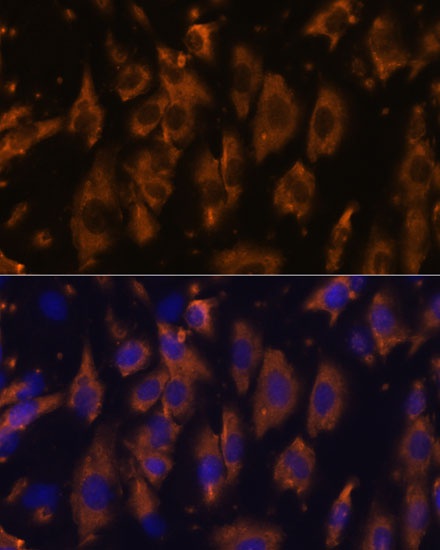
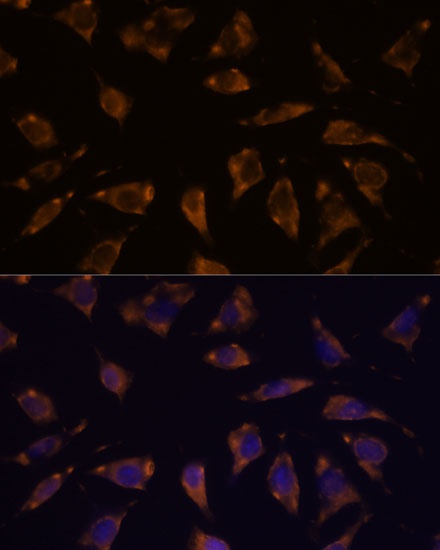
Immunofluorescence analysis of C6 cells using PTRF Rabbit pAb (CAB18331) at dilution of 1:100. Secondary antibody: Cy3-conjugated Goat anti-Rabbit IgG (H+L) (AS007) at 1:500 dilution. Blue: DAPI for nuclear staining.
Immunofluorescence analysis of L929 cells using PTRF Rabbit pAb (CAB18331) at dilution of 1:100. Secondary antibody: Cy3-conjugated Goat anti-Rabbit IgG (H+L) (AS007) at 1:500 dilution. Blue: DAPI for nuclear staining.