The SIL1 Polyclonal Antibody (PAC041318) is a valuable tool for researchers studying the SIL1 protein, a crucial chaperone involved in protein folding in the endoplasmic reticulum. This antibody is raised in rabbits and has been validated for use in Western blot applications, providing accurate detection of SIL1 protein levels in various cell types.SIL1 is known for its role in protein quality control and maintaining cellular homeostasis. Dysregulation of SIL1 has been implicated in several diseases, including neurodegenerative disorders and skeletal dysplasias. Therefore, research on SIL1 is essential for understanding the underlying mechanisms of these diseases and developing targeted therapies.
With its high reactivity with human samples, the SIL1 Polyclonal Antibody offers researchers a reliable tool for investigating the function and expression of SIL1 in both normal and disease states. Its versatility and specificity make it an ideal choice for studies in cell biology, molecular biology, and protein folding mechanisms. By utilizing this antibody, scientists can gain valuable insights into the role of SIL1 in health and disease.
Antibody Name:
SIL1 Antibody (PACO41318)
Antibody SKU:
PACO41318
Size:
50ug
Host Species:
Rabbit
Tested Applications:
ELISA, WB
Recommended Dilutions:
ELISA:1:2000-1:10000, WB:1:200-1:1000
Species Reactivity:
Human, Mouse
Immunogen:
Recombinant Human Nucleotide exchange factor SIL1 protein (32-174AA)
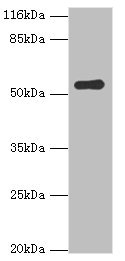
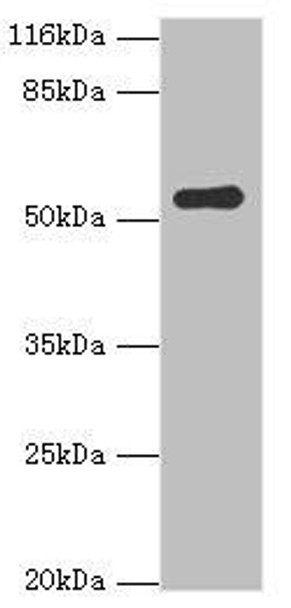
Western blot. All lanes: SIL1 antibody at 2µg/ml + Mouse kidney tissue. Secondary. Goat polyclonal to rabbit IgG at 1/10000 dilution. Predicted band size: 52 kDa. Observed band size: 52 kDa.
Background:
Required for protein translocation and folding in the endoplasmic reticulum (ER). Functions as a nucleotide exchange factor for the ER lumenal chaperone HSPA5.
SIL1: Required for protein translocation and folding in the endoplasmic reticulum (ER). Functions as a nucleotide exchange factor for the ER lumenal chaperone HSPA5. Defects in SIL1 are a cause of Marinesco-Sjoegren syndrome (MSS). MSS is an autosomal recessive multisystem disorder which is characterized by cerebellar ataxia due to cerebellar atrophy, with Purkinje and granule cell loss and myopathy featuring marked muscle replacement with fat and connective tissue. Other cardinal features include bilateral cataracts, hypergonadotrophic hypogonadism and mild to severe mental retardation. Skeletal abnormalities, short stature, dysarthria, strabismus and nystagmus are also frequent findings. Mutational inactivation of this protein may result in ER stress- induced cell death signaling or malfunctioning chaperone machineries that mishandle client proteins which are critical for the organs targeted in MSS. Belongs to the SIL1 family.Protein type: Secreted, signal peptide; SecretedChromosomal Location of Human Ortholog: 5q31Cellular Component: endoplasmic reticulum; extracellular spaceMolecular Function: protein bindingDisease: Marinesco-sjogren Syndrome
UniProt Protein Details:
NCBI Summary:
This gene encodes a resident endoplasmic reticulum (ER), N-linked glycoprotein with an N-terminal ER targeting sequence, 2 putative N-glycosylation sites, and a C-terminal ER retention signal. This protein functions as a nucleotide exchange factor for another unfolded protein response protein. Mutations in this gene have been associated with Marinesco-Sjogren syndrome. Alternate transcriptional splice variants have been characterized. [provided by RefSeq, Jul 2008]