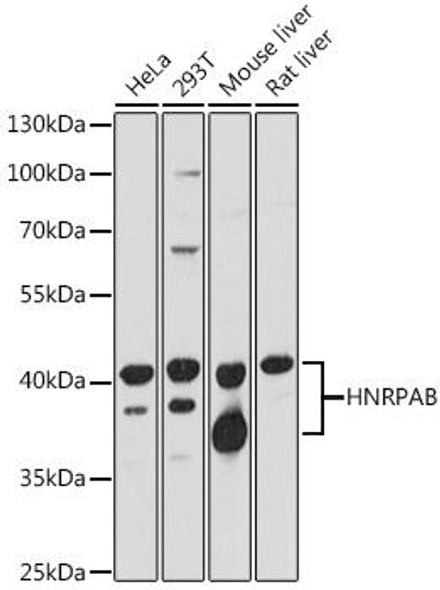
The UNKL Antibody (PAC013097) is a valuable tool for researchers studying UNKL, a protein involved in immune regulation and potentially implicated in cancer and autoimmune disorders. This polyclonal antibody, raised in rabbits, is highly specific for human samples and is suitable for use in Western blot applications. By binding to UNKL, this antibody enables detection and analysis of the protein in various cell types, making it an ideal choice for studies in immunology and oncology research.UNKL, also known as a potential immune regulator, is believed to play a crucial role in maintaining immune homeostasis by modulating inflammatory responses and possibly inhibiting allergic reactions.
Its involvement in immune function makes it a promising target for investigating diseases such as cancer and autoimmune disorders. Understanding the function of UNKL is essential for developing therapeutic strategies that can modulate immune responses in these disease contexts.Overall, the UNKL Antibody (PAC013097) offers researchers a valuable tool to delve into the role of UNKL in immune regulation, cancer biology, and autoimmune disorders, providing insights that could lead to the development of novel therapeutic approaches.
May participate in a protein complex showing an E3 ligase activity regulated by RAC1. Ubiquitination is directed towards itself and possibly other substrates, such as SMARCD2/BAF60b. Intrinsic E3 ligase activity has not been proven.
UniProt Protein Details:
NCBI Summary:
This gene encodes a RING finger protein that may function in Rac signaling. It can bind to Brg/Brm-associated factor 60b and can promote its ubiquitination. Alternative splicing of this gene results in multiple transcript variants. [provided by RefSeq, Jun 2013]