Description
EV71 3C Polyclonal Antibody (CAB20687)
The EV71 3C Polyclonal Antibody (CAB20687) is a high-quality antibody developed for reliable detection and analysis of target proteins. This polyclonal antibody, produced in rabbits, is highly specific to EV71 3C protein and is validated for use in various applications, including immunofluorescence and ELISA.EV71 is a picornavirus that can cause severe neurological complications and even death in young children. The 3C protein is a key virulence factor involved in viral replication and pathogenesis, making it a valuable target for therapeutic interventions.
This antibody is validated for use in WB, ELISA applications and has demonstrated reactivity against Other (Wide Range Predicted) samples.
| Product Name: | EV71 3C Polyclonal Antibody |
| SKU: | CAB20687 |
| Size: | 20μL, 100μL |
| Reactivity: | Other (Wide Range Predicted) |
| Conjugate: | Unconjugated |
| Immunogen: | Recombinant protein (or fragment).This information is considered to be commercially sensitive. | ||||
| Tested Applications: | WB ELISA | ||||
| Recommended Dilution: |
|
| Positive Sample: | HeLa |
| Observed MW: | 20kDa |
Enterovirus 71 (EV71) is the main pathogen of the hand, foot, and mouth disease. It was firstly isolated from sputum specimens of infants with central nervous system diseases in California in 1969, and has been repeatedly reported in various parts of the world, especially in the Asia-Pacific region. Infection with EV71 can lead tosevere neurological complications such as encephalitis, acuteflaccid paralysis, and pulmonary edema in children (1). EV71 belongs to the genus Enterovirus within the Picorna viridae family, which is a non-enveloped virus with a singlepositive-stranded RNA genome.EV71 3C protein is a 183 amino acid cysteine protease that can cleave most structural and non-structural proteins of EV71. Based on the analysis and understanding of EV71 3C protease, it is helpful to study and treat diseases caused by EV71 virus infection. The EV71 3C protease promotes virus replication by cleaving EV71 synthesis or host proteins. Moreover, EV71 3C protease inhibits the innate immune system and causes apoptosis.
| Purification Method | Affinity purification |
| Buffer Information | Store at -20℃. Avoid freeze / thaw cycles. Buffer: PBS containing 50% glycerol, preserved with proclin300 or sodium azide, pH 7.3. |
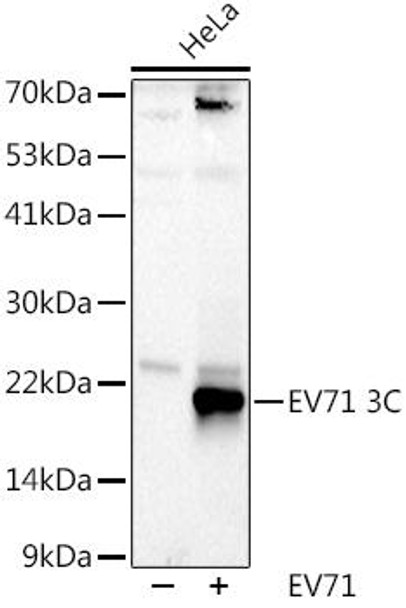
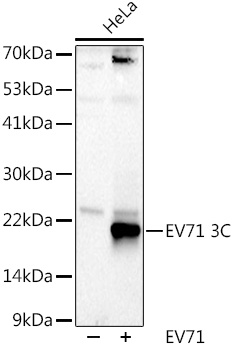 | Western blot analysis of lysates from HeLa cells, using EV71 3C Rabbit pAb (CAB20687) at 1:1000 dilution. Secondary antibody: HRP-conjugated Goat anti-Rabbit IgG (H+L) (CABS014) at 1:10000 dilution. Lysates/proteins: 25μg per lane. Blocking buffer: 3% nonfat dry milk in TBST. Detection: ECL Basic Kit (AbGn00020). Exposure time: 90s. |