The Pan-Symmetric Di-Methyl Arginine Motif Monoclonal Antibody (CAB20794) is a high-quality antibody developed for reliable detection and analysis of target proteins. Symmetric Dimethylarginine is a dimethylated derivative of L-arginine where the two methyl groups are attached to arginine in a symmetrical configuration. Symmetric dimethylarginine (SDMA) is formed when S-adenosylmethionine protein N-methyltransferases transfer one methyl group from S-adenosylmethionine to each of the two guanidine nitrogen groups of a single arginine residue in a protein. SDMA is released when the protein is degraded. SDMA doesn't bind nitric oxide synthase (NOS) but may noncompetitivelty inhibit nitric oxide (NO) synthesis by reducing L-arginine availability; it also may play a role in the modulation of cardiovascular homeostasis and renal function. RRID Gene ID Swiss Prot Synonym
This antibody is validated for use in WB, ELISA applications and has demonstrated reactivity against Human, Mouse, Rat, Other (Wide Range Predicted) samples.
Synthetic peptide. This information is considered to be commercially sensitive.
Tested Applications:
WBELISA
Recommended Dilution:
WB
1:1000 - 1:2000
ELISA
Recommended starting concentration is 1 μg/mL. Please optimize the concentration based on your specific assay requirements.
Synonyms:
-
Positive Sample:
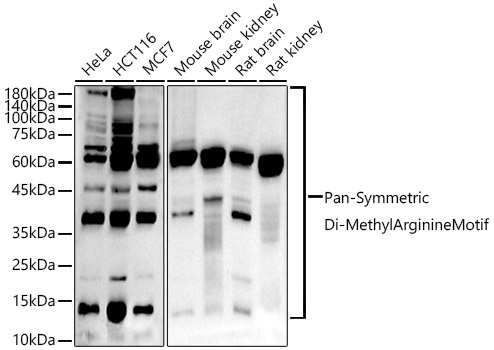
HeLa, HCT 116, MCF7, Mouse brain, Mouse kidney, Rat brain, Rat kidney
Cellular Localization:
-
Calculated MW:
-
Observed MW:
10-180kDa
Symmetric Dimethylarginine is a dimethylated derivative of L-arginine where the two methyl groups are attached to arginine in a symmetrical configuration. Symmetric dimethylarginine (SDMA) is formed when S-adenosylmethionine protein N-methyltransferases transfer one methyl group from S-adenosylmethionine to each of the two guanidine nitrogen groups of a single arginine residue in a protein. SDMA is released when the protein is degraded. SDMA doesn't bind nitric oxide synthase (NOS) but may noncompetitivelty inhibit nitric oxide (NO) synthesis by reducing L-arginine availability; it also may play a role in the modulation of cardiovascular homeostasis and renal function. RRID Gene ID Swiss Prot Synonym
Purification Method:
Affinity purification
Gene ID:
-
RRID:
-
Buffer Information:
Store at -20℃. Avoid freeze / thaw cycles. Buffer: PBS containing 50% glycerol and 0.05% BSA, preserved with proclin300 or sodium azide, pH 7.3.
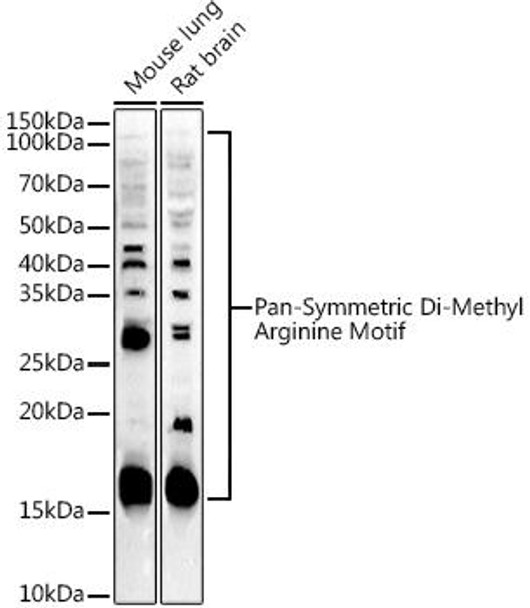
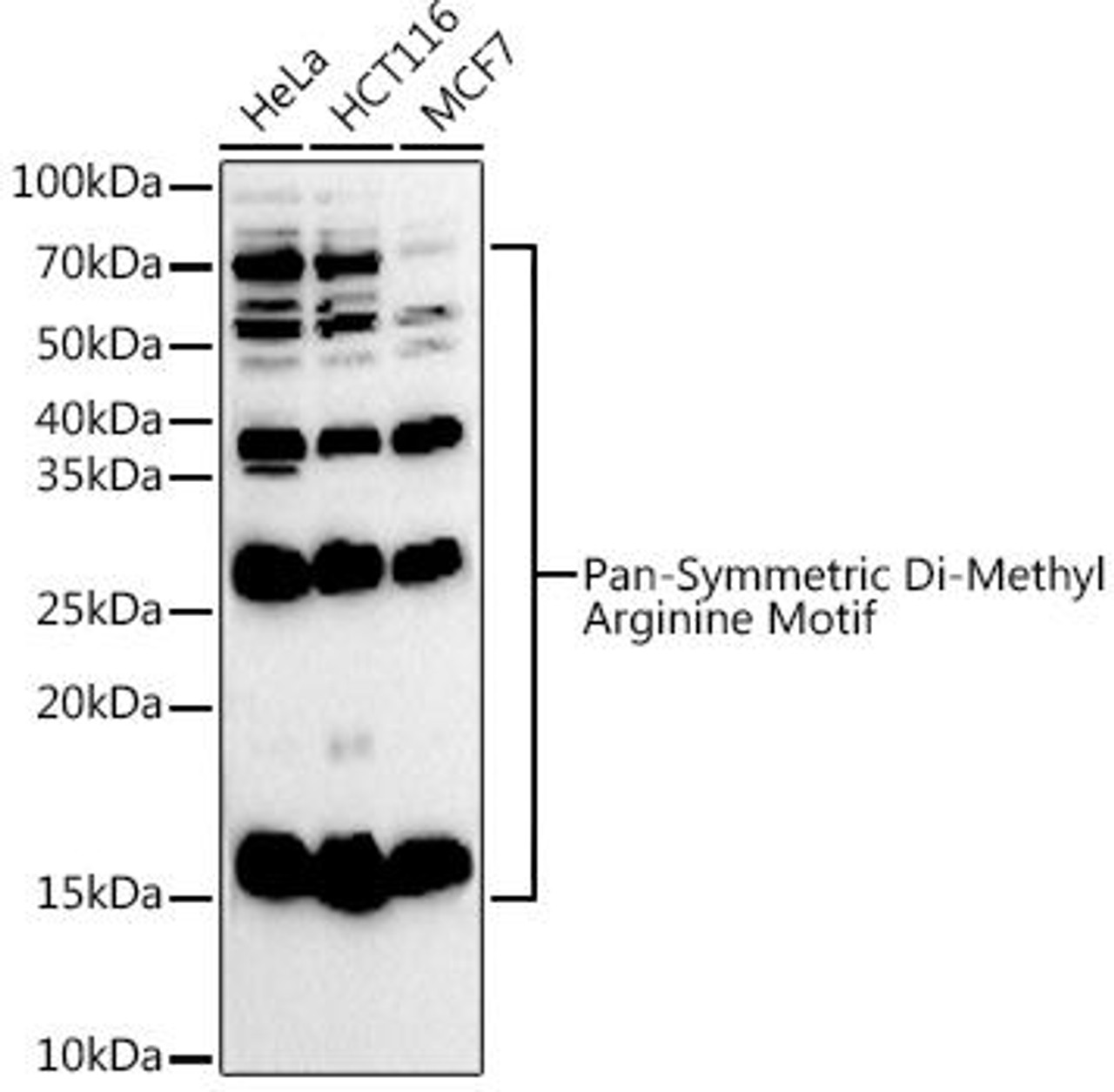
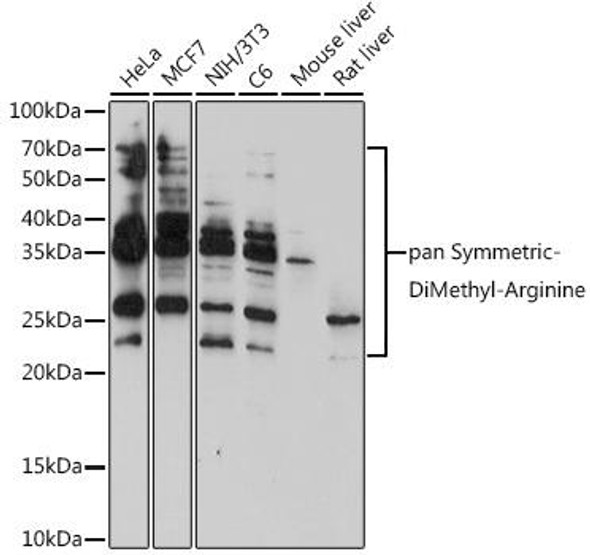
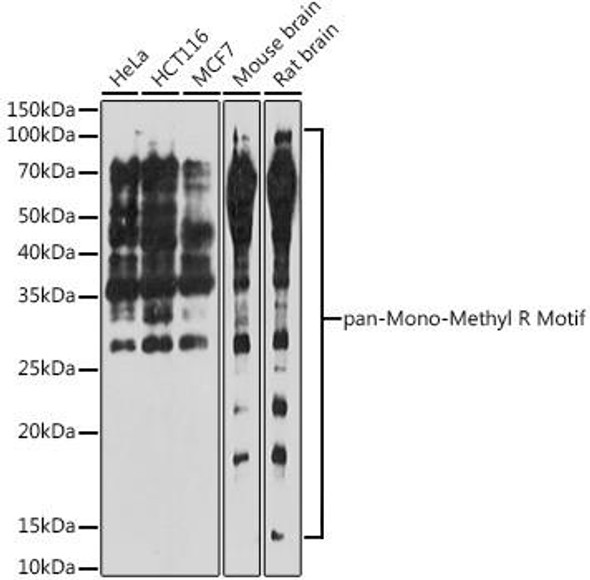
Western blot analysis of various lysates using Pan-Symmetric Di-Methyl Arginine Motif Rabbit mAb (CAB20794) at 1:1000 dilution. Secondary antibody: HRP-conjugated Goat anti-Rabbit IgG (H+L) (AS014) at 1:10000 dilution. Lysates/proteins: 25 μg per lane. Blocking buffer: 3% nonfat dry milk in TBST. Detection: ECL Basic Kit (AbGn00020). Exposure time: 180 s.