The DCAMKL1/DCLK1 Antibody (CAB9474) is a high-quality antibody developed for reliable detection and analysis of target proteins. This antibody, produced in rabbits, is highly specific to human DCLK1 and has been validated for use in various applications, including Western blot and immunohistochemistry.DCLK1, also known as doublecortin-like kinase 1, is a potential therapeutic target in cancer due to its role in promoting tumor development and metastasis. By targeting DCLK1 with this antibody, researchers can better understand its function and potential as a biomarker or treatment target in various cancer types.
This antibody is validated for use in WB, ELISA, IF-P applications and has demonstrated reactivity against Human, Mouse, Rat samples.
Product Name:
DCAMKL1/DCLK1 Antibody
SKU:
CAB9474
Size:
20μL, 100μL
Reactivity:
Human, Mouse, Rat
Conjugate:
Unconjugated
Immunogen:
Recombinant protein (or fragment).This information is considered to be commercially sensitive.
Recommended starting concentration is 1 μg/mL. Please optimize the concentration based on your specific assay requirements.
Synonyms:
CL1, DCLK, CLICK1, DCDC3A, DCAMKL1, DCAMKL1/DCLK1
Positive Sample:
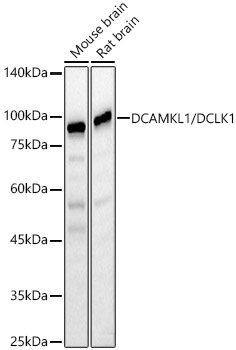
Mouse brain, Rat brain
Cellular Localization:
Plasma Membrane, Postsynaptic Density.
Calculated MW:
82kDa
Observed MW:
82kDa
This gene encodes a member of the protein kinase superfamily and the doublecortin family. The protein encoded by this gene contains two N-terminal doublecortin domains, which bind microtubules and regulate microtubule polymerization, a C-terminal serine/threonine protein kinase domain, which shows substantial homology to Ca2+/calmodulin-dependent protein kinase, and a serine/proline-rich domain in between the doublecortin and the protein kinase domains, which mediates multiple protein-protein interactions. The microtubule-polymerizing activity of the encoded protein is independent of its protein kinase activity. The encoded protein is involved in several different cellular processes, including neuronal migration, retrograde transport, neuronal apoptosis and neurogenesis. This gene is up-regulated by brain-derived neurotrophic factor and associated with memory and general cognitive abilities. Multiple transcript variants generated by two alternative promoter usage and alternative splicing have been reported, but the full-length nature and biological validity of some variants have not been defined. These variants encode different isoforms, which are differentially expressed and have different kinase activities.
Purification Method
Affinity purification
Gene ID
9201
RRID
AB_2769121
Buffer Information
Store at -20℃. Avoid freeze / thaw cycles. Buffer: PBS containing 50% glycerol, preserved with proclin300 or sodium azide, pH 7.3.
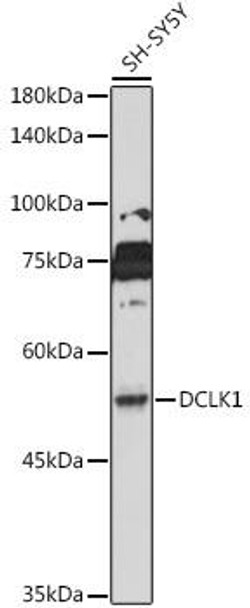
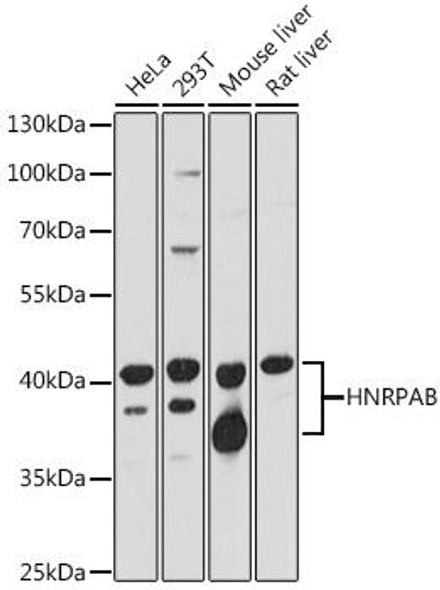
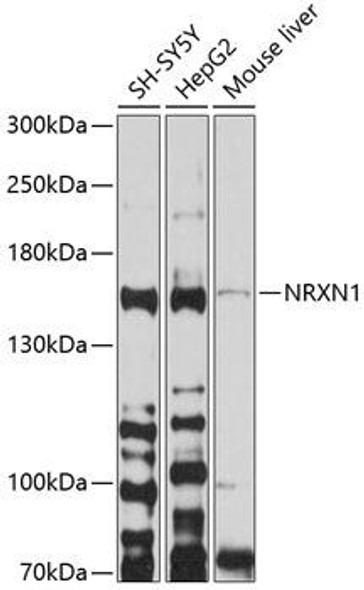
Western blot analysis of various lysates, using DCAMKL1/DCLK1 Rabbit pAb (CAB9474) at 1:800 dilution. Secondary antibody: HRP-conjugated Goat anti-Rabbit IgG (H+L) (CABS014) at 1:10000 dilution. Lysates/proteins: 25μg per lane. Blocking buffer: 3% nonfat dry milk in TBST. Detection: ECL Basic Kit (AbGn00020). Exposure time: 60s.
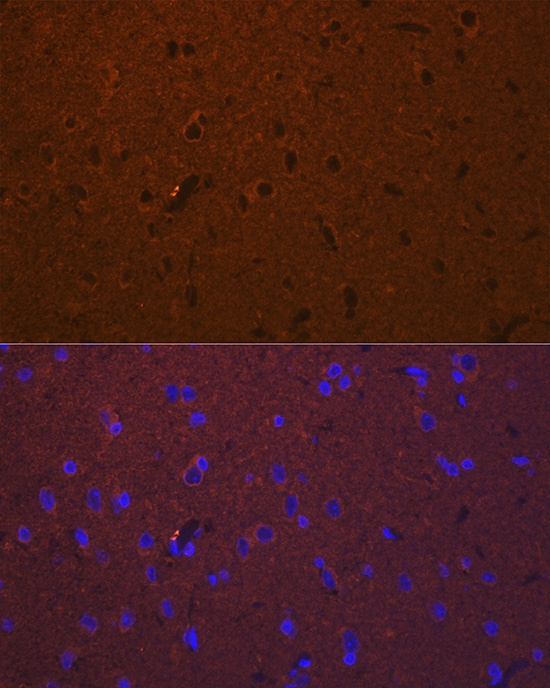
Immunofluorescence analysis of paraffin-embedded Rat brain using DCAMKL1/DCLK1 Rabbit pAb (CAB9474) at dilution of 1:100 (40x lens). Secondary antibody: Cy3-conjugated Goat anti-Rabbit IgG (H+L) (CABS007) at 1:500 dilution. Blue: DAPI for nuclear staining.
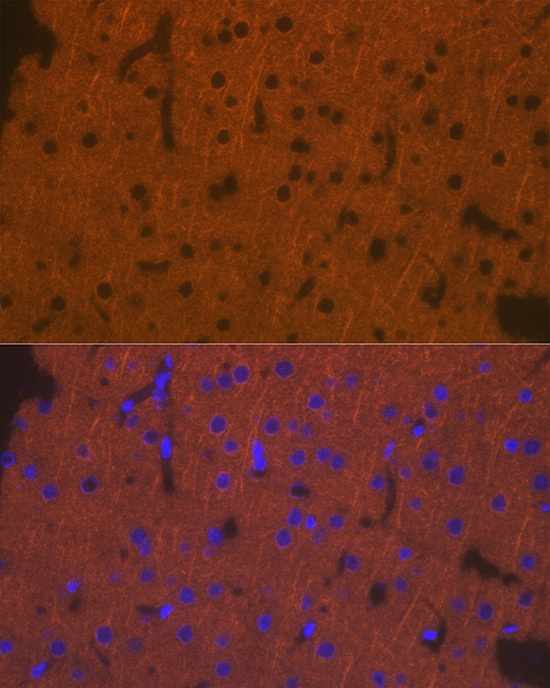
Immunofluorescence analysis of paraffin-embedded rat brain using DCAMKL1/DCLK1 Rabbit pAb (CAB9474) at dilution of 1:100 (40x lens). Secondary antibody: Cy3-conjugated Goat anti-Rabbit IgG (H+L) (CABS007) at 1:500 dilution. Blue: DAPI for nuclear staining.
Immunofluorescence analysis of paraffin-embedded mouse brain using DCAMKL1/DCLK1 Rabbit pAb (CAB9474) at dilution of 1:100 (40x lens). Secondary antibody: Cy3-conjugated Goat anti-Rabbit IgG (H+L) (CABS007) at 1:500 dilution. Blue: DAPI for nuclear staining.