The FGFR3 Antibody (CAB0404) is a high-quality antibody developed for reliable detection and analysis of target proteins. This antibody, generated in rabbits, is highly specific for human samples and has been validated for use in Western blot applications.FGFR3 is a key player in various cellular processes, including development, tissue repair, and angiogenesis. Dysregulation of FGFR3 signaling has been linked to a range of diseases, including skeletal disorders, cancer, and developmental abnormalities. By targeting FGFR3 with this antibody, researchers can investigate its expression and activity in different cell types, shedding light on its function in both normal and disease states.
This antibody is validated for use in WB, IHC-P, IF/ICC, ELISA applications and has demonstrated reactivity against Human, Mouse, Rat samples.
Product Name:
FGFR3 Antibody
SKU:
CAB0404
Size:
20μL, 100μL
Reactivity:
Human, Mouse, Rat
Conjugate:
Unconjugated
Immunogen:
Synthetic peptide. This information is considered to be commercially sensitive.
Recommended starting concentration is 1 μg/mL. Please optimize the concentration based on your specific assay requirements.
Synonyms:
ACH, CEK2, JTK4, CD333, HSFGFR3EX, FGFR3
Positive Sample:
Rat brain
Cellular Localization:
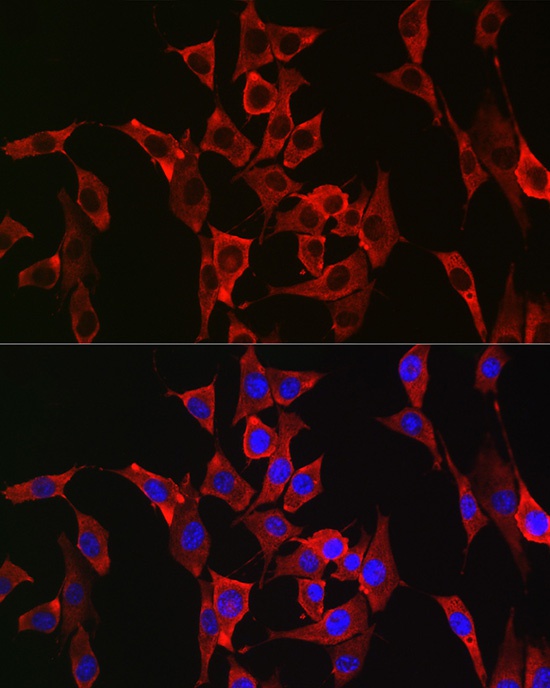
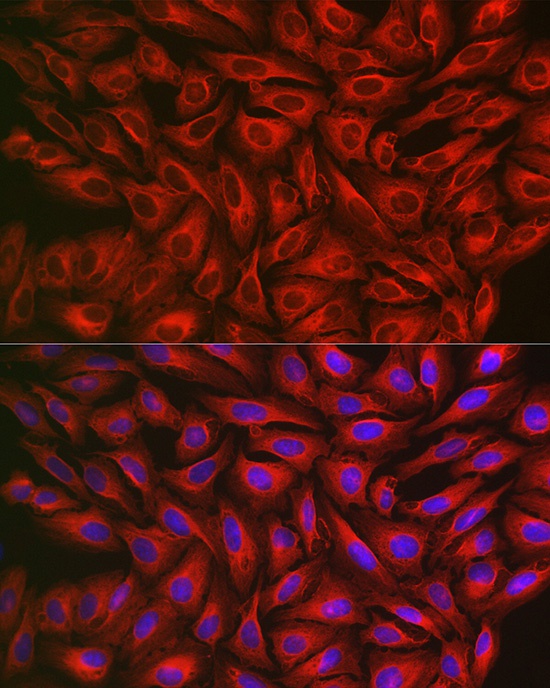
Cell Membrane, Cytoplasmic Vesicle, Endoplasmic Reticulum, Secreted, Single-Pass Type I Membrane Protein.
Calculated MW:
88kDa
Observed MW:
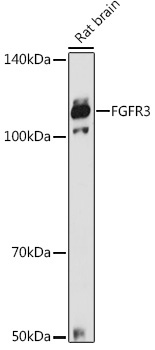
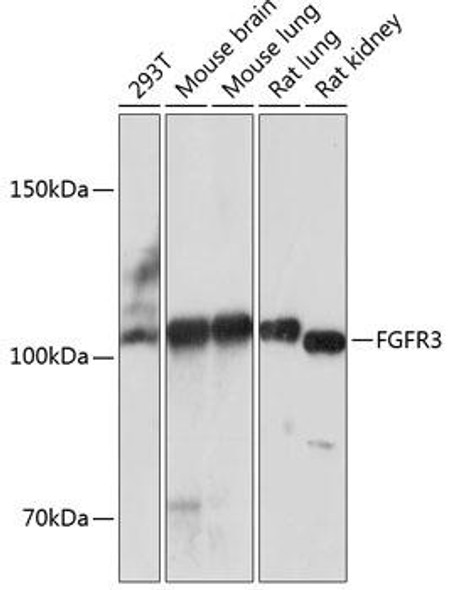
125kDa
This gene encodes a member of the fibroblast growth factor receptor (FGFR) family, with its amino acid sequence being highly conserved between members and among divergent species. FGFR family members differ from one another in their ligand affinities and tissue distribution. A full-length representative protein would consist of an extracellular region, composed of three immunoglobulin-like domains, a single hydrophobic membrane-spanning segment and a cytoplasmic tyrosine kinase domain. The extracellular portion of the protein interacts with fibroblast growth factors, setting in motion a cascade of downstream signals, ultimately influencing mitogenesis and differentiation. This particular family member binds acidic and basic fibroblast growth hormone and plays a role in bone development and maintenance. Mutations in this gene lead to craniosynostosis and multiple types of skeletal dysplasia.
Purification Method
Affinity purification
Gene ID
2261
RRID
AB_2757175
Buffer Information
Store at -20℃. Avoid freeze / thaw cycles. Buffer: PBS containing 50% glycerol, preserved with proclin300 or sodium azide, pH 7.3.
Western blot analysis of lysates from Rat brain, using FGFR3 Rabbit pAb (CAB0404) at 1:1000 dilution. Secondary antibody: HRP-conjugated Goat anti-Rabbit IgG (H+L) (CABS014) at 1:10000 dilution. Lysates/proteins: 25μg per lane. Blocking buffer: 3% nonfat dry milk in TBST. Detection: ECL Basic Kit (AbGn00020). Exposure time: 30s.
Immunofluorescence analysis of NIH/3T3 cells using FGFR3 Rabbit pAb (CAB0404) at dilution of 1:100 (40x lens). Secondary antibody: Cy3-conjugated Goat anti-Rabbit IgG (H+L) (CABS007) at 1:500 dilution. Blue: DAPI for nuclear staining.
Immunofluorescence analysis of U2OS cells using FGFR3 Rabbit pAb (CAB0404) at dilution of 1:100 (40x lens). Secondary antibody: Cy3-conjugated Goat anti-Rabbit IgG (H+L) (CABS007) at 1:500 dilution. Blue: DAPI for nuclear staining.