The PPAP2B Antibody (CAB15743) is a high-quality antibody developed for reliable detection and analysis of target proteins. This antibody is produced in rabbits and is highly reactive with human samples, making it ideal for use in Western blot applications. By binding specifically to the PPAP2B protein, this antibody enables the detection and analysis of PPAP2B in a variety of cell types.PPAP2B is a phosphatidate phosphatase enzyme that plays a crucial role in lipid metabolism and cell signaling. Dysregulation of PPAP2B has been implicated in various diseases, including metabolic disorders, neurodegenerative diseases, and cancer.
This antibody is validated for use in WB, ELISA applications and has demonstrated reactivity against Human, Mouse, Rat samples.
Product Name:
PPAP2B Antibody
SKU:
CAB15743
Size:
20μL, 100μL
Reactivity:
Human, Mouse, Rat
Conjugate:
Unconjugated
Immunogen:
Synthetic peptide. This information is considered to be commercially sensitive.
The protein encoded by this gene is a member of the phosphatidic acid phosphatase (PAP) family. PAPs convert phosphatidic acid to diacylglycerol, and function in de novo synthesis of glycerolipids as well as in receptor-activated signal transduction mediated by phospholipase D. This protein is a membrane glycoprotein localized at the cell plasma membrane. It has been shown to actively hydrolyze extracellular lysophosphatidic acid and short-chain phosphatidic acid. The expression of this gene is found to be enhanced by epidermal growth factor in Hela cells.
Purification Method
Affinity purification
Gene ID
8613
RRID
AB_2763159
Buffer Information
Store at -20℃. Avoid freeze / thaw cycles. Buffer: PBS containing 50% glycerol, preserved with proclin300 or sodium azide, pH 7.3.
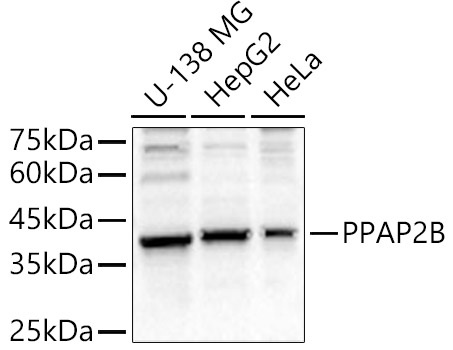
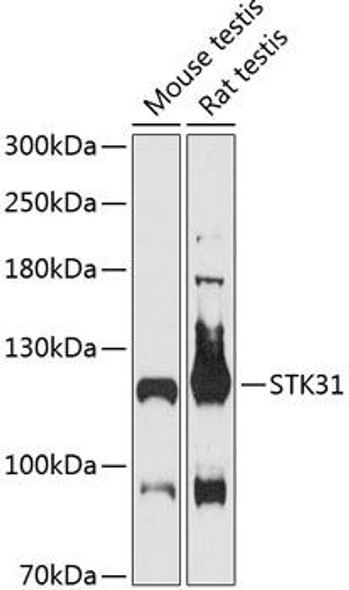
Western blot analysis of various lysates, using PPAP2B Rabbit pAb (CAB15743) at 1:1000 dilution. Secondary antibody: HRP-conjugated Goat anti-Rabbit IgG (H+L) (CABS014) at 1:10000 dilution. Lysates/proteins: 25μg per lane. Blocking buffer: 3% nonfat dry milk in TBST. Detection: ECL Basic Kit (AbGn00020). Exposure time: 10s.