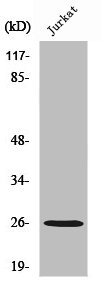
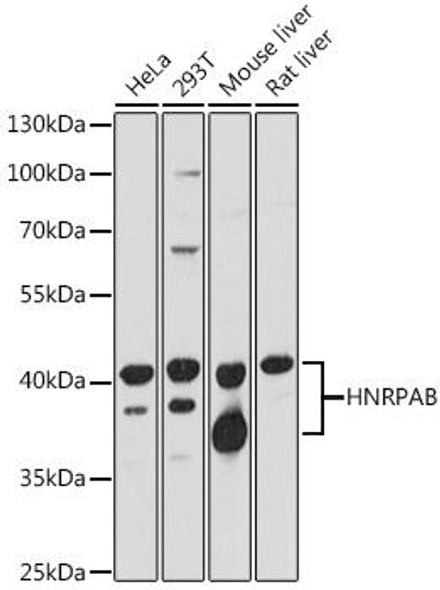
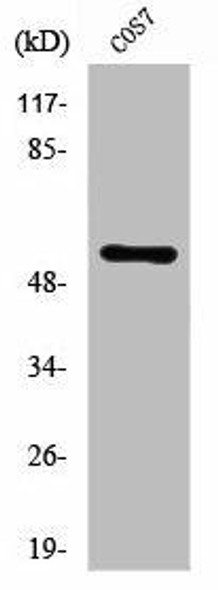
RAP2C Antibody is a premium polyclonal that offers outstanding performance and reliability for demanding research applications. Rigorously validated for WB, ELISA, this antibody ensures consistent, reproducible results across multiple experimental platforms. Demonstrates excellent reactivity with Human, Mouse samples, providing researchers with confidence in cross-species compatibility. Conveniently packaged in 50ug format to meet your experimental needs. For optimal performance, store at -20°C or -80°C and maintains stability for 12 months. Backed by rigorous quality control testing to ensure superior performance in your critical research applications.
Product Name:
RAP2C Antibody
SKU:
PACO01409
Size:
50μg
Isotype:
IgG
Host Species:
Rabbit
Reactivity:
Human, Mouse
Immunogen:
Synthesized peptide derived from the Internal region of Human Rap 2C.
Immunogen Species:
Homo sapiens (Human)
Uniprot No:
Q9Y3L5
Form:
Liquid
Tested Applications:
WBELISA
Recommended Dilution:
Application
Recommended Dilution
WB
1:500-1:2000
ELISA
1:5000
Synonyms:
2010200P20Rik antibody, AI194294 antibody, AL022976 antibody, BOS_25229 antibody, DKFZp313B211 antibody, MGC143331 antibody, OTTHUMP00000024037 antibody, OTTMUSP00000019067 antibody, RAP2C antibody, RAP2C, member of RAS oncogene family antibody, RAP2C_HUMAN antibody, Ras related protein Rap 2c antibody, Ras-related protein Rap-2c antibody, RP23-15D12.2 antibody
Target Names:
RAP2C
Storage Buffer:
Liquid in PBS containing 50% glycerol, 0.5% BSA and 0.02% sodium azide.
Purification:
The antibody was affinity-purified from rabbit antiserum by affinity-chromatography using epitope-specific immunogen.
Conjugate:
Non-conjugated
Western Blot analysis of MCF7 cells using Rap 2C Polyclonal Antibody